Leith Damien, Lin Yeun Yi, Brennan Paul
Clinical Research Centre, Ninewells Hospital, Dundee, UK.
touchREV Endocrinol. 2024 Oct;20(2):5-9. doi: 10.17925/EE.2024.20.2.2. Epub 2024 Apr 23.
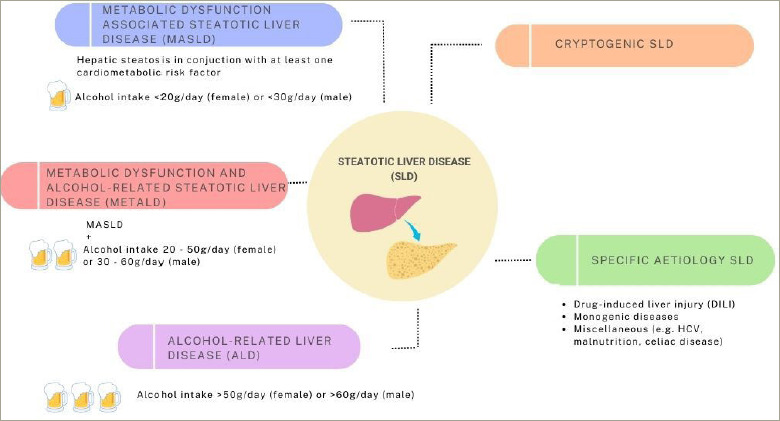
Type 2 diabetes (T2D) and metabolic dysfunction-associated steatotic liver disease (MASLD) are both facets of the metabolic syndrome, associated with obesity and insulin resistance. MASLD, a term that replaces non-alcoholic fatty liver disease (NAFLD), occurs in up to 70% of people with T2D. Not only do T2D and MASLD commonly co-occur, but there is a synergistic, bidirectional relationship between these conditions, meaning that each affects the natural disease course of the other. As such, it is important for those caring for people with T2D to recognize the importance of this co-diagnosis. In this summary, we detail the synergistic relationship between T2D and MASLD, explain the current challenges in recognizing this common co-diagnosis and suggest practical approaches for those caring for people with T2D to improve the diagnosis and treatment of MASLD.
2型糖尿病(T2D)和代谢功能障碍相关脂肪性肝病(MASLD)都是代谢综合征的表现,与肥胖和胰岛素抵抗相关。MASLD这一术语取代了非酒精性脂肪性肝病(NAFLD),在高达70%的T2D患者中出现。T2D和MASLD不仅经常同时发生,而且在这些病症之间存在协同的双向关系,这意味着每种病症都会影响另一种病症的自然病程。因此,对于照顾T2D患者的人来说,认识到这种共诊断的重要性很重要。在本综述中,我们详细阐述了T2D和MASLD之间的协同关系,解释了识别这种常见共诊断目前面临的挑战,并为照顾T2D患者的人提出了切实可行的方法,以改善MASLD的诊断和治疗。