MRC Laboratory of Molecular Biology , Cambridge, UK.
Division of Molecular, Cell and Developmental Biology, School of Life Sciences, University of Dundee, Dundee, UK.
J Cell Biol. 2025 Jan 6;224(1). doi: 10.1083/jcb.202406103. Epub 2024 Nov 12.
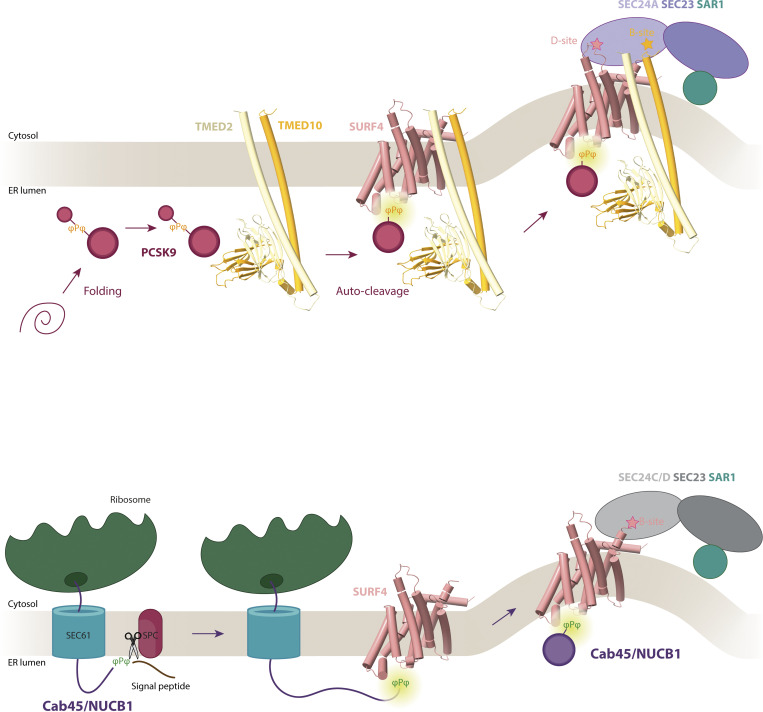
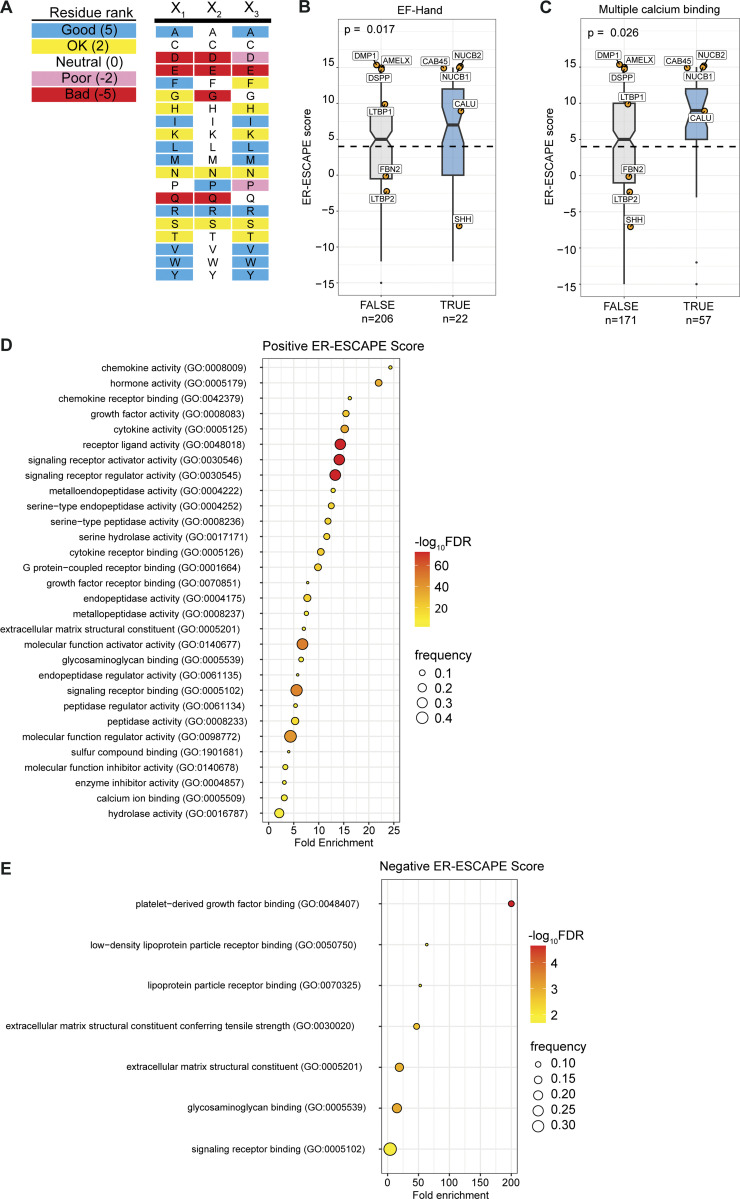
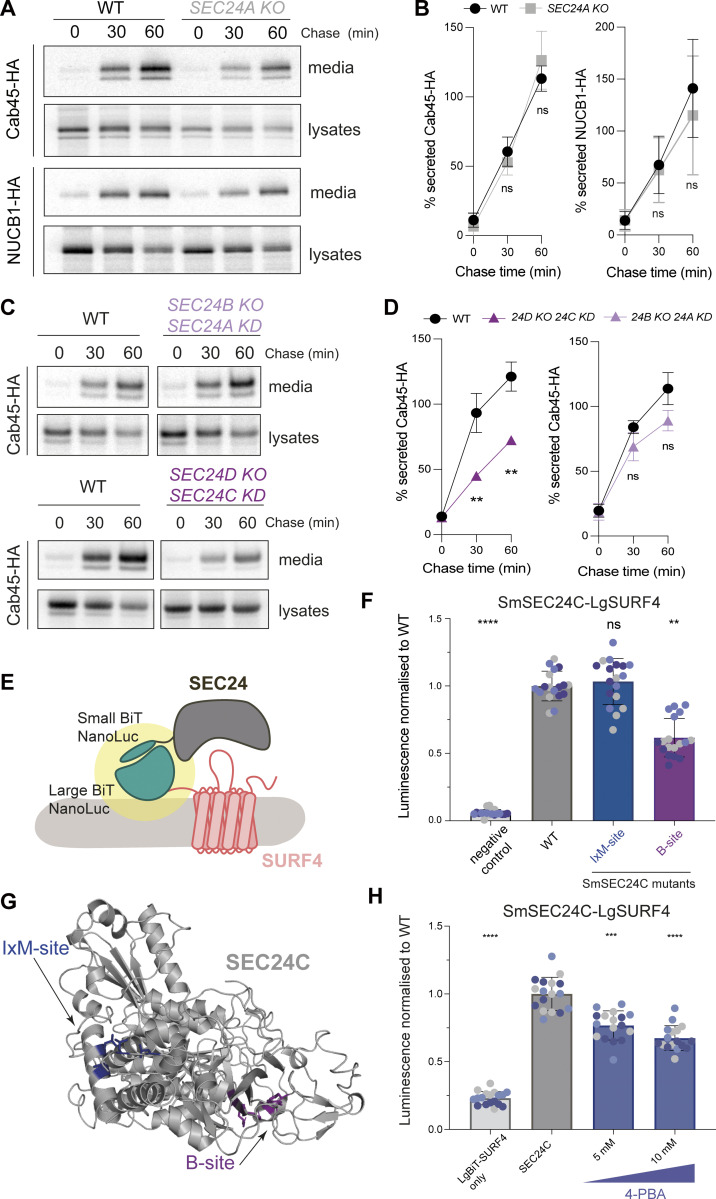
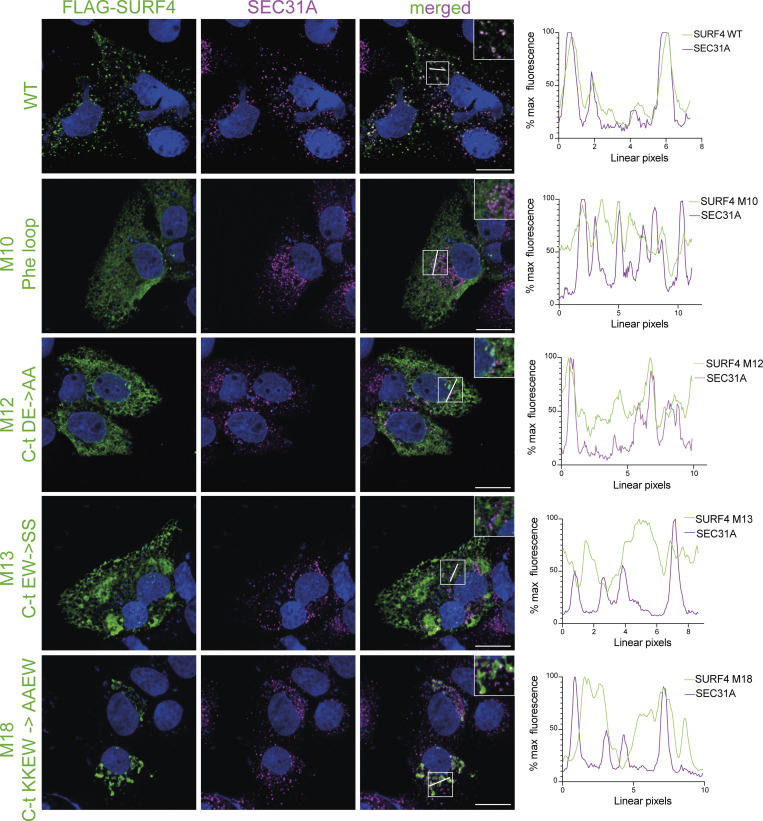
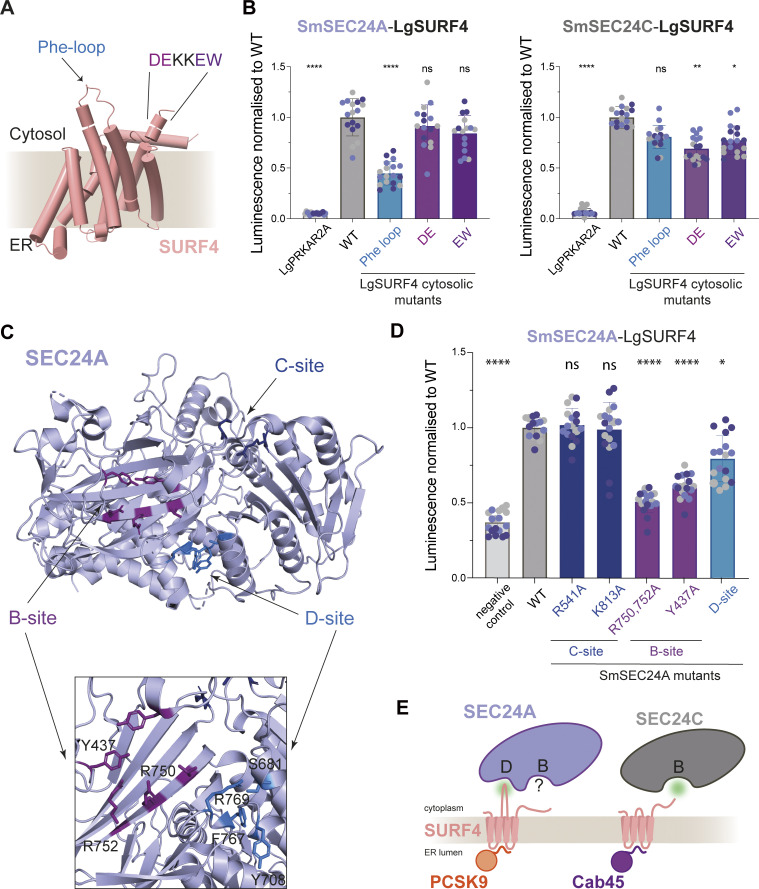
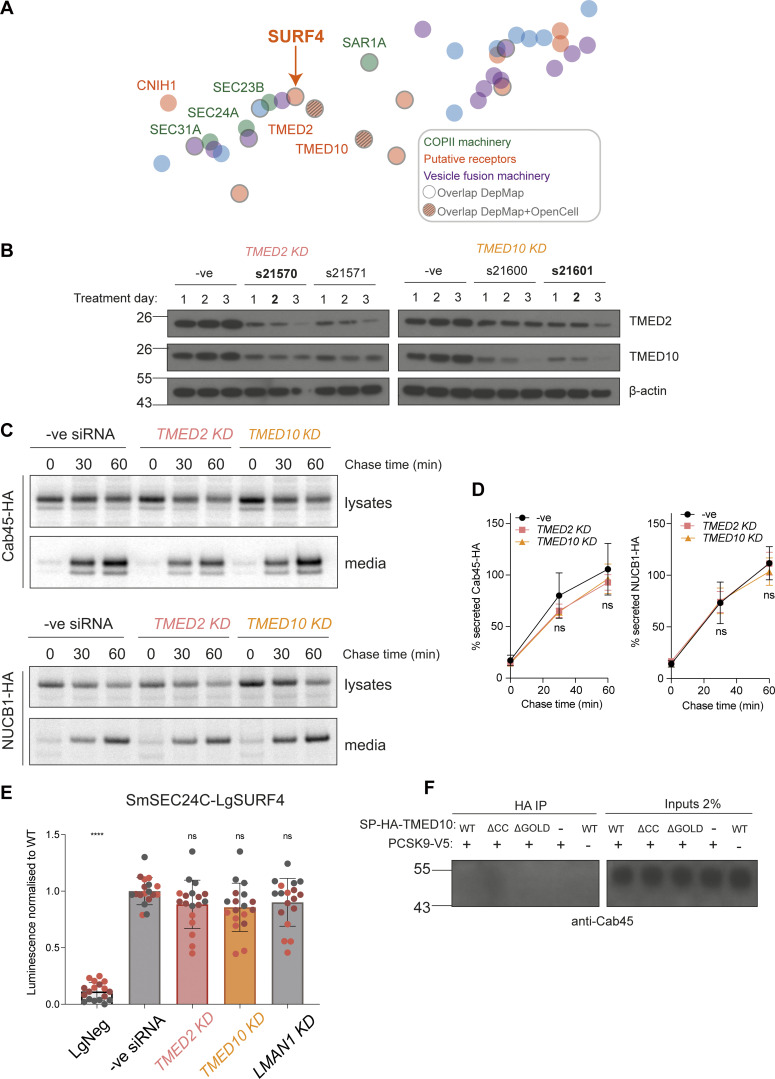
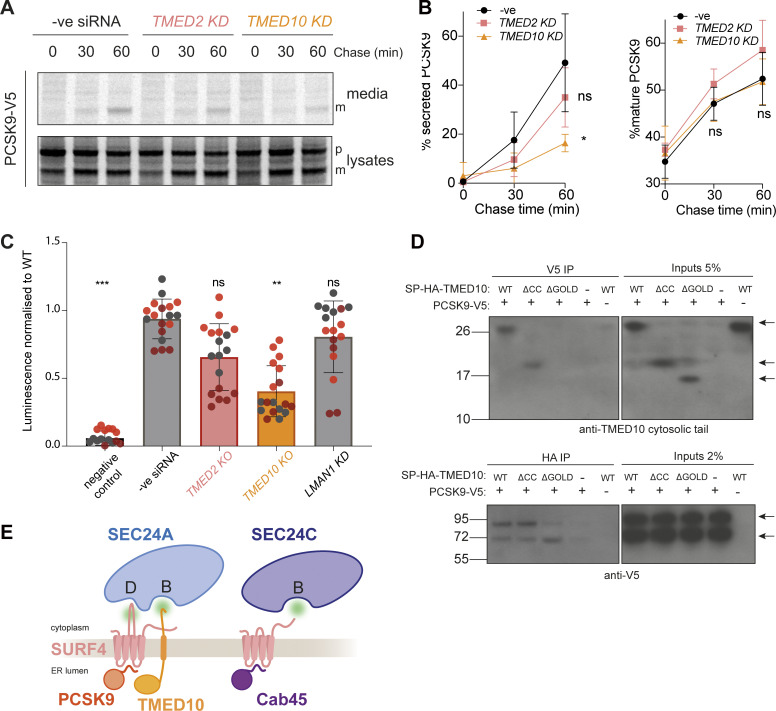
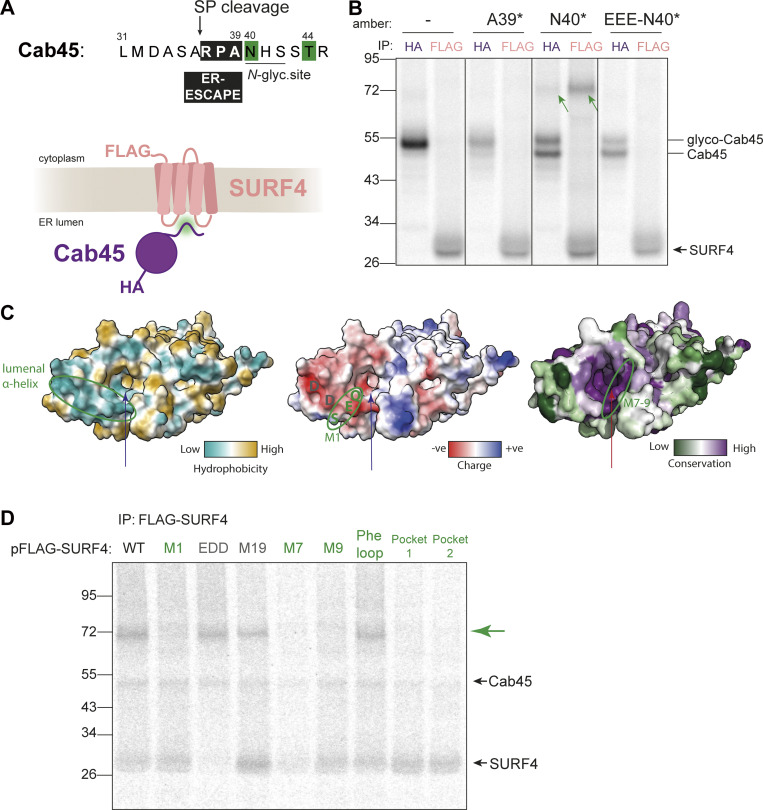
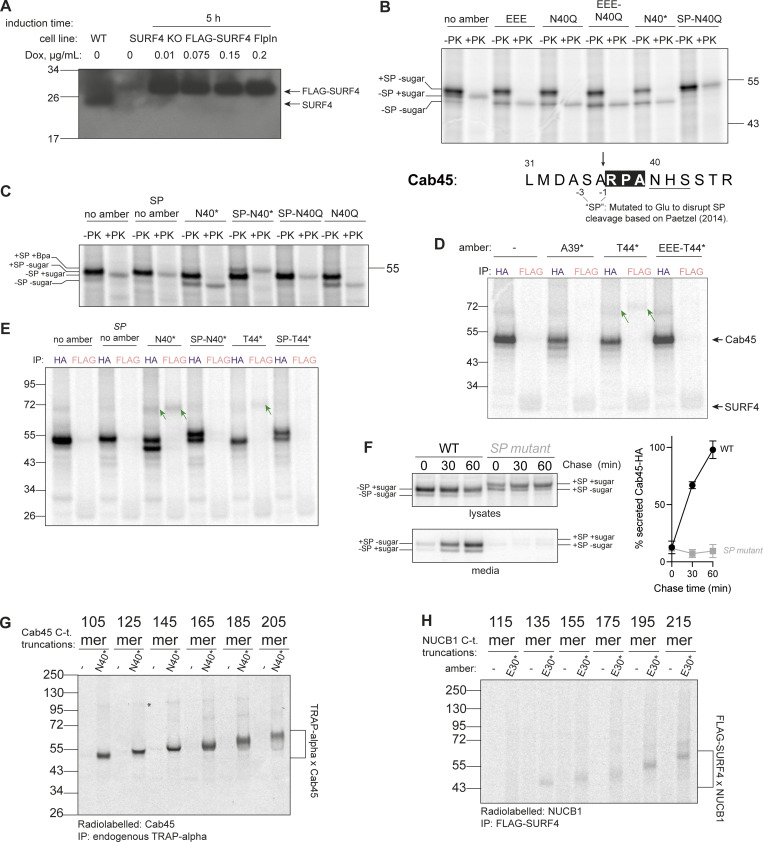
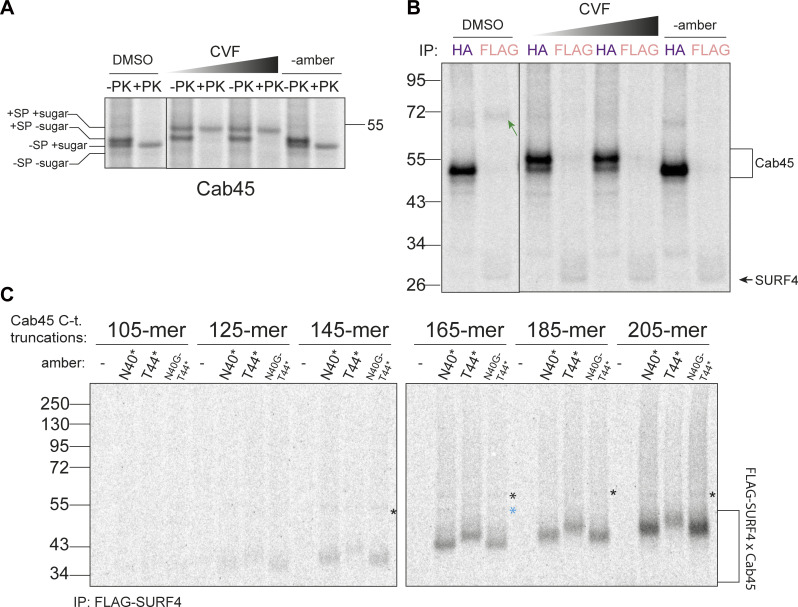
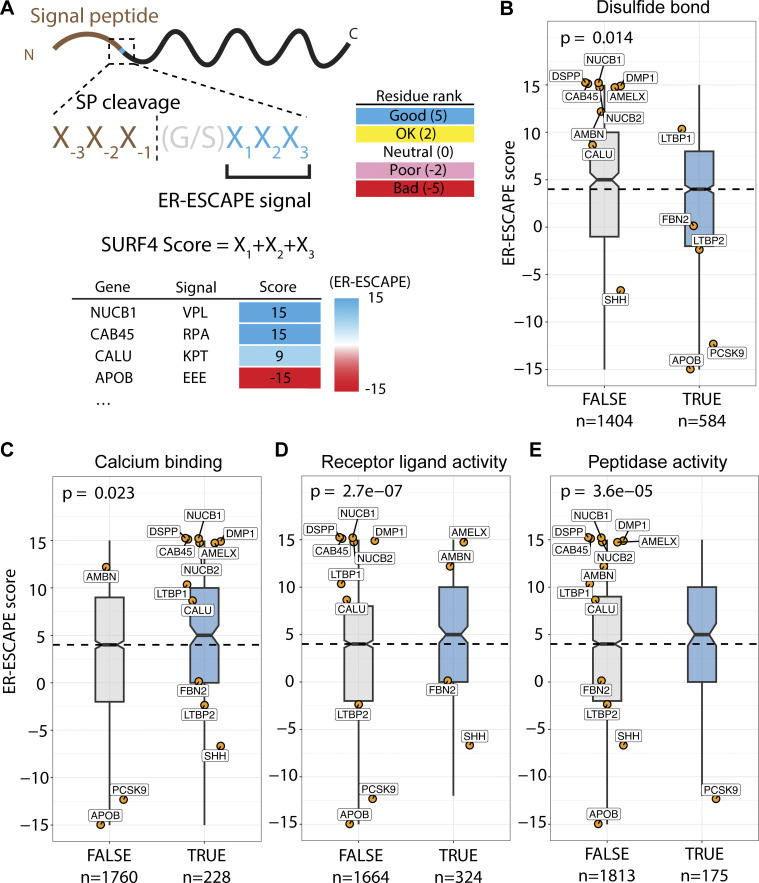
Protein secretion is an essential process that drives cell growth and communication. Enrichment of soluble secretory proteins into ER-derived transport carriers occurs via transmembrane cargo receptors that connect lumenal cargo to the cytosolic COPII coat. Here, we find that the cargo receptor, SURF4, recruits different SEC24 cargo adaptor paralogs of the COPII coat to export different cargoes. The secreted protease, PCSK9, requires both SURF4 and a co-receptor, TMED10, for export via SEC24A. In contrast, secretion of Cab45 and NUCB1 requires SEC24C/D. We further show that ER export signals of Cab45 and NUCB1 bind co-translationally to SURF4 via a lumenal pocket, contrasting prevailing models of receptor engagement only upon protein folding/maturation. Bioinformatics analyses suggest that strong SURF4-binding motifs are features of proteases, receptor-binding ligands, and Ca2+-binding proteins. We propose that certain classes of proteins are fast-tracked for rapid export to protect the health of the ER lumen.
蛋白质分泌是一个推动细胞生长和通讯的基本过程。通过连接腔货物与胞质 COPII 外套的跨膜货物受体,将可溶性分泌蛋白富集到内质网衍生的运输载体中。在这里,我们发现货物受体 SURF4 招募 COPII 外套的不同 SEC24 货物衔接蛋白同源物来输出不同的货物。分泌蛋白酶 PCSK9 需要 SURF4 和共受体 TMED10 通过 SEC24A 进行输出。相比之下,Cab45 和 NUCB1 的分泌需要 SEC24C/D。我们进一步表明,Cab45 和 NUCB1 的 ER 输出信号通过腔内腔结合 SURF4,与仅在蛋白质折叠/成熟时结合受体的现有模型形成对比。生物信息学分析表明,强烈的 SURF4 结合基序是蛋白酶、受体结合配体和 Ca2+-结合蛋白的特征。我们提出,某些类别的蛋白质被快速出口以保护内质网腔的健康。