
胸苷酸合成酶缺乏会导致小鼠大脑中β淀粉样蛋白(Aβ)积累和tau蛋白过度磷酸化。
Thorase deficiency causes both Aβ accumulation and tau hyperphosphorylation in mouse brain.
作者信息
Zhang Han, Cai Menghua, Gao Fei, Yang Jia, Li Chao, Han Jingyi, Wang Yue, Xu Yi, Hu Yu, Chen Hui, He Wei, Zhang Jianmin
机构信息
Department of Immunology, CAMS Key laboratory T cell and Cancer Immunotherapy, Institute of Basic Medical Sciences, Chinese Academy of Medical Sciences and School of Basic Medicine, Peking Union Medical College, State Key Laboratory of Common Mechanism Research for Major Diseases, Beijing, China.
Department of Thoracic Surgery, Qilu Hospital of Shandong University, Jinan, Shandong, China.
出版信息
Alzheimers Dement. 2024 Dec;20(12):8769-8786. doi: 10.1002/alz.14329. Epub 2024 Nov 13.
INTRODUCTION
The pathogenesis of two major pathogenic characters-amyloid beta (Aβ) accumulation and hyperphosphorylated tau protein-in the brains of patients with Alzheimer's disease (AD) remains unclear.
METHODS
Western blot and immunofluorescence staining were performed to detect the proteins in the brains of Thorase conditional knockout/transgenic mice and their littermates. A co-immunoprecipitation assay was applied to examine the Thorase-interacting proteins.
RESULTS
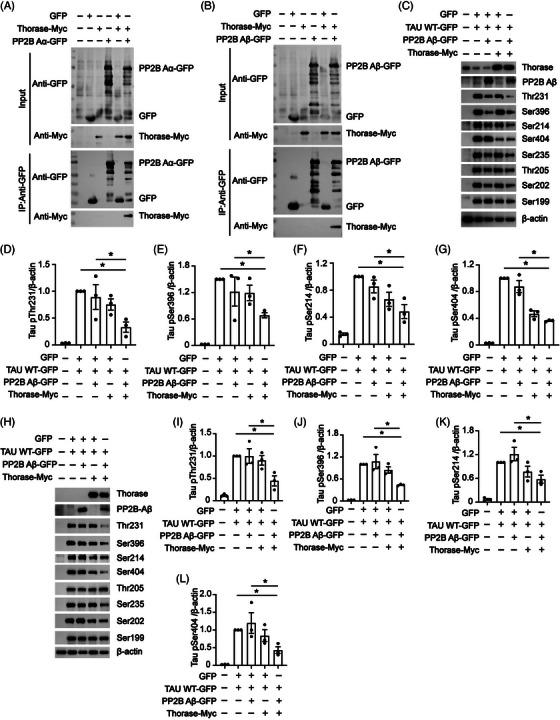
Genetic deletion of Thorase resulted in tau hyperphosphorylation and promoted Aβ accumulation in the mouse brain. Conversely, Thorase overexpression alleviated the pathogenesis of AD. Thorase regulated the phosphorylation of tau by targeting specific kinases and theprotein phosphatase 2B (PP2B). Thorase deficiency also impaired microglial phagocytosis and induced neuroinflammation by the activation of the NOD-like receptor thermal protein domain associated protein 3 (NLRP3) inflammasomes in microglia.
DISCUSSION
Thorase may be a potential druggable target for developing therapeutic approaches to treat AD and other neurodegenerative diseases.
HIGHLIGHTS
Thorase deletion leads to elevated amyloid beta (Aβ) deposition and hyperphosphorylated tau accumulation in the brain. Thorase regulates the phosphorylation of tau protein via PP2B. Thorase deficiency impairs microglial phagocytosis and promotesNLRP3-mediated neuroinflammation. Overexpression of Thorase alleviates Aβ deposition and tau phosphorylation in the AD mouse model.
引言
阿尔茨海默病(AD)患者大脑中两个主要致病特征——淀粉样β蛋白(Aβ)积累和tau蛋白过度磷酸化——的发病机制仍不清楚。
方法
采用蛋白质免疫印迹法和免疫荧光染色法检测Thorase条件性敲除/转基因小鼠及其同窝小鼠大脑中的蛋白质。应用免疫共沉淀试验检测与Thorase相互作用的蛋白质。
结果
Thorase基因缺失导致小鼠大脑中tau蛋白过度磷酸化并促进Aβ积累。相反,Thorase过表达减轻了AD的发病机制。Thorase通过靶向特定激酶和蛋白磷酸酶2B(PP2B)来调节tau蛋白的磷酸化。Thorase缺乏还会损害小胶质细胞的吞噬作用,并通过激活小胶质细胞中的NOD样受体热蛋白结构域相关蛋白3(NLRP3)炎性小体诱导神经炎症。
讨论
Thorase可能是开发治疗AD和其他神经退行性疾病治疗方法的潜在可药物化靶点。
要点
Thorase缺失导致大脑中淀粉样β蛋白(Aβ)沉积增加和tau蛋白过度磷酸化积累。Thorase通过PP2B调节tau蛋白的磷酸化。Thorase缺乏会损害小胶质细胞的吞噬作用并促进NLRP3介导的神经炎症。Thorase过表达减轻了AD小鼠模型中的Aβ沉积和tau蛋白磷酸化。




 Zotero 插件