Department of Bioengineering, University of California San Diego, San Diego, CA, USA.
Altos Labs, San Diego, CA, USA.
Nat Commun. 2024 Nov 13;15(1):9818. doi: 10.1038/s41467-024-53973-0.
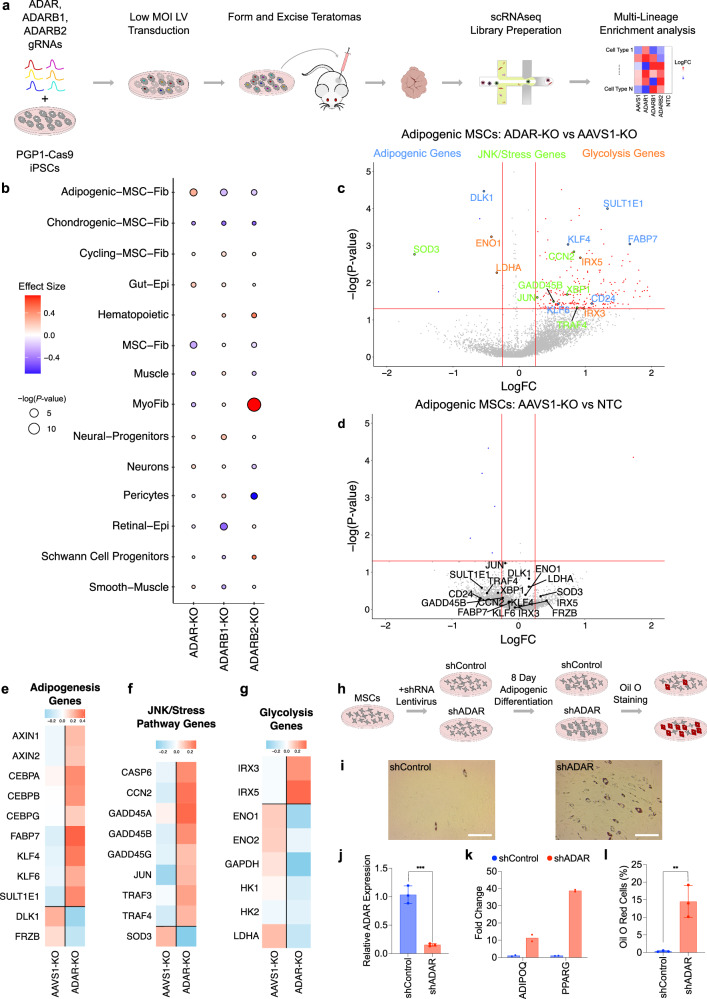
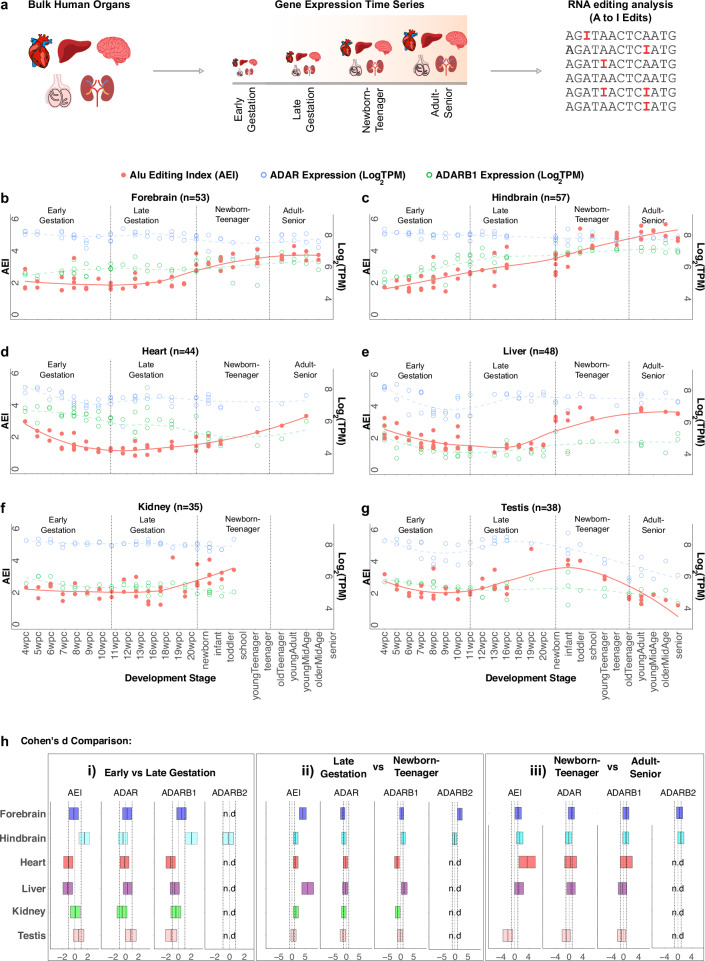
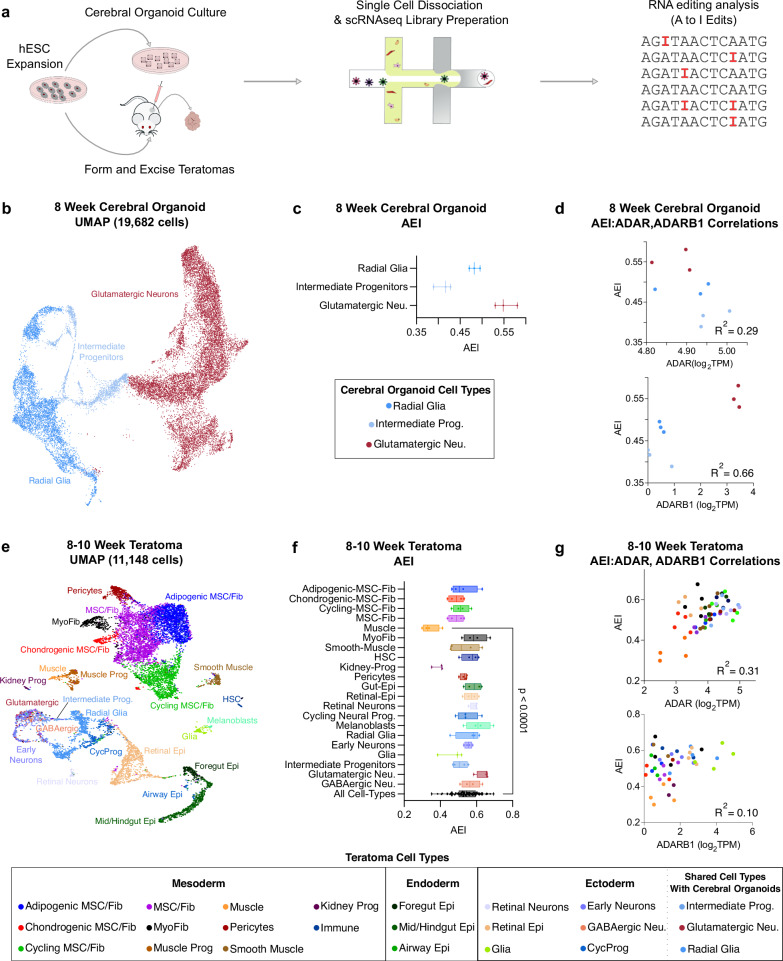
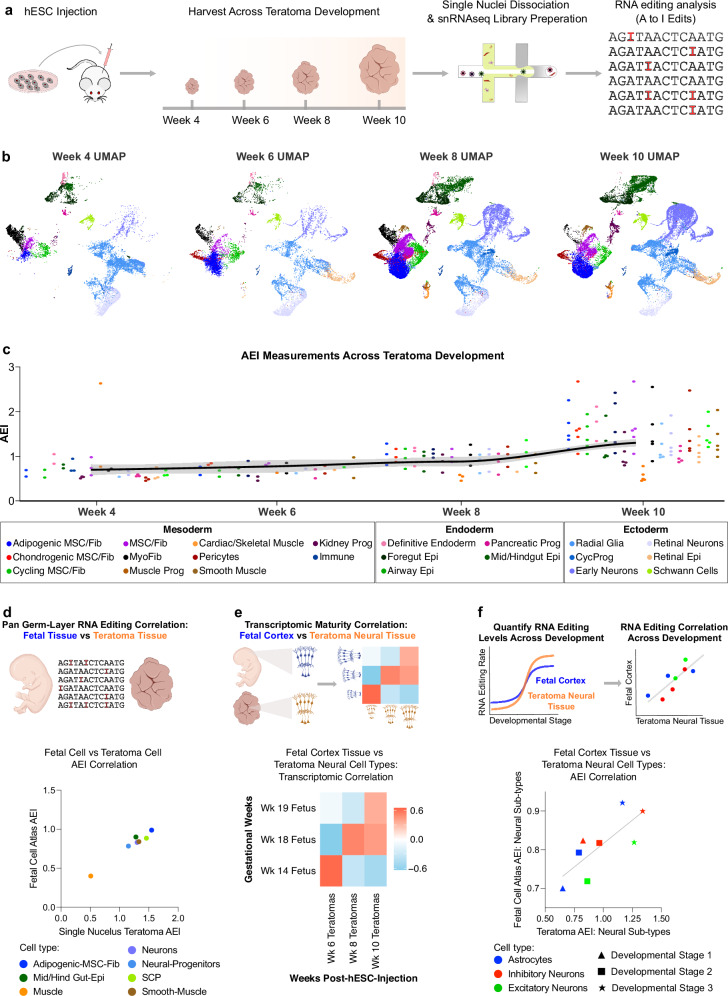
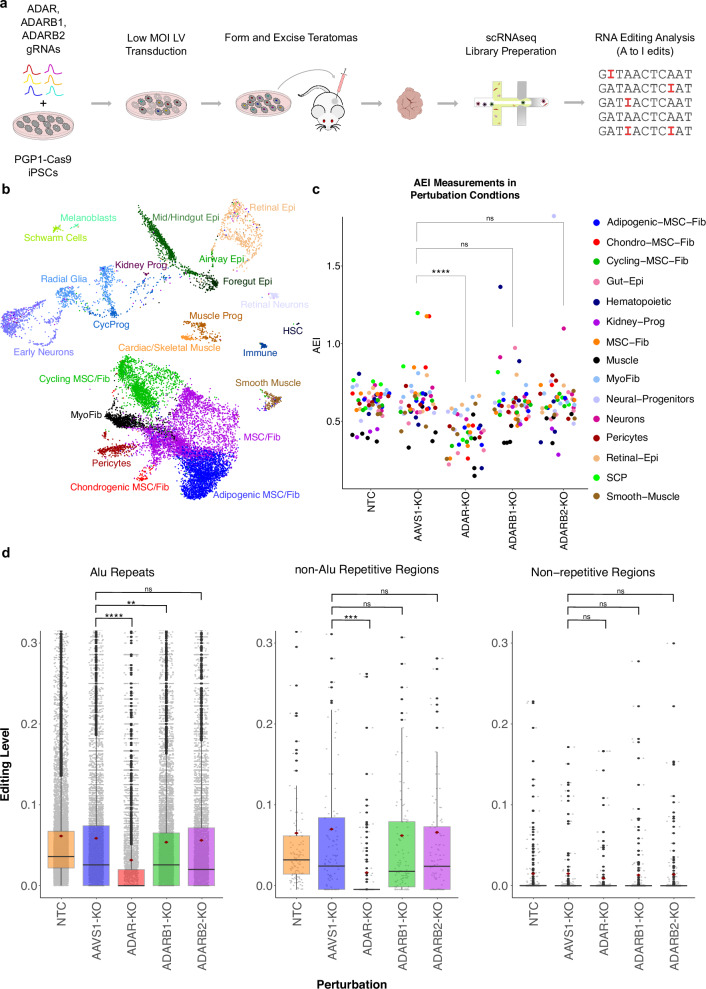
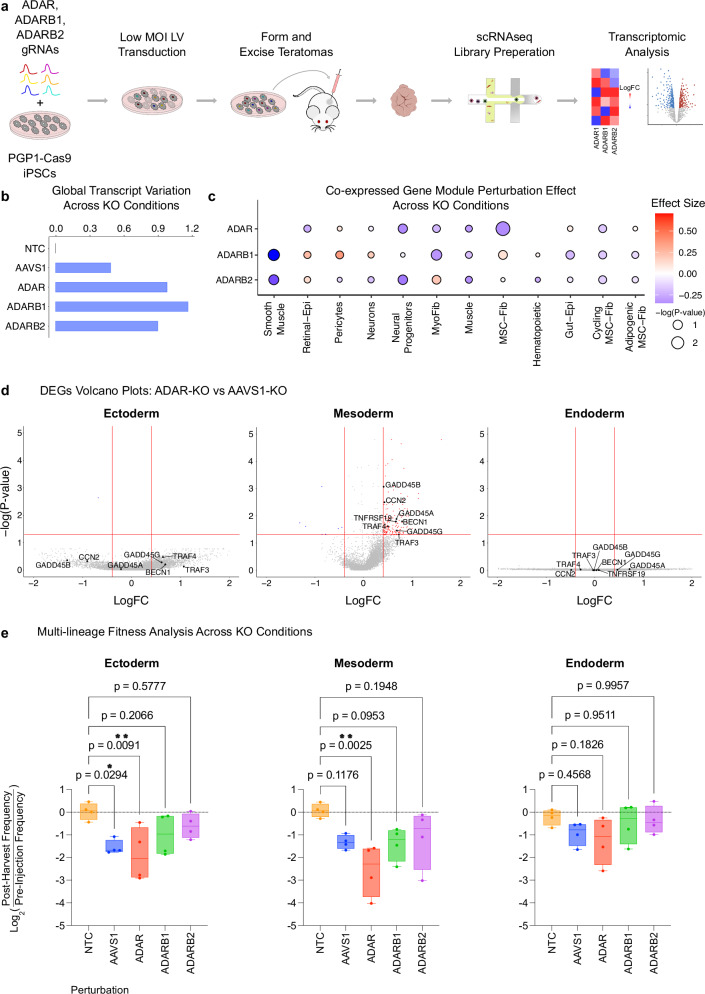
Adenosine deaminases acting on RNA (ADARs) impact diverse cellular processes and pathological conditions, but their functions in early cell-fate specification remain less understood. To gain insights here, we began by charting time-course RNA editing profiles in human organs from fetal to adult stages. Next, we utilized hPSC differentiation to experimentally probe ADARs, harnessing brain organoids as neural specific, and teratomas as pan-tissue developmental models. We show that time-series teratomas faithfully recapitulate fetal developmental trends, and motivated by this, conducted pan-tissue, single-cell CRISPR-KO screens of ADARs in teratomas. Knocking out ADAR leads to a global decrease in RNA editing across all germ-layers. Intriguingly, knocking out ADAR leads to an enrichment of adipogenic cells, revealing a role for ADAR in human adipogenesis. Collectively, we present a multi-pronged framework charting time-resolved RNA editing profiles and coupled ADAR perturbations in developmental models, thereby shedding light on the role of ADARs in cell-fate specification.
腺苷脱氨酶作用于 RNA(ADARs)影响多种细胞过程和病理状况,但它们在早期细胞命运特化中的功能仍知之甚少。为了在此获得深入了解,我们首先绘制了从胎儿到成人阶段人类器官的时间过程 RNA 编辑图谱。接下来,我们利用 hPSC 分化来实验性地探测 ADAR,利用脑类器官作为神经特异性的模型,以及畸胎瘤作为多组织发育模型。我们表明,时间序列畸胎瘤忠实地再现了胎儿发育趋势,受此启发,我们在畸胎瘤中进行了 ADAR 的全组织单细胞 CRISPR-KO 筛选。敲除 ADAR 会导致所有胚层的 RNA 编辑全面减少。有趣的是,敲除 ADAR 会导致脂肪细胞富集,揭示了 ADAR 在人类脂肪生成中的作用。总之,我们提出了一个多方面的框架,绘制了时间分辨的 RNA 编辑图谱,并在发育模型中结合了 ADAR 干扰,从而揭示了 ADAR 在细胞命运特化中的作用。