Maula Mohamad Izzur, Ammarullah Muhammad Imam, Nugwita Chandra Maulana, Faisal Muhammad Sultan, Afif Ilham Yustar, Husaini Farhan Ali, Lamura M Danny Pratama, Jamari Jamari, Winarni Tri Indah
Undip Biomechanics Engineering & Research Centre (UBM-ERC) Universitas Diponegoro Semarang Central Java Indonesia.
Department of Mechanical Engineering, Faculty of Engineering Universitas Diponegoro Semarang Indonesia.
Health Sci Rep. 2024 Nov 13;7(11):e70194. doi: 10.1002/hsr2.70194. eCollection 2024 Nov.
Mental and neurological disorders are a growing global concern, further intensified by the COVID-19 pandemic. Stress management techniques, such as deep pressure therapy, have gained attention, with weighted vests commonly used for anxiety relief. However, there is limited scientific evidence supporting their efficacy. This study aimed to rigorously assess the effectiveness of a weighted vest incorporating vibrotactile stimulation in reducing anxiety by measuring physiological indicators-pulse rate and skin conductance (SC)-as well as subjective comfort ratings.
A total of 30 final-semester college students participated in the study. Participants wore a vibrotactile-weighted vest, and both pulse rate and skin conductance (SC) were measured to gauge anxiety levels. Additionally, participants rated their comfort using a Comfort Rating Scale (CRS). Changes in pulse rate and SC were statistically analyzed, and effect sizes (Cohen's ) were calculated to assess the magnitude of the intervention's impact.
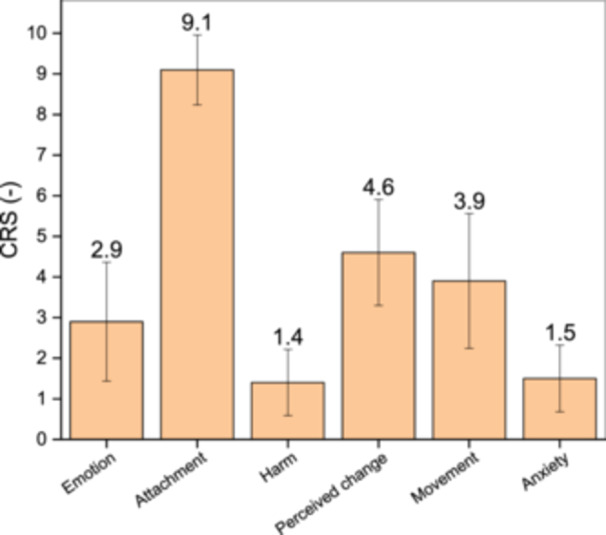
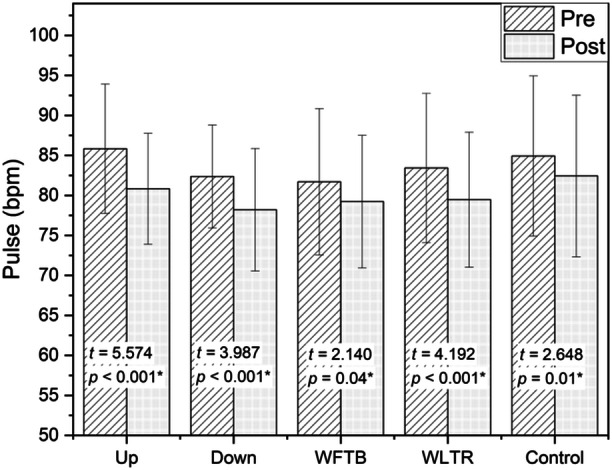
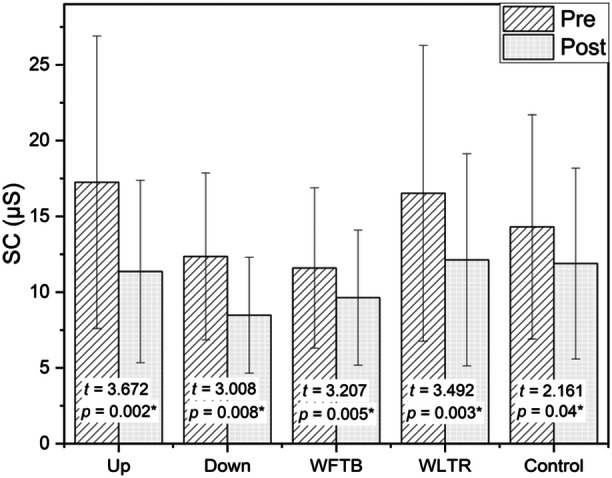
The weighted vest with vibrotactile stimulation resulted in a significant reduction in both pulse rate (dpulse = 0.23-0.62) and SC (dsc = 0.32-0.66), indicating a small to medium effect size in anxiety reduction. Subjective evaluations of the vest using the CRS revealed low scores on discomfort-related items, with participants rating unfavorable statements between 1.5/10 and 4.6/10, suggesting overall comfort during use.
This study provides compelling evidence that vibrotactile-weighted vests effectively reduce anxiety, as indicated by both physiological measures and subjective comfort ratings. The findings support the potential of this intervention as a formal therapeutic tool for stress and anxiety reduction. Further research may explore long-term effects and broader applications in clinical settings.
精神和神经疾病日益成为全球关注的问题,新冠疫情使其进一步加剧。压力管理技术,如深层压力疗法,受到了关注,加权背心常用于缓解焦虑。然而,支持其疗效的科学证据有限。本研究旨在通过测量生理指标——脉搏率和皮肤电导率(SC)以及主观舒适度评分,严格评估一种结合振动触觉刺激的加权背心在减轻焦虑方面的有效性。
共有30名大学最后一学期的学生参与了该研究。参与者穿着振动触觉加权背心,测量脉搏率和皮肤电导率(SC)以评估焦虑水平。此外,参与者使用舒适度评分量表(CRS)对他们的舒适度进行评分。对脉搏率和SC的变化进行了统计分析,并计算了效应大小(科恩d值)以评估干预影响的程度。
带有振动触觉刺激的加权背心使脉搏率(dpulse = 0.23 - 0.62)和SC(dsc = 0.32 - 0.66)均显著降低,表明在减轻焦虑方面有小到中等的效应大小。使用CRS对背心的主观评价显示,与不适相关项目的得分较低,参与者对负面陈述的评分在1.5/10至4.6/10之间,表明使用过程中总体舒适。
本研究提供了有力证据,表明振动触觉加权背心能有效减轻焦虑,生理测量和主观舒适度评分均表明了这一点。研究结果支持了这种干预作为减轻压力和焦虑的正式治疗工具的潜力。进一步的研究可以探索其长期效果以及在临床环境中的更广泛应用。