Department of Experimental Medicine, TOR, University of Rome "Tor Vergata", Rome, Italy.
IDI-IRCCS, Rome, Italy.
Cell Death Dis. 2024 Nov 14;15(11):830. doi: 10.1038/s41419-024-07159-7.
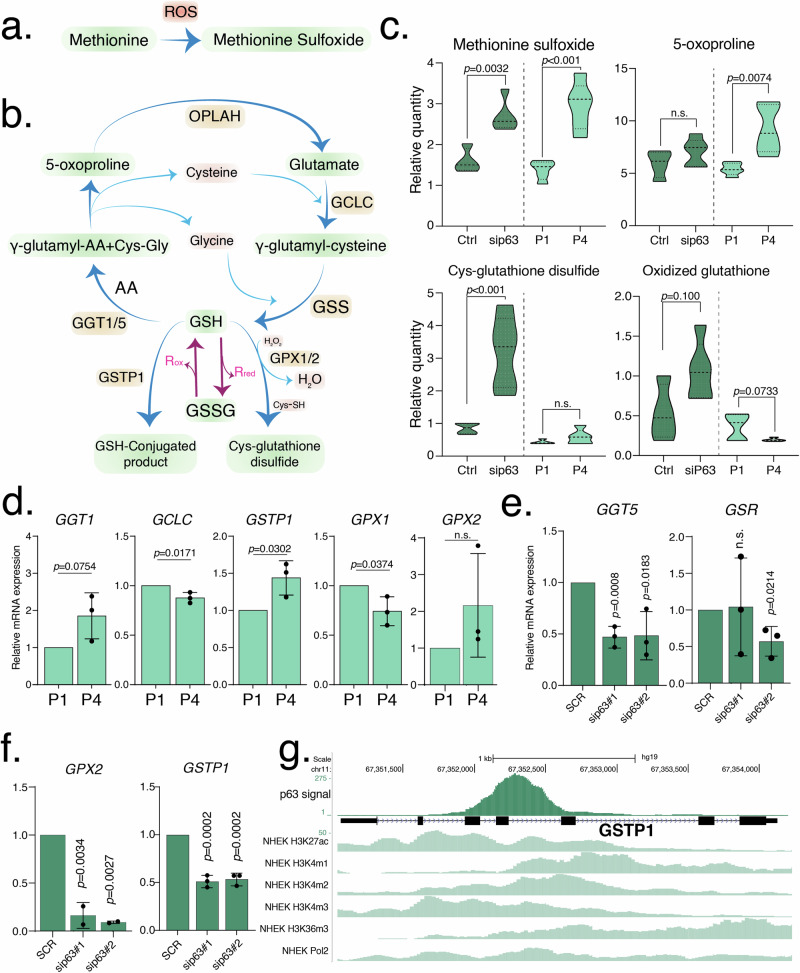
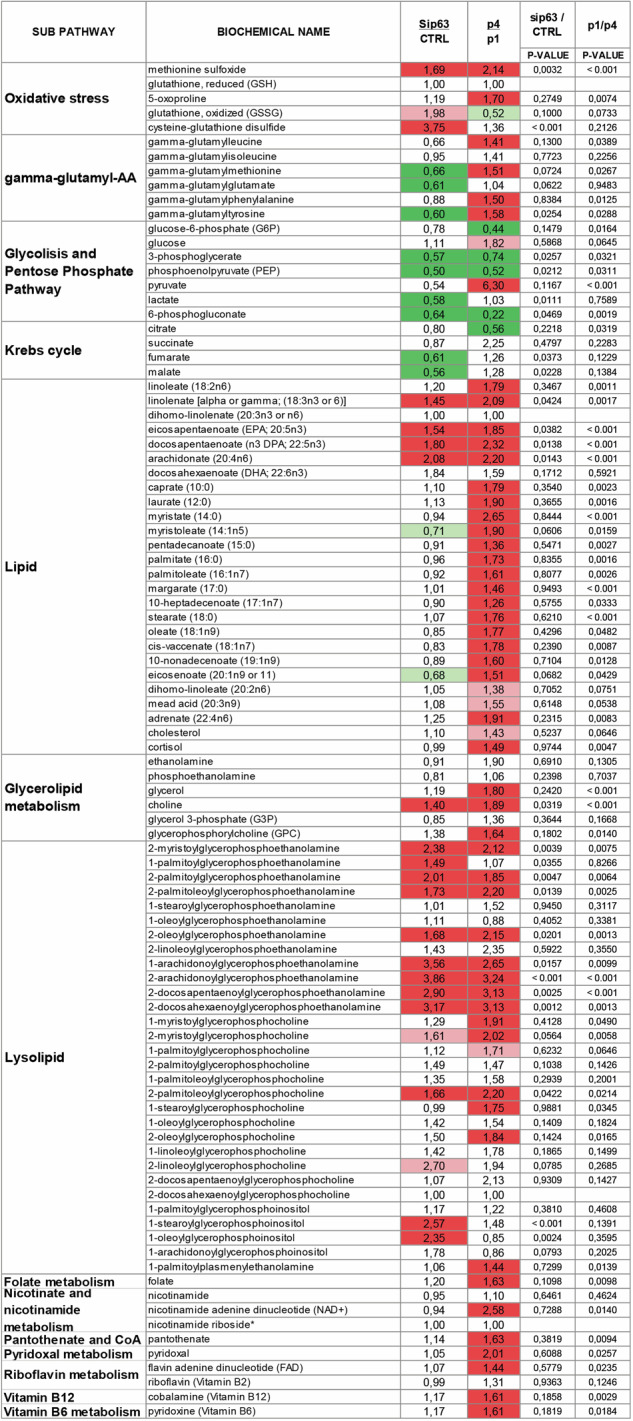
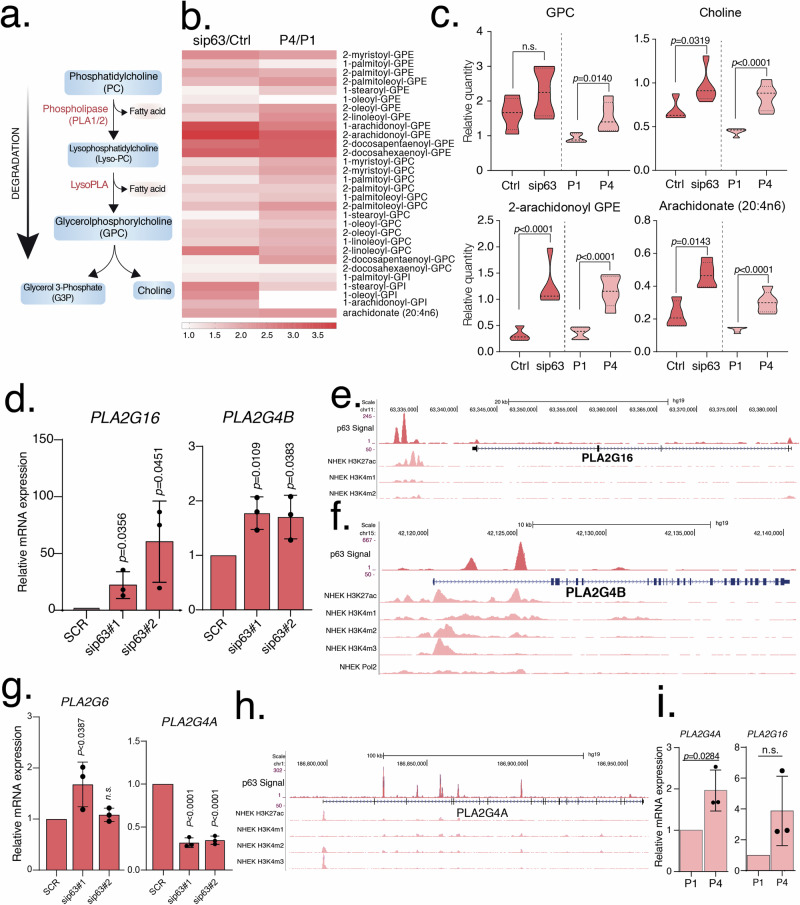
Unraveling the molecular nature of skin aging and keratinocyte senescence represents a challenging research project in epithelial biology. In this regard, depletion of p63, a p53 family transcription factor prominently expressed in human and mouse epidermis, accelerates both aging and the onset of senescence markers in vivo animal models as well as in ex vivo keratinocytes. Nonetheless, the biochemical link between p63 action and senescence phenotype remains largely unexplored. In the present study, through ultrahigh performance liquid chromatography-tandem mass spectroscopy (UPLC-MS/MS) and gas chromatography/mass spectrometry (GC/MS) metabolomic analysis, we uncover interesting pathways linking replicative senescence to metabolic alterations during p63 silencing in human keratinocytes. Integration of our metabolomic profiling data with targeted transcriptomic investigation empowered us to demonstrate that absence of p63 and senescence share similar modulation profiles of oxidative stress markers, pentose phosphate pathway metabolites and lyso-glycerophospholipids, the latter due to enhanced phospholipases gene expression profile often under p63 direct/indirect gene control. Additional biochemical features identified in deranged keratinocytes include a relevant increase in lipids production, glucose and pyruvate levels as confirmed by upregulation of gene expression of key lipid synthesis and glycolytic enzymes, which, together with improved vitamins uptake, characterize senescence phenotype. Silencing of p63 in keratinocytes instead, translates into a blunted flux of metabolites through both glycolysis and the Krebs cycle, likely due to a p63-dependent reduction of hexokinase 2 and citrate synthase gene expression. Our findings highlight the potential role of p63 in counteracting keratinocyte senescence also through fine regulation of metabolite levels and relevant biochemical pathways. We believe that our research might contribute significantly to the discovery of new implications of p63 in keratinocyte senescence and related diseases.
揭示皮肤衰老和角质形成细胞衰老的分子本质是上皮生物学中具有挑战性的研究项目。在这方面,p53 家族转录因子 p63 的耗竭会加速体内动物模型以及体外角质形成细胞的衰老和衰老标志物的出现。然而,p63 作用与衰老表型之间的生化联系在很大程度上仍未得到探索。在本研究中,我们通过超高效液相色谱-串联质谱(UPLC-MS/MS)和气相色谱/质谱(GC/MS)代谢组学分析,揭示了有趣的途径,将复制性衰老与 p63 沉默后角质形成细胞代谢改变联系起来。将我们的代谢组学分析数据与靶向转录组学研究相结合,使我们能够证明 p63 缺失和衰老在氧化应激标志物、戊糖磷酸途径代谢物和溶甘油磷脂的代谢改变方面具有相似的调节模式,后者是由于增强了通常受 p63 直接/间接基因控制的磷脂酶基因表达谱。在失调的角质形成细胞中还确定了其他生化特征,包括脂质、葡萄糖和丙酮酸盐水平的显著增加,这是通过关键脂质合成和糖酵解酶的基因表达上调来证实的,这与改善维生素摄取一起,构成了衰老表型的特征。在角质形成细胞中沉默 p63 会导致糖酵解和三羧酸循环中代谢物通量的明显减少,这可能是由于 p63 依赖性降低了己糖激酶 2 和柠檬酸合酶的基因表达。我们的研究结果强调了 p63 通过精细调节代谢物水平和相关生化途径来抵抗角质形成细胞衰老的潜在作用。我们相信,我们的研究可能会对发现 p63 在角质形成细胞衰老和相关疾病中的新作用做出重要贡献。