
低温心脏骤停:复温前成功复苏的预后因素。
Hypothermic cardiac arrest: prognostic factors for successful resuscitation before rewarming.
机构信息
Department of Emergency Medicine, Jan Kochanowski University, al. IX Wieków Kielc 19A, Kielce, Poland.
Department of Anaesthesiology and Intensive Care, Medical University of Silesia, Katowice, Poland.
出版信息
Scand J Trauma Resusc Emerg Med. 2024 Nov 14;32(1):114. doi: 10.1186/s13049-024-01288-w.
OBJECTIVE
To indicate factors predicting return of spontaneous circulation in patients with hypothermic cardiac arrest in the pre-rewarming period.
METHODS
A multicenter retrospective study was conducted. We included patients who had suffered cardiac arrest caused by severe accidental hypothermia with a core body temperature of ≤ 28 °C. Patients who had achieved return of spontaneous circulation before commencement of active rewarming at the hospital were compared to those who remained in cardiac arrest.
RESULTS
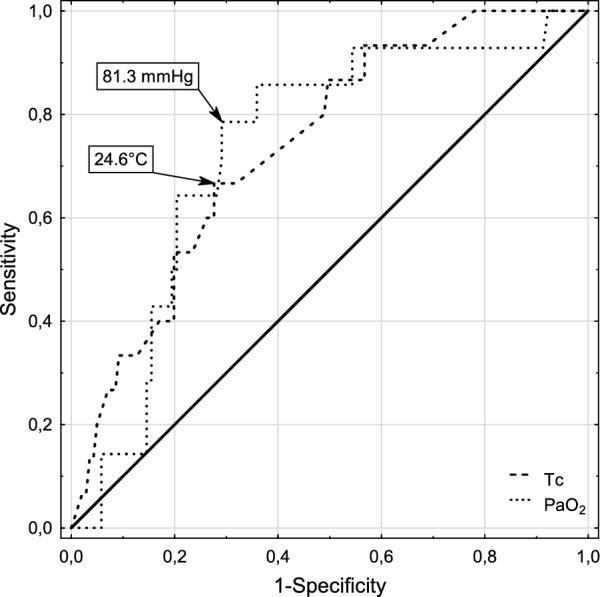
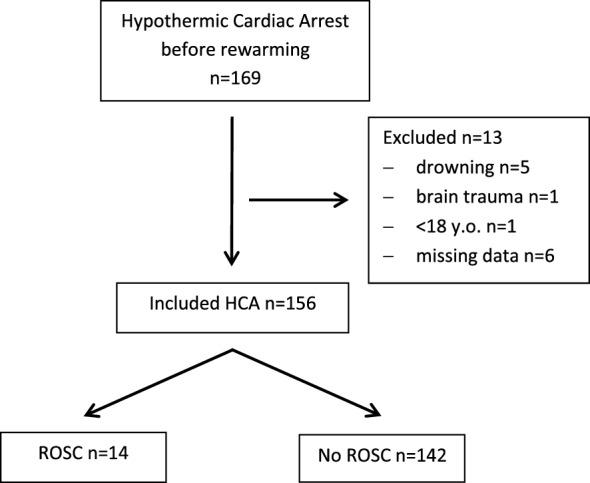
A total of 156 patients suffering hypothermic cardiac arrest were included in the study. In 14 of them (9%) resuscitation was successful before rewarming. Factors associated with return of spontaneous circulation were as follows: witnessed onset of cardiac arrest (p = 0.04); a higher core body temperature (p = 0.005) with a prognostic threshold of 24.6 °C; and a higher arterial oxygen partial pressure (p = 0.04) with a prognostic threshold of 81 mmHg. One patient after successful resuscitation sustained recurrence of cardiac arrest during rewarming.
CONCLUSIONS
Patients with core body temperature < 25 °C, hypoxemia, and those who sustained unwitnessed hypothermic cardiac arrest have weak chances for successful resuscitation before rewarming. They can benefit from immediate transportation to an extracorporeal life support facility under continuous cardiopulmonary resuscitation. Effective rewarming and oxygenation during the prehospital period can increase the chances for return of spontaneous circulation. Recurrence of cardiac arrest during rewarming is uncommon.
目的
在复温前阶段,指出预测低体温性心脏骤停患者自主循环恢复的因素。
方法
进行了一项多中心回顾性研究。我们纳入了因严重意外低体温而导致心脏骤停且核心体温≤28°C 的患者。将在医院开始主动复温前已恢复自主循环的患者与仍处于心脏骤停的患者进行比较。
结果
本研究共纳入 156 例低体温性心脏骤停患者。其中 14 例(9%)在复温前复苏成功。与自主循环恢复相关的因素如下:目击心脏骤停发作(p=0.04);核心体温较高(p=0.005,预测阈值为 24.6°C);动脉血氧分压较高(p=0.04,预测阈值为 81mmHg)。1 例复苏成功的患者在复温过程中再次发生心脏骤停。
结论
核心体温<25°C、低氧血症以及未目击到的低体温性心脏骤停患者,在复温前成功复苏的机会较弱。他们可以受益于在持续心肺复苏的情况下立即转送至体外生命支持设备。在院前阶段进行有效的复温和氧合可以增加自主循环恢复的机会。复温过程中再次发生心脏骤停并不常见。
 Zotero 插件