Department of Radiological Sciences, University of California Los Angeles, Los Angeles, USA.
, 1250 16th Street, Suite 2340, Santa Monica, CA, 90404, USA.
Cancer Imaging. 2024 Nov 14;24(1):154. doi: 10.1186/s40644-024-00802-8.
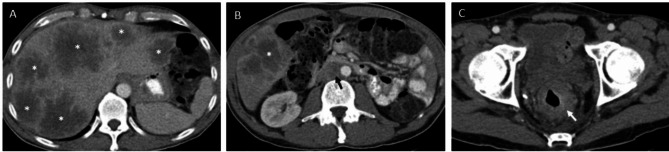
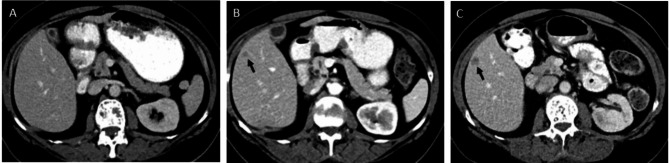
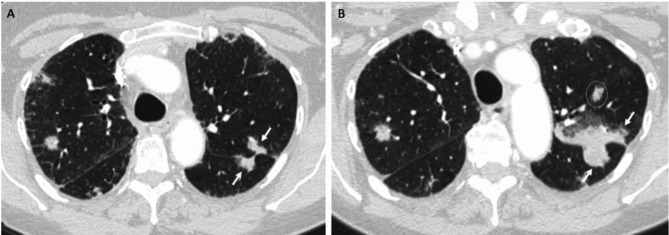
The Response Evaluation in Solid Tumors (RECIST) 1.1 provides key guidance for performing imaging response assessment and defines image-based outcome metrics in oncology clinical trials, including progression free survival. In this framework, tumors identified on imaging are designated as either target lesions, non-target disease or new lesions and a structured categorical response is assigned at each imaging time point. While RECIST provides definitions for these categories, it specifically and objectively defines only the target disease. Predefined thresholds of size change provide unbiased metrics for determining objective response and disease progression of the target lesions. However, worsening of non-target disease or emergence of new lesions is given the same importance in determining disease progression despite these being qualitatively assessed and less rigorously defined. The subjective assessment of non-target and new disease contributes to reader variability, which can impact the quality of image interpretation and even the determination of progression free survival. The RECIST Working Group has made significant efforts in developing RECIST 1.1 beyond its initial publication, particularly in its application to targeted agents and immunotherapy. A review of the literature highlights that the Working Group has occasionally employed or adopted objective measures for assessing non-target and new lesions in their evaluation of RECIST-based outcome measures. Perhaps a prospective evaluation of these more objective definitions for non-target and new lesions within the framework of RECIST 1.1 might improve reader interpretation. Ideally, these changes could also better align with clinically meaningful outcome measures of patient survival or quality of life.
实体瘤反应评价标准(RECIST)1.1 为进行影像学反应评估提供了关键指导,并定义了肿瘤临床试验中的基于图像的结果衡量标准,包括无进展生存期。在这个框架中,影像学上识别的肿瘤被指定为靶病灶、非靶病灶或新病灶,并在每个影像学时间点分配结构化的分类反应。虽然 RECIST 为这些类别提供了定义,但它仅具体且客观地定义了靶病灶。大小变化的预设阈值为确定靶病灶的客观反应和疾病进展提供了无偏倚的衡量标准。然而,尽管非靶病灶的恶化或新病灶的出现是通过定性评估和不太严格定义的,但在确定疾病进展时,它们同样重要。非靶病灶和新病灶的主观评估导致了读者间的差异,这可能会影响图像解读的质量,甚至影响无进展生存期的确定。RECIST 工作组在其最初发布后,特别是在其对靶向药物和免疫疗法的应用方面,为 RECIST 1.1 的发展做出了重大努力。对文献的回顾强调,工作组在评估基于 RECIST 的结果衡量标准时,偶尔会采用或采用客观措施来评估非靶病灶和新病灶。也许在 RECIST 1.1 框架内对非靶病灶和新病灶进行这些更客观的定义的前瞻性评估可能会改善读者的解读。理想情况下,这些变化也可以更好地与患者生存或生活质量的临床相关结果衡量标准保持一致。