Department of Stem Cell and Regenerative Biotechnology, Konkuk University, Hwayang-Dong, Kwangjin-Gu, Seoul, Republic of Korea.
Vet Res. 2024 Nov 14;55(1):150. doi: 10.1186/s13567-024-01402-x.
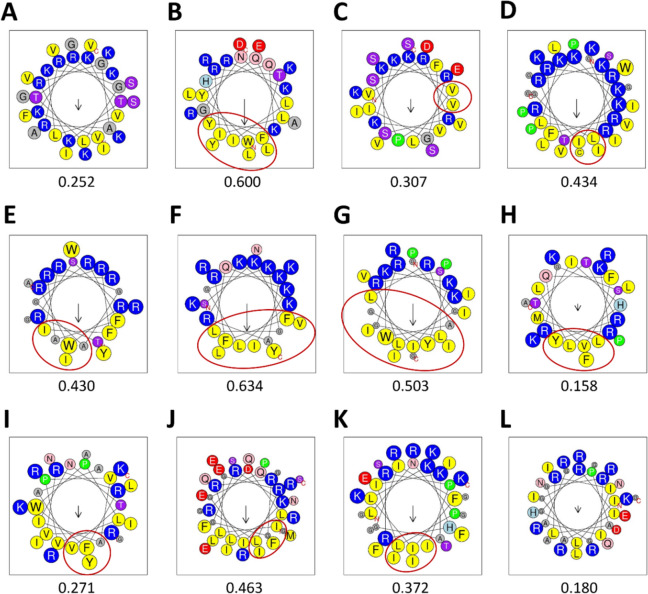
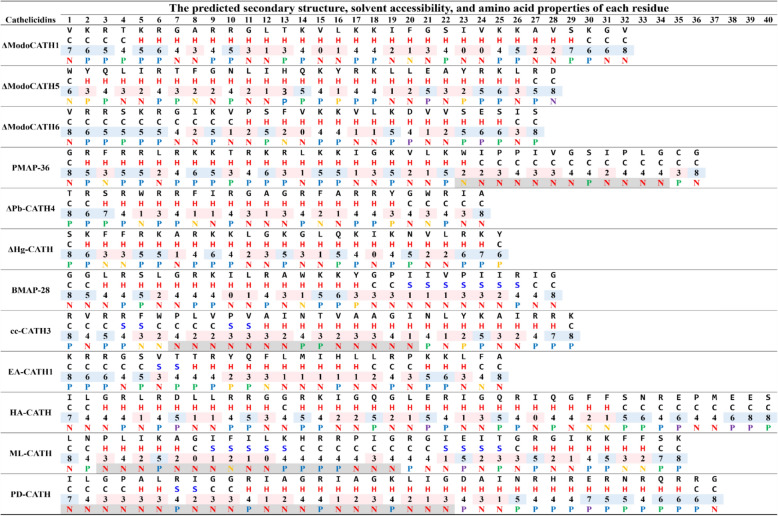
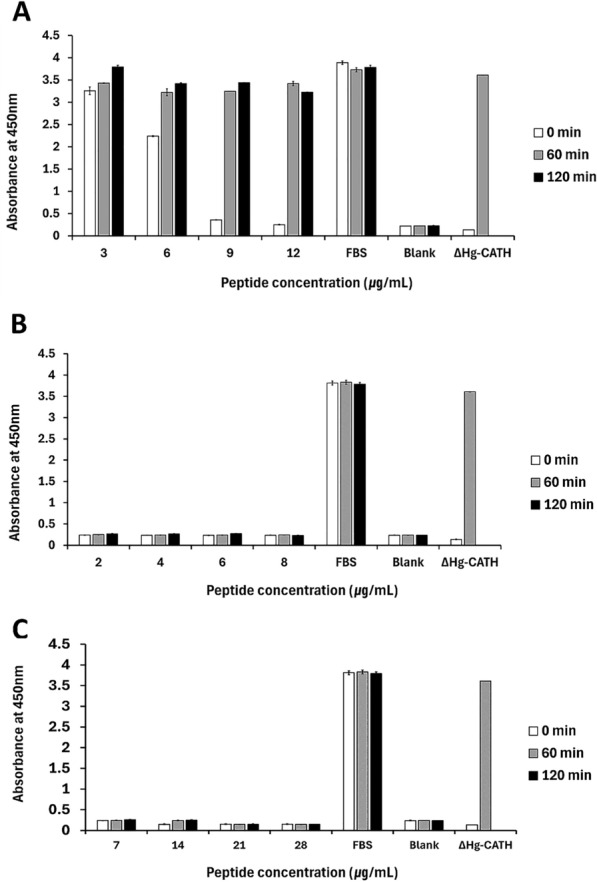
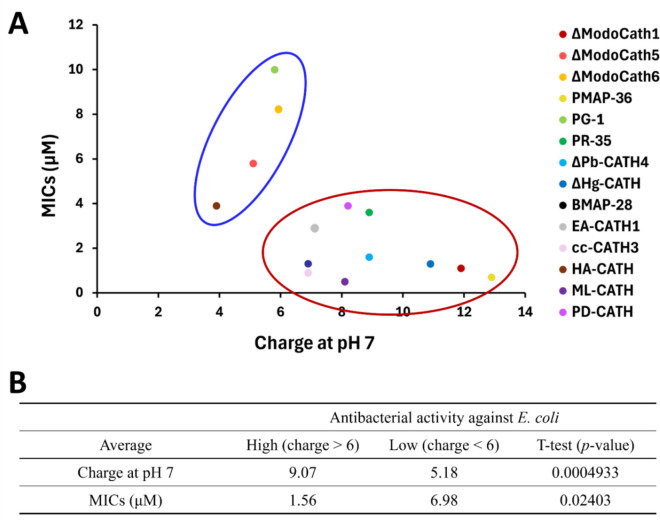
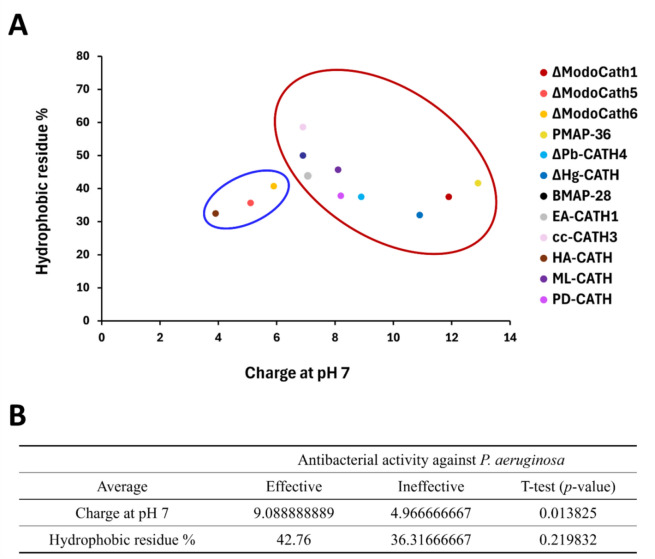
Mastitis, often caused by bacterial infection, is an inflammatory condition affecting the mammary glands. The condition is particularly prevalent in dairy cattle. Current treatment of bovine mastitis heavily relies on the use of antibiotics. To identify alternative solutions to antibiotic use, we evaluated the antimicrobial activity of 14 cathelicidins reported from 10 animal species. In conjunction, we assessed two bacteriocins against the bovine-mastitis causative bacterial panel, consisting of Escherichia coli, Pseudomonas aeruginosa, Staphylococcus aureus, Bacillus cereus, Enterococcus faecalis, Streptococcus agalactiae, Streptococcus dysgalactiae, and Streptococcus equi. Among the antimicrobial peptides (AMPs), cc-CATH3, ML-CATH, and PD-CATH proved to be highly active (minimum inhibitory concentration of 2-41 μg/mL, 0.2-10.3 μM) against all bacterial strains in the panel and field isolates from milk, with elevated somatic cell counts (≥ 500,000 cells/mL). Of the AMPs tested in this study, ML-CATH presented the highest level of effectiveness in controlling mastitis-associated bacterial strains while also possessing minimal cytotoxicity and functional stability against pH change and a high salt condition. The results of in silico analyses on the biochemical features of 12 helical cathelicidins revealed that the charge of AMPs appears to be a major determinant in killing Gram-negative bacteria. Furthermore, we observed a unique motif, "N-P-N", from the sequences of PMAP-36, cc-CATH3, ML-CATH, and PD-CATH that exhibits potent antimicrobial activity against a broad spectrum of bacteria compared to others. Our findings support the proposition that AMPs could serve as effective antimicrobial alternatives to conventional antibiotics in treating complex animal diseases caused by microbial infection, such as bovine mastitis.
乳腺炎通常由细菌感染引起,是一种影响乳腺的炎症性疾病。这种疾病在奶牛中尤为普遍。目前,牛乳腺炎的治疗主要依赖于抗生素的使用。为了寻找替代抗生素使用的方法,我们评估了来自 10 种动物的 14 种 cathelicidins 的抗菌活性。同时,我们评估了两种细菌素对由大肠杆菌、铜绿假单胞菌、金黄色葡萄球菌、蜡样芽孢杆菌、粪肠球菌、无乳链球菌、停乳链球菌和马肠链球菌组成的牛乳腺炎致病细菌谱的抗菌活性。在这些抗菌肽 (AMPs) 中,cc-CATH3、ML-CATH 和 PD-CATH 对该细菌谱中的所有细菌株和来自牛奶的田间分离株均表现出高度的活性(最小抑菌浓度为 2-41μg/mL,0.2-10.3μM),且体细胞计数升高(≥500,000 个细胞/mL)。在本研究中测试的 AMPs 中,ML-CATH 对控制乳腺炎相关细菌株的效果最高,同时对 pH 值变化和高盐条件具有最小的细胞毒性和功能稳定性。对 12 种螺旋 cathelicidins 的生化特征进行的计算机分析结果表明,AMP 的电荷似乎是杀死革兰氏阴性菌的主要决定因素。此外,我们观察到来自 PMAP-36、cc-CATH3、ML-CATH 和 PD-CATH 的序列中的一个独特基序“N-P-N”,与其他 cathelicidins 相比,它对广谱细菌表现出强大的抗菌活性。我们的研究结果支持这样一种观点,即 AMPs 可以作为治疗微生物感染引起的复杂动物疾病(如牛乳腺炎)的有效抗菌替代物,而不是传统抗生素。