Department of Biochemistry, Genetics and Microbiology, University of Pretoria, Hatfield, Pretoria, 0028, South Africa.
Institute for Sustainable Malaria Control, University of Pretoria, Hatfield, Pretoria, 0028, South Africa.
Nat Commun. 2024 Nov 15;15(1):9896. doi: 10.1038/s41467-024-54144-x.
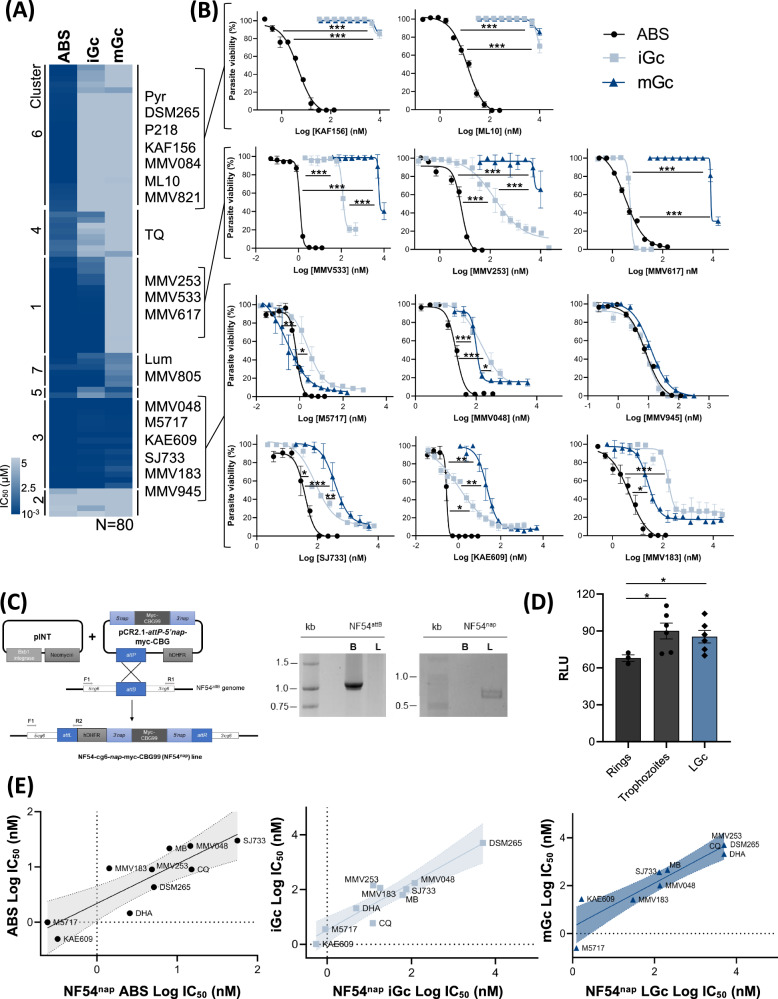
Novel antimalarial compounds targeting both the pathogenic and transmissible stages of the human malaria parasite, Plasmodium falciparum, would greatly benefit malaria elimination strategies. However, most compounds affecting asexual blood stage parasites show severely reduced activity against gametocytes. The impact of this activity loss on a compound's transmission-blocking activity is unclear. Here, we report the systematic evaluation of the activity loss against gametocytes and investigate the confounding factors contributing to this. A threshold for acceptable activity loss between asexual blood stage parasites and gametocytes was defined, with near-equipotent compounds required to prevent continued gametocyte maturation and onward transmission. Target abundance is not predictive of gametocytocidal activity, but instead, lipoidal uptake is the main barrier of dual activity and is influenced by distinct physicochemical properties. This study provides guidelines for the required profiles of potential dual-active antimalarial agents and facilitates the development of effective transmission-blocking compounds.
新型抗疟化合物靶向人类疟原虫(Plasmodium falciparum)的致病性和传染性阶段,将极大地有益于疟疾消除策略。然而,大多数影响无性血期寄生虫的化合物对配子体的活性严重降低。这种活性损失对化合物的传播阻断活性的影响尚不清楚。在这里,我们报告了对配子体活性损失的系统评估,并研究了导致这种损失的混杂因素。定义了可接受的无性血期寄生虫和配子体之间的活性损失阈值,需要近乎等效的化合物来阻止配子体进一步成熟和继续传播。靶标丰度不能预测配子体杀伤活性,而是脂质摄取是双重活性的主要障碍,并受不同的物理化学性质影响。本研究为潜在的双重活性抗疟药物所需的特性提供了指导,并促进了有效的传播阻断化合物的开发。