Bernstein Zachary J, Gierke Taylor R, Dammen-Brower Kris, Tzeng Stephany Y, Zhu Stanley, Chen Sabrina S, Wilson D Scott, Green Jordan J, Yarema Kevin J, Spangler Jamie B
Department of Biomedical Engineering, Johns Hopkins University School of Medicine, Baltimore, Maryland, USA; Translational Tissue Engineering Center, Johns Hopkins University School of Medicine, Baltimore, Maryland, USA.
Department of Biomedical Engineering, Johns Hopkins University School of Medicine, Baltimore, Maryland, USA; Translational Tissue Engineering Center, Johns Hopkins University School of Medicine, Baltimore, Maryland, USA; Institute for NanoBioTechnology, Johns Hopkins University, Baltimore, Maryland, USA.
J Biol Chem. 2024 Dec;300(12):108005. doi: 10.1016/j.jbc.2024.108005. Epub 2024 Nov 16.
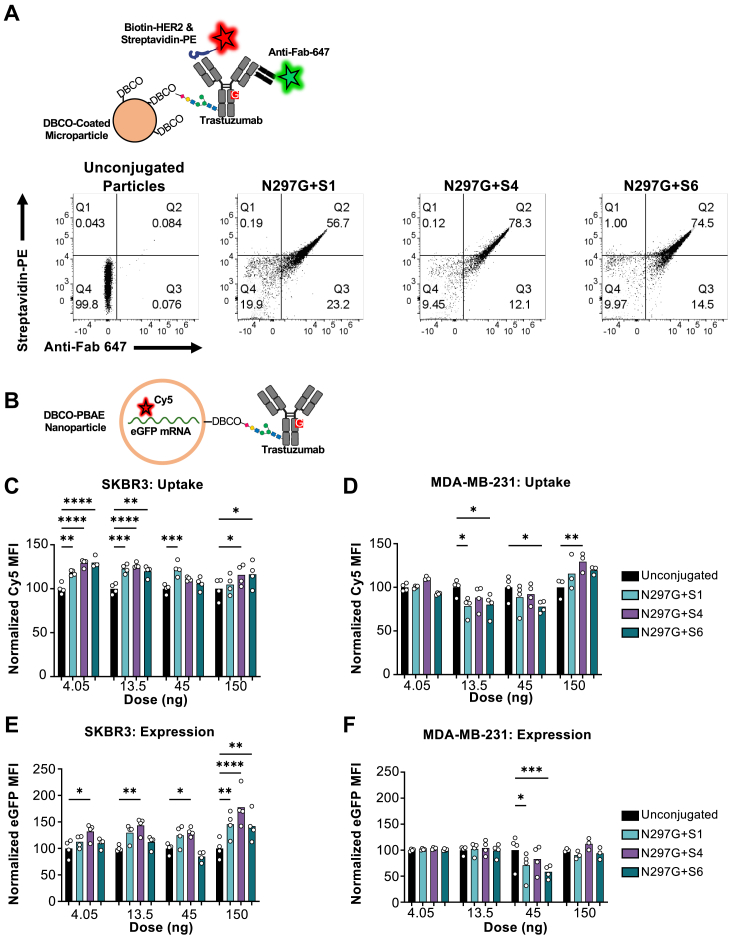
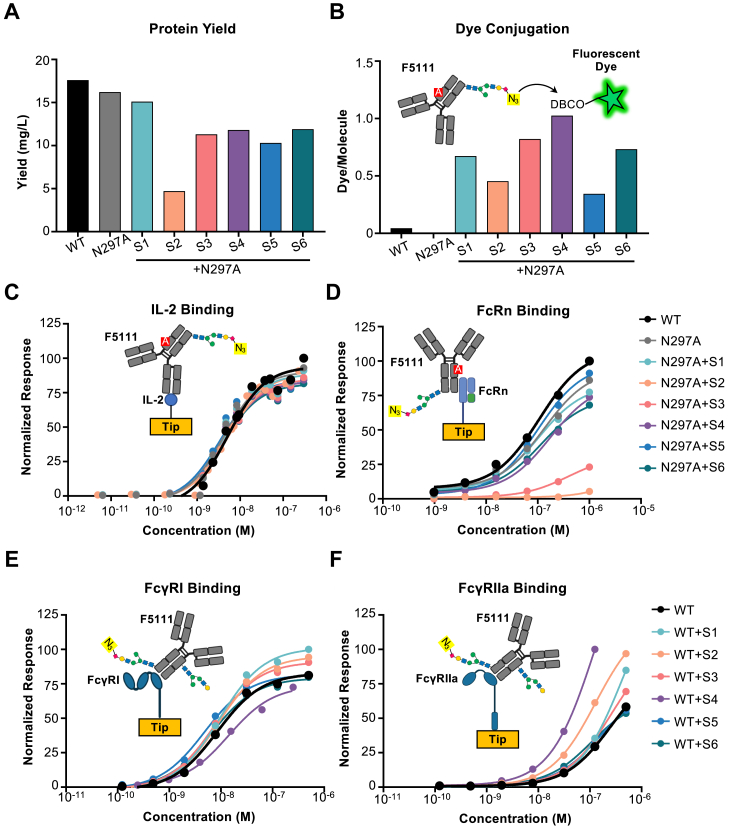
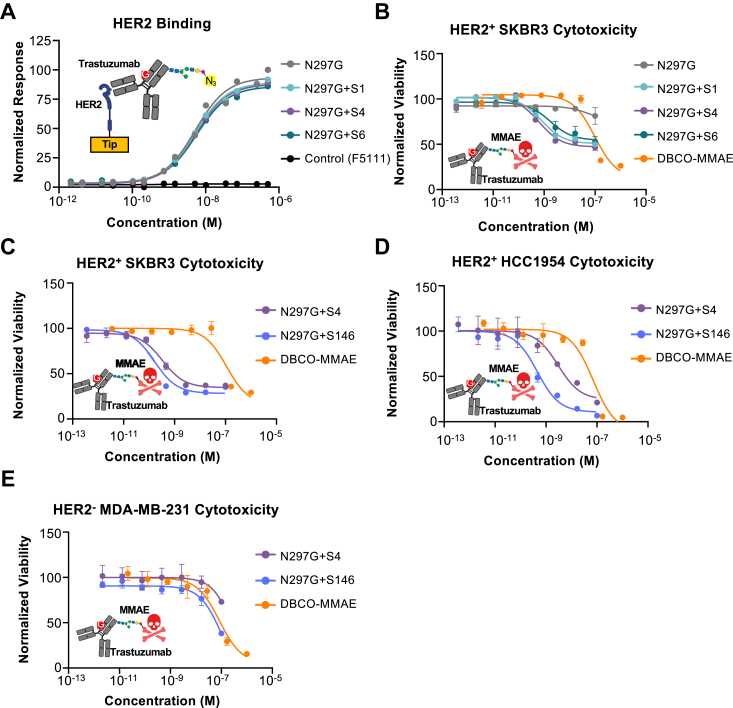
Molecular conjugation to antibodies has emerged as a growing strategy to combine the mechanistic activities of the attached molecule with the specificity of antibodies. A variety of technologies have been applied for molecular conjugation; however, these approaches face several limitations, including disruption of antibody structure, destabilization of the antibody, and/or heterogeneous conjugation patterns. Collectively, these challenges lead to reduced yield, purity, and function of conjugated antibodies. While glycoengineering strategies have largely been applied to study protein glycosylation and manipulate cellular metabolism, these approaches also harbor great potential to enhance the production and performance of protein therapeutics. Here, we devise a novel glycoengineering workflow for the development of site-specific antibody conjugates. This approach combines metabolic glycoengineering using azido-sugar analogs with newly installed N-linked glycosylation sites in the antibody constant domain to achieve specific conjugation to the antibody via the introduced N-glycans. Our technique allows facile and efficient manufacturing of well-defined antibody conjugates without the need for complex or destructive chemistries. Moreover, the introduction of conjugation sites in the antibody fragment crystallizable (Fc) domain renders this approach widely applicable and target agnostic. Our platform can accommodate up to three conjugation sites in tandem, and the extent of conjugation can be tuned through the use of different sugar analogs or production in different cell lines. We demonstrated that our platform is compatible with various use-cases, including fluorescent labeling, antibody-drug conjugation, and targeted gene delivery. Overall, this study introduces a versatile and effective yet strikingly simple approach to producing antibody conjugates for research, industrial, and medical applications.
分子与抗体的偶联已成为一种日益重要的策略,可将所连接分子的作用机制与抗体的特异性相结合。多种技术已被应用于分子偶联;然而,这些方法面临若干限制,包括抗体结构的破坏、抗体的不稳定以及/或异质偶联模式。总体而言,这些挑战导致偶联抗体的产量、纯度和功能降低。虽然糖基工程策略主要用于研究蛋白质糖基化和操纵细胞代谢,但这些方法在提高蛋白质治疗剂的生产和性能方面也具有巨大潜力。在此,我们设计了一种用于开发位点特异性抗体偶联物的新型糖基工程工作流程。该方法将使用叠氮糖类似物的代谢糖基工程与抗体恒定结构域中新安装的N-连接糖基化位点相结合,以通过引入的N-聚糖实现与抗体的特异性偶联。我们的技术允许简便高效地制造明确的抗体偶联物,而无需复杂或破坏性的化学方法。此外,在抗体可结晶片段(Fc)结构域中引入偶联位点使该方法具有广泛的适用性且不依赖于靶点。我们的平台可串联容纳多达三个偶联位点,并且偶联程度可通过使用不同的糖类似物或在不同细胞系中生产来调节。我们证明了我们的平台与各种应用案例兼容,包括荧光标记、抗体-药物偶联和靶向基因递送。总体而言,本研究介绍了一种通用、有效且极其简单的方法,用于生产用于研究、工业和医学应用的抗体偶联物。