Seitter Samantha J, Rossi Alexander J, Hernandez Jonathan M, Nilubol Naris, Schrump David S
Center for Cancer Research, National Cancer Institute, National Institutes of Health, Bethesda, MD, USA.
J Thorac Dis. 2024 Oct 31;16(10):7123-7131. doi: 10.21037/jtd-22-1763. Epub 2024 Oct 30.
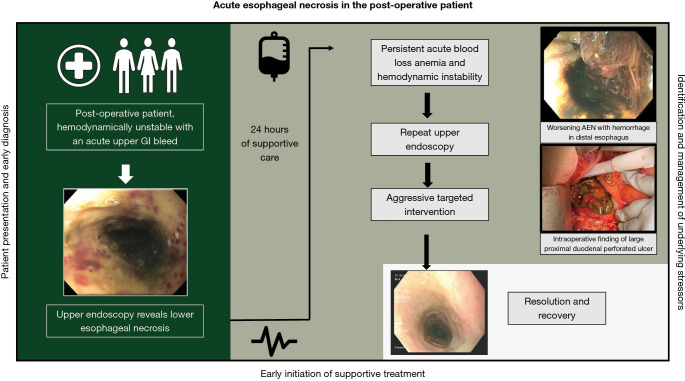
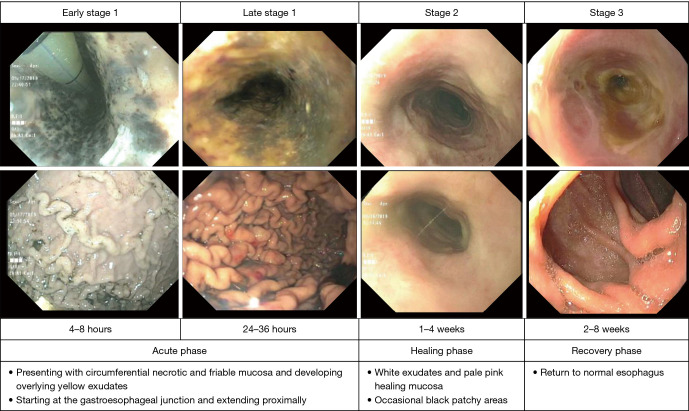
Acute esophageal necrosis (AEN) is a rare clinical condition characterized by diffuse, circumferential, black mucosal discoloration of the distal esophagus. The cause is multifactorial, frequently seen as a sequela to a large physiologic stressor such as trauma, multisystem organ failure, or sepsis. Mortality from AEN has previously been documented as high as 32%. Cases of AEN have been described in the post-operative period, however the etiology has not clearly been defined.
A review of AEN was performed, predominately through case reports and small series. In combination of clinical experience and review, emphasis was placed on identification of shared risk factors, signs and symptoms and efficacious management.
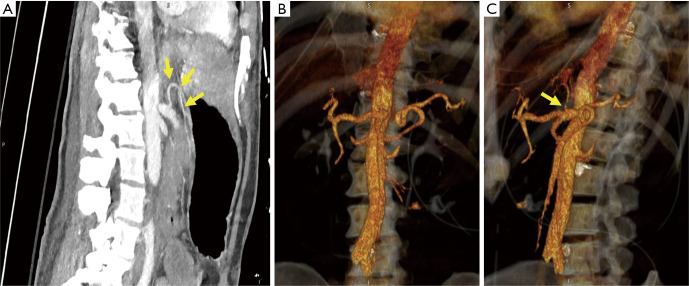
Patients diagnosed with AEN frequently have a documented history of diabetes, hypertension, and chronic kidney disease. Additional risk factors include duodenal and/or gastric ulcer disease, reflux anemia and malignancy. While more common in patients with multiple comorbidities, AEN is seen otherwise healthy post-operative patients. Surgery can act as a trigger for AEN, documented after transplants, oncologic operations, and routine cholecystectomies. The most common presenting symptom was hematemesis. Management focused on early diagnosis with upper endoscopy, supportive care and reversal of underlying stressors can mitigate morbidity and mortality.
AEN is a rare and life-threatening condition that requires early identification and intervention to prevent severe morbidity and mortality. It not only occurs in patients with multiple comorbidities but also in otherwise healthy patients in response to a large stressor, such as surgery.
急性食管坏死(AEN)是一种罕见的临床病症,其特征为食管远端黏膜呈弥漫性、环形黑色变色。病因是多因素的,常被视为诸如创伤、多系统器官衰竭或脓毒症等重大生理应激源的后遗症。此前文献记载AEN的死亡率高达32%。AEN病例在术后阶段已有描述,但其病因尚未明确界定。
主要通过病例报告和小系列研究对AEN进行了综述。结合临床经验和综述,重点关注共同危险因素、体征和症状的识别以及有效的管理方法。
被诊断为AEN的患者常有糖尿病、高血压和慢性肾病的病史记录。其他危险因素包括十二指肠和/或胃溃疡疾病、反流性贫血和恶性肿瘤。虽然AEN在有多种合并症的患者中更常见,但也见于其他方面健康的术后患者。手术可成为AEN的诱因,在移植、肿瘤手术和常规胆囊切除术后均有记载。最常见的症状是呕血。管理重点在于通过上消化道内镜检查进行早期诊断,支持性治疗以及消除潜在应激源可降低发病率和死亡率。
AEN是一种罕见且危及生命的病症,需要早期识别和干预以预防严重的发病率和死亡率。它不仅发生在有多种合并症的患者中,也发生在其他方面健康的患者身上,是对诸如手术等重大应激源的反应。