Gangwar Vibha, Verma Manish, Singh Arvind K, Agarwal Jyotsana, Kumari Rashmi, Garg Jaya, Shukla Vinita, Pathak Anumesh K, Jasrotia Rajani Bala, Kumari Sarita
Department of Physiology, Dr. Ram Manohar Lohia Institute of Medical Sciences, Lucknow, IND.
Department of Community Medicine, Dr. Ram Manohar Lohia Institute of Medical Sciences, Lucknow, IND.
Cureus. 2024 Oct 15;16(10):e71505. doi: 10.7759/cureus.71505. eCollection 2024 Oct.
Vaccination time may provide an opportunity to advance immunogenicity in terms of the immune system's circadian nature. This analytical study was planned to determine the impact of forenoon and afternoon administration of the COVID-19 vaccine to adults on the magnitude of antibody response.
A total of 33 healthy adults with no history of COVID-19 infection or any other disease participated in the study. They were allotted a forenoon (900-1200 hours) or afternoon (1200-500 hours) slot for vaccination. They were categorized as a forenoon or afternoon group, with 16 subjects in the forenoon and 17 in the afternoon group. With the consent of the participants, a blood sample was collected before vaccination, 30 days after the first and 30 days after the second dose of vaccination from all the subjects. The antibody titer response was measured using a commercial semi-quantitative assay, SARS-CoV-2 IgG II.
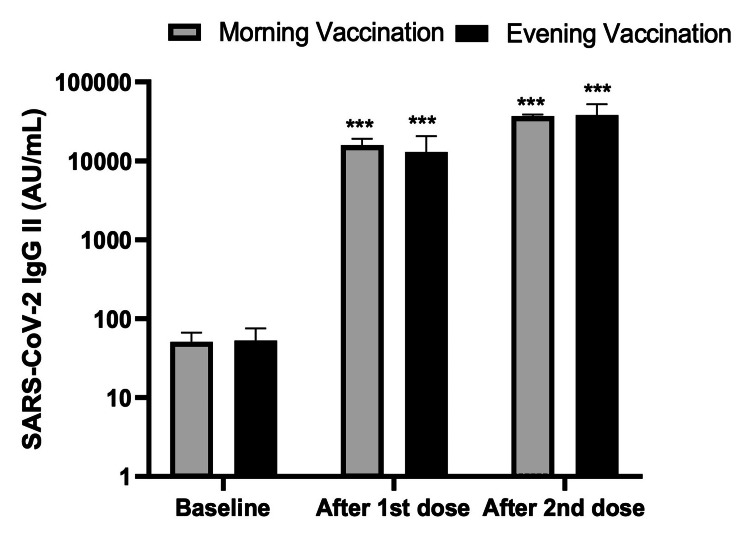
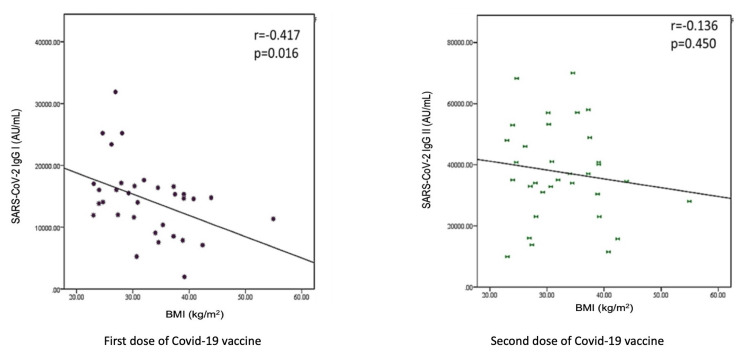
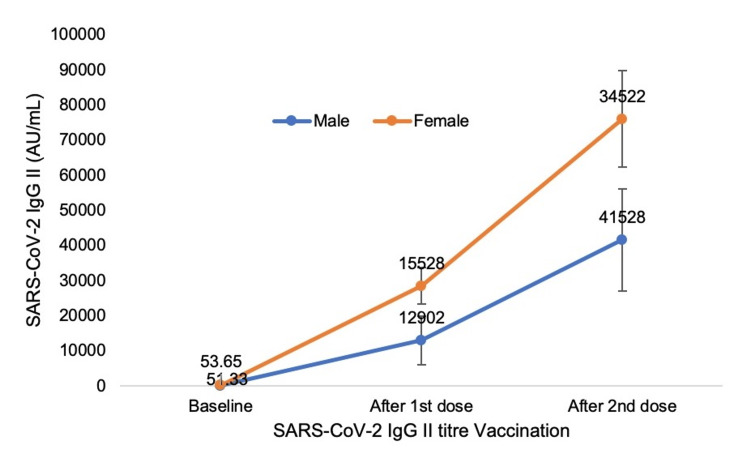
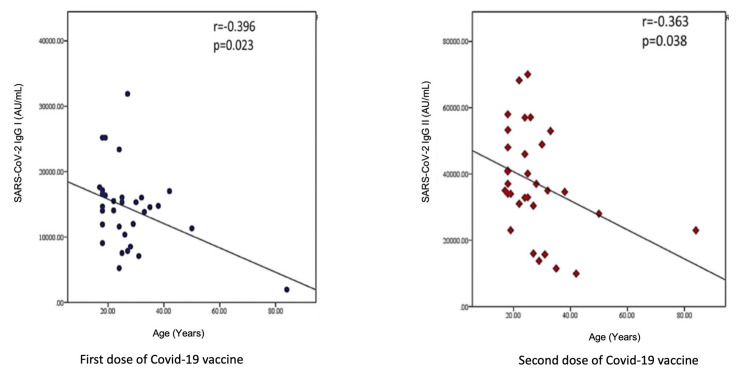
The baseline antibody titer against COVID-19 was 51.41 ± 22.22 AU/mL and 53.21 ± 15.67 AU/mL in the forenoon and afternoon groups, respectively, which increased to 15773.00 ± 3231.41 AU/mL and 12970.82 ± 7608.00 AU/mL after 30 days of the first dose of the COVID-19 vaccine in the forenoon and afternoon groups, respectively. This further increased to 37007.00 ± 1697.75 AU/mL and 38012.00 ± 14001.16 AU/mL after 30 days of the second dose of the COVID-19 vaccine in the forenoon and afternoon groups, respectively. There was no difference in antibody response in subjects with forenoon and afternoon vaccinations. There was no significant difference in antibody titer in males vs. females. The study reported that antibody titers decreased with increasing age and BMI of participants.
The time of the day of vaccination does not impact the immune response to COVID-19, but age and BMI are important factors to consider during vaccination against SARS-CoV-2 in the adult population.
鉴于免疫系统的昼夜节律特性,疫苗接种时间可能为提高免疫原性提供契机。本分析研究旨在确定成人在上午和下午接种新冠疫苗对抗体反应强度的影响。
共有33名无新冠病毒感染史或其他疾病史的健康成年人参与本研究。他们被分配到上午(9:00 - 12:00)或下午(12:00 - 17:00)时段进行疫苗接种。他们被分为上午组或下午组,上午组有16名受试者,下午组有17名受试者。在参与者同意的情况下,于接种疫苗前、首剂接种后30天以及所有受试者第二剂接种后30天采集血样。使用商业半定量检测方法SARS-CoV-2 IgG II测量抗体滴度反应。
上午组和下午组针对新冠病毒的基线抗体滴度分别为51.41±22.22 AU/mL和53.21±15.67 AU/mL,在上午组和下午组首剂接种新冠疫苗30天后分别增至15773.00±3231.41 AU/mL和12970.82±7608.00 AU/mL。在上午组和下午组第二剂接种新冠疫苗30天后,这一数值进一步分别增至37007.00±1697.75 AU/mL和38012.00±14001.16 AU/mL。上午和下午接种疫苗的受试者在抗体反应方面无差异。男性与女性的抗体滴度无显著差异。该研究报告称,抗体滴度随参与者年龄和体重指数的增加而降低。
一天中的疫苗接种时间不会影响对新冠病毒的免疫反应,但在成人人群接种针对严重急性呼吸综合征冠状病毒2的疫苗时,年龄和体重指数是需要考虑的重要因素。