Antariksa Naura Fakhira, Di Antonio Marco
Imperial College London, Department of Chemistry, Molecular Sciences Research Hub, 82 Wood Lane, London W12 0BZ, U.K.
The Francis Crick Institute, 1 Midland Road, London NW1 1AT, U.K.
Acc Chem Res. 2024 Dec 3;57(23):3397-3406. doi: 10.1021/acs.accounts.4c00574. Epub 2024 Nov 18.
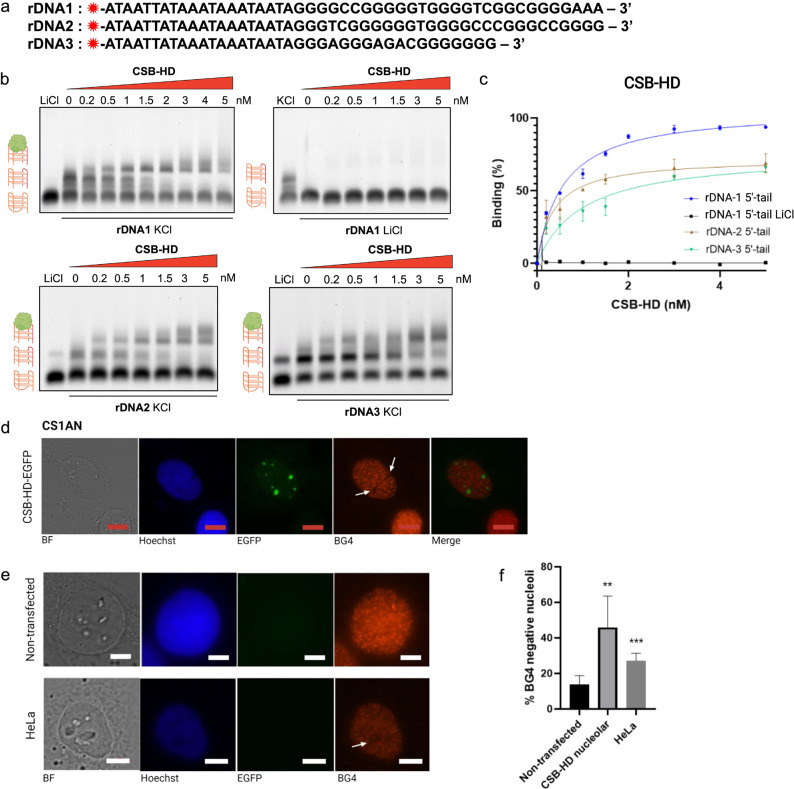
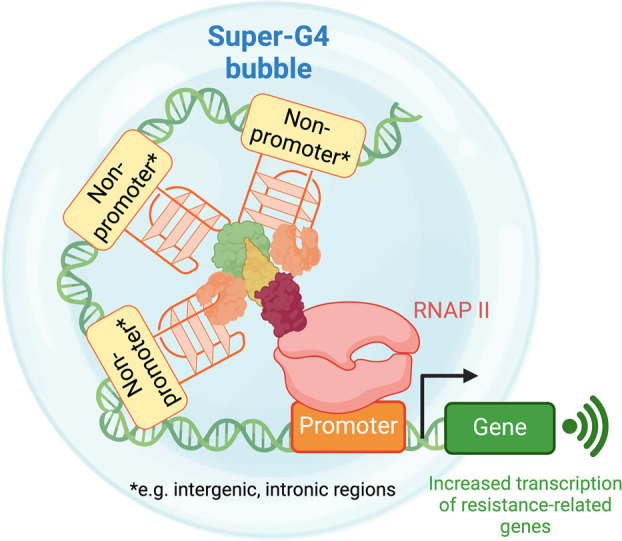
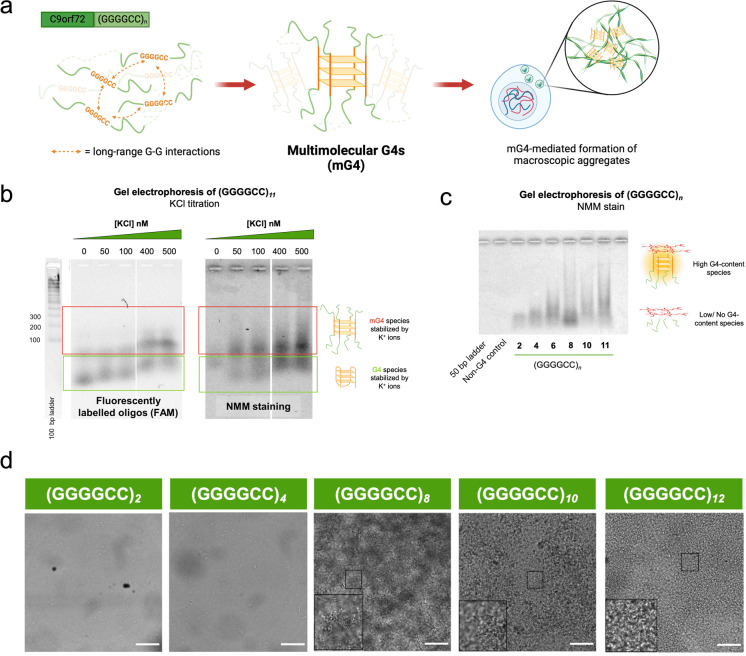
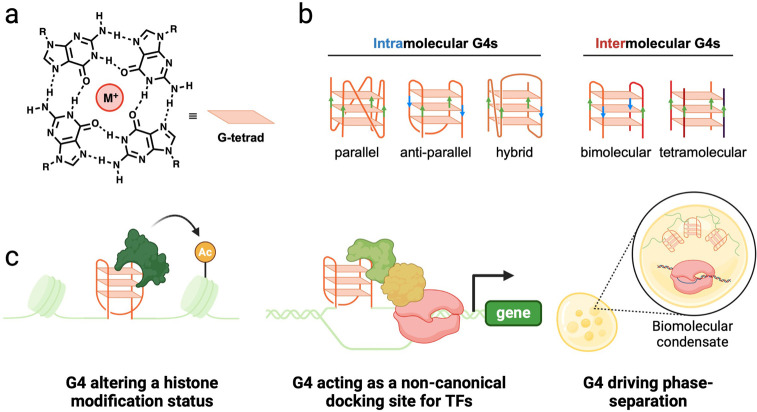
The ability of genomic DNA to adopt non-canonical secondary structures known as G-quadruplexes (G4s) under physiological conditions has been recognized for its potential regulatory function of various biological processes. Among those, transcription has recently emerged as a key process that can be heavily affected by G4 formation, particularly when these structures form at gene promoters. While the presence of G4s within gene promoters has been traditionally associated with transcriptional inhibition, in a model whereby G4s act as roadblocks to polymerase elongation, recent genomics experiments have revealed that the regulatory role of G4s in transcription is more complex than initially anticipated. Indeed, earlier studies linking G4-formation and transcription mainly relied on small-molecule ligands to stabilize and promote G4s, which might lead to disruption of protein-DNA interactions and local environments and, therefore, does not necessarily reflect the endogenous function of G4s at gene promoters. There is now strong evidence pointing toward G4s being associated with transcriptional enhancement, rather than repression, through multifaceted mechanisms such as recruitment of key transcriptional proteins, molding of chromatin architecture, and mode of phase separation. In this Account, we explore pivotal findings from our research on a particular subset of G4s, namely, those formed through interactions between distant genomic locations or independent nucleic acid strands, referred to as multimolecular G4s (mG4s), and discuss their active role in transcriptional regulation. We present our recent studies suggesting that the formation of mG4s may positively regulate transcription by inducing phase-separation and selectively recruiting chromatin-remodeling proteins. Our work highlighted how mG4-forming DNA and RNA sequences can lead to liquid-liquid phase separation (LLPS) in the absence of any protein. This discovery provided new insights into a potential mechanism by which mG4 can positively regulate active gene expression, namely, by establishing DNA networks based on distal guanine-guanine base pairing that creates liquid droplets at the interface of DNA loops. This is particularly relevant in light of the increasing evidence suggesting that G4 structures formed at enhancers can drive elevated expression of the associated genes. Given the complex three-dimensional nature of enhancers, our findings underscore how mG4 formation at enhancers would be particularly beneficial for promoting transcription. Moreover, we will elaborate on our recent discovery of a DNA repair and chromatin remodeling protein named Cockayne Syndrome B (CSB) that displays astonishing binding selectivity to mG4s over the more canonical unimolecular counterparts, suggesting another role of mG4s for molding chromatin architecture at DNA loops sites. Altogether, the studies presented in this Account suggest that mG4 formation in a chromatin context could be a crucial yet underexplored structural feature for transcriptional regulation. Whether mG4s actively regulate transcription or are formed as a mere consequence of chromatin plasticity remains to be elucidated. Still, given the novel insights offered by our research and the potential for mG4s to be selectively targeted by chemical and biological probes, we anticipate that further studies into the fundamental biology regulated by these structures can provide unprecedented opportunities for the development of therapeutic agents aimed at targeting nucleic acids from a fresh perspective.
基因组DNA在生理条件下形成被称为G-四链体(G4s)的非经典二级结构的能力,因其对各种生物过程的潜在调节功能而受到认可。其中,转录最近已成为一个关键过程,会受到G4形成的严重影响,特别是当这些结构在基因启动子处形成时。虽然基因启动子内G4s的存在传统上与转录抑制相关,即在一种模型中G4s充当聚合酶延伸的障碍,但最近的基因组学实验表明,G4s在转录中的调节作用比最初预期的更为复杂。事实上,早期将G4形成与转录联系起来的研究主要依赖小分子配体来稳定和促进G4s,这可能导致蛋白质-DNA相互作用和局部环境的破坏,因此不一定反映G4s在基因启动子处的内源性功能。现在有强有力的证据表明,G4s通过多方面的机制,如关键转录蛋白的招募、染色质结构的塑造和相分离模式参与转录增强,而非抑制。在本综述中,我们探讨了我们对特定G4子集的研究中的关键发现,即那些通过远距离基因组位置或独立核酸链之间的相互作用形成的G4s,称为多分子G4s(mG4s),并讨论它们在转录调控中的积极作用。我们展示了我们最近的研究,表明mG4s的形成可能通过诱导相分离和选择性招募染色质重塑蛋白来正向调节转录。我们的工作突出了形成mG4的DNA和RNA序列如何在没有任何蛋白质的情况下导致液-液相分离(LLPS)。这一发现为mG4能够正向调节活性基因表达的潜在机制提供了新见解,即通过基于远端鸟嘌呤-鸟嘌呤碱基配对建立DNA网络,在DNA环的界面处形成液滴。鉴于越来越多的证据表明在增强子处形成的G4结构可以驱动相关基因的高表达,这一点尤为重要。考虑到增强子复杂的三维性质,我们的发现强调了在增强子处形成mG4对促进转录将特别有益。此外,我们将详细阐述我们最近发现的一种名为科凯恩综合征B(CSB)的DNA修复和染色质重塑蛋白,它对mG4s表现出比对更典型的单分子对应物惊人的结合选择性,这表明mG4s在DNA环位点塑造染色质结构方面的另一个作用。总之,本综述中提出的研究表明,染色质环境中mG4的形成可能是转录调控中一个关键但尚未充分探索的结构特征。mG4s是积极调节转录还是仅仅作为染色质可塑性 的结果而形成,仍有待阐明。不过,鉴于我们的研究提供的新见解以及mG4s被化学和生物探针选择性靶向的潜力,我们预计对这些结构所调节的基础生物学的进一步研究可以为从新角度靶向核酸的治疗药物开发提供前所未有的机会。