Department for Biological Sciences and Pathobiology, Animal Breeding and Genetics, University of Veterinary Medicine Vienna, Vienna 1210, Austria.
Vienna Graduate School of Population Genetics, University of Veterinary Medicine Vienna, Vienna 1210, Austria.
Proc Natl Acad Sci U S A. 2024 Dec 3;121(49):e2414408121. doi: 10.1073/pnas.2414408121. Epub 2024 Nov 18.
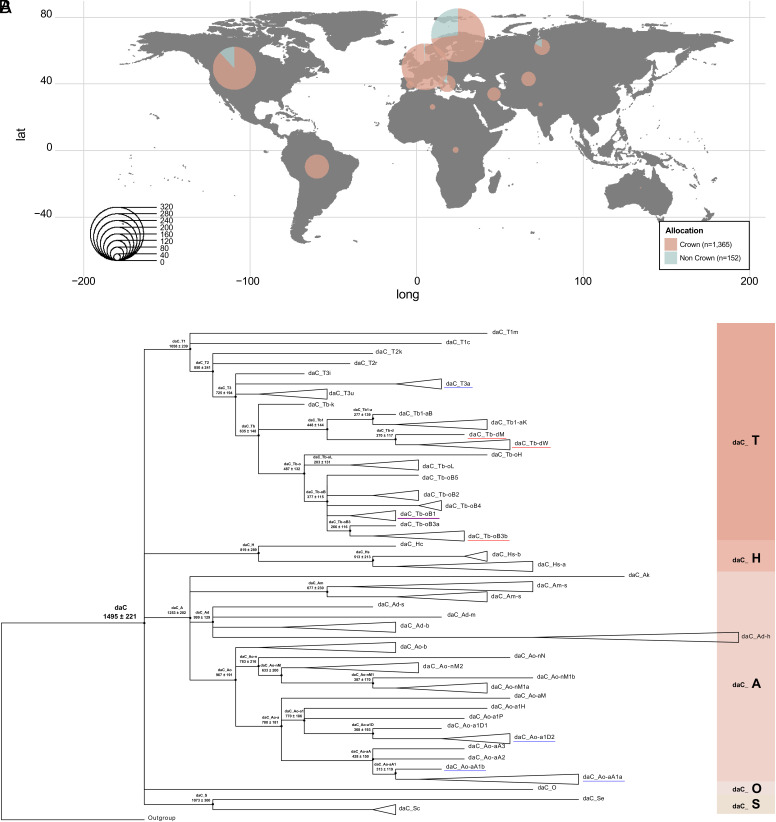
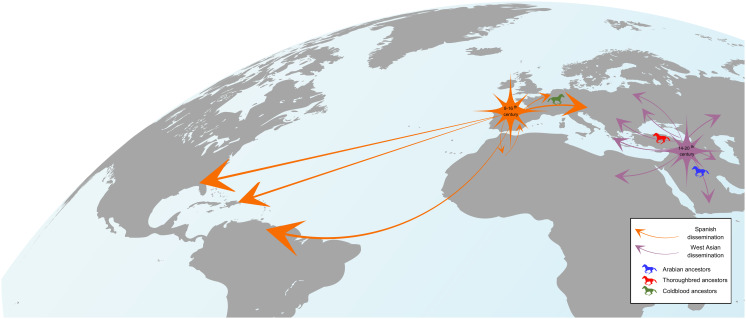
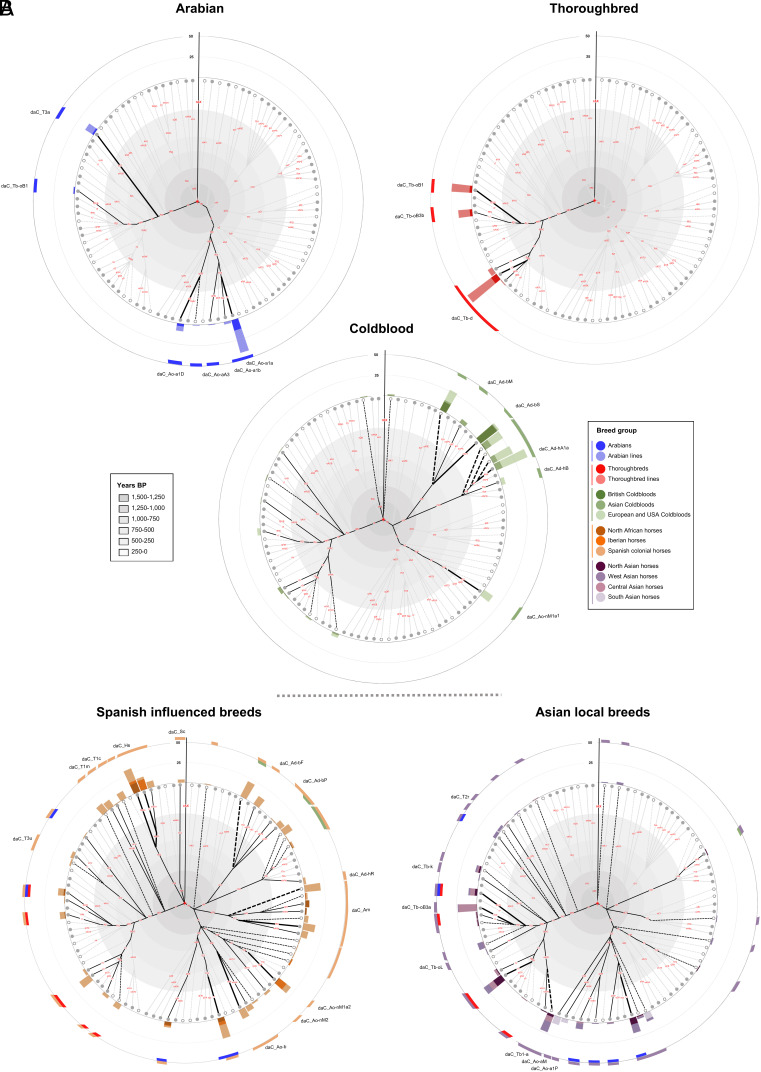
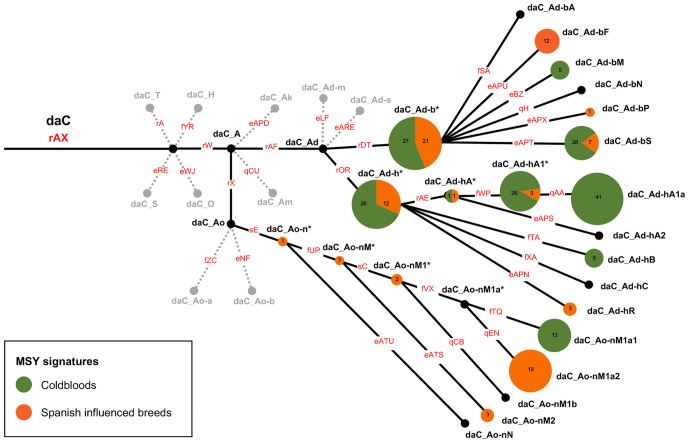
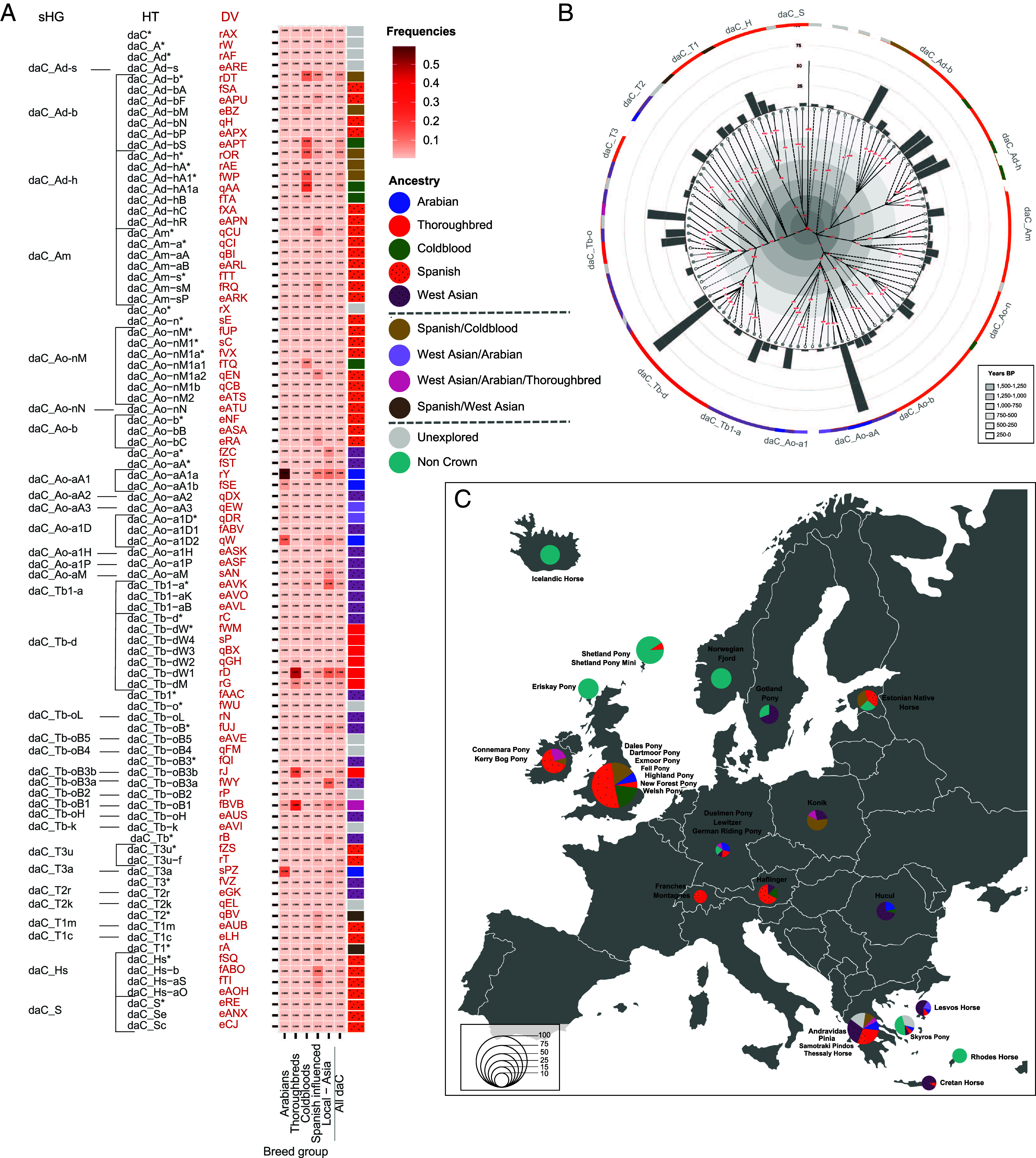
Since their domestication, horses have accompanied mankind, and humans have constantly shaped horses according to their needs through stallion-centered breeding. Consequently, the male-specific portion of the Y chromosome (MSY) is extremely uniform in modern horse breeds. The majority of stallions worldwide carry MSY haplotypes (HT) attributed to an only ~1,500-y-old, so-called, "Crown" haplogroup. The predominance of the Crown in modern horse breeds is thought to represent a footprint of the vast impact of stallions of "Oriental origin" in the past millennium. Here, we report the results of a fine-scaled MSY haplotyping of large datasets of patrilines comprising 1,517 males of 189 modern horse breeds, covering a broad phenotypic and geographic spectrum. We can disentangle the multilayered influence of Oriental stallions over the last few hundred years, exposing the intense linebreeding and the wide-ranging impact of Arabian, English Thoroughbred, and Coldblood sires. Iberian and New World horse breeds contain a wide range of diversified Crown lineages. Their broad HT spectrum illustrates the spread of horses of Oriental origin via the Iberian Peninsula after the Middle Ages, which is commonly referred to as the "Spanish influence." Our survey also revealed a second major historical dissemination of horses from Western Asia, attributed to the expansion of the Ottoman Empire. Our analysis shows that MSY analysis can uncover the complex history of horse breeds and can be used to establish the paternal ancestry of modern horse breeds.
自被驯化以来,马就一直陪伴着人类,人类通过以种马为中心的选育不断地按照自身需求来塑造马。因此,现代马品种的 Y 染色体雄性特异性部分(MSY)极其统一。全世界大多数种马都携带 MSY 单倍型(HT),这些 HT 归因于一个只有约 1500 年历史的所谓“冠”单倍群。“冠”在现代马品种中的优势被认为代表了过去千年中“东方起源”的种马巨大影响的足迹。在这里,我们报告了对包含 189 个现代马品种的 1517 个雄性个体的大型系谱数据集进行精细 MSY 单倍型分析的结果,这些系谱涵盖了广泛的表型和地理范围。我们可以梳理出过去几百年中东方种马的多层次影响,揭示出阿拉伯马、英国纯血马和冷血马的强烈近交和广泛影响。伊比利亚和新世界马品种包含广泛的多样化的冠系。它们广泛的 HT 谱说明了自中世纪以来东方起源的马通过伊比利亚半岛的传播,这通常被称为“西班牙影响”。我们的调查还揭示了第二次来自西亚的马的主要历史传播,这归因于奥斯曼帝国的扩张。我们的分析表明,MSY 分析可以揭示马品种的复杂历史,并可用于确定现代马品种的父系祖先。