Wellcome Sanger Institute, Wellcome Genome Campus, Hinxton, UK.
Department of Systems Biology, The University of Texas MD Anderson Cancer Center, Houston, TX, USA.
Nat Immunol. 2024 Dec;25(12):2320-2330. doi: 10.1038/s41590-024-02018-1. Epub 2024 Nov 18.
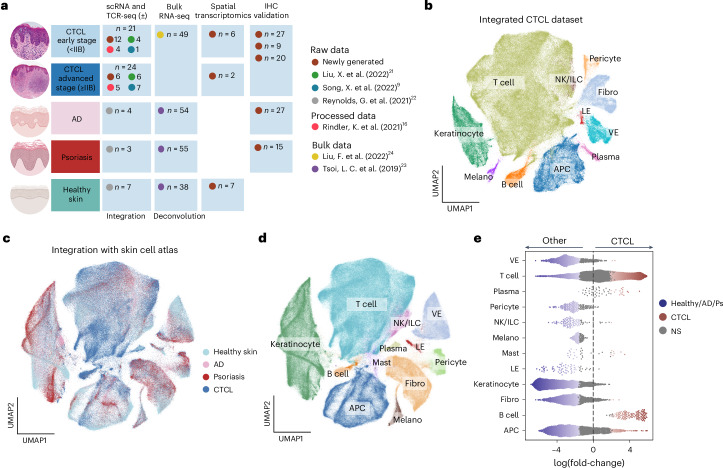
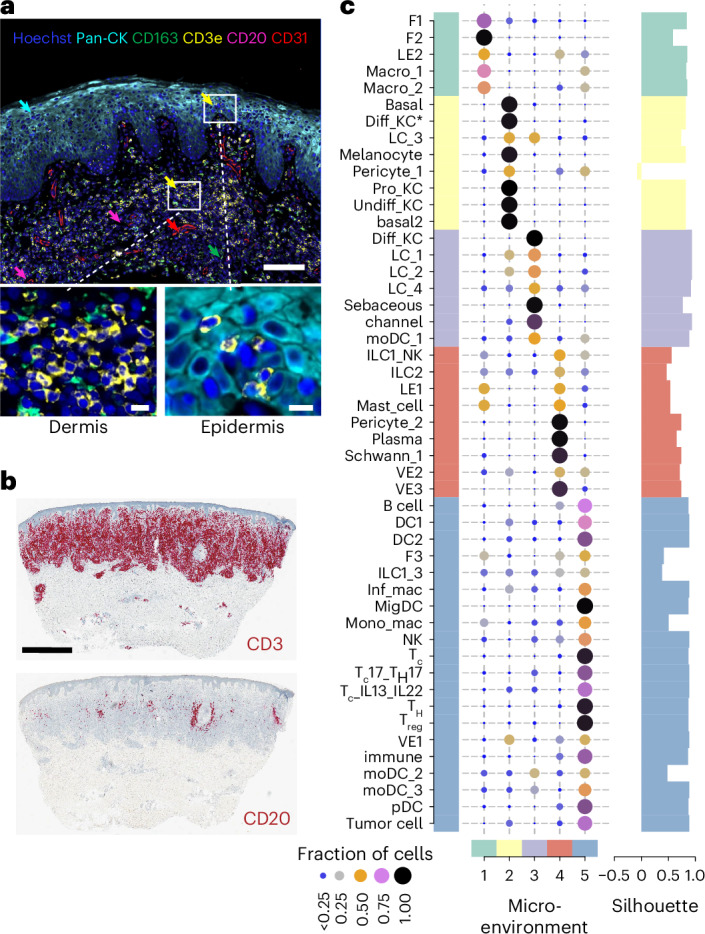
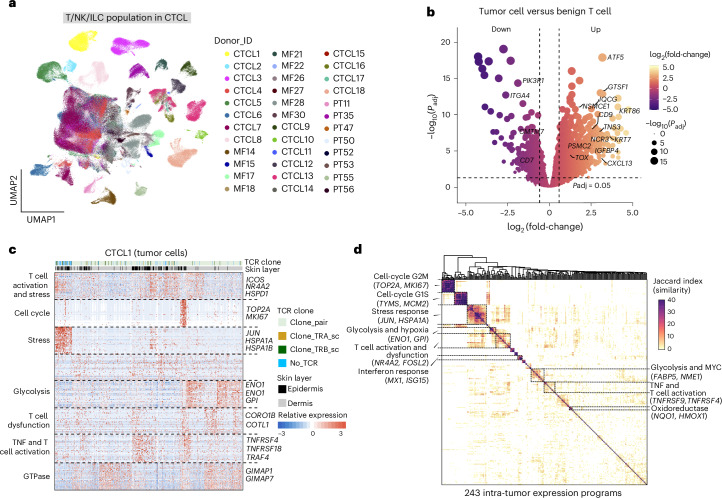
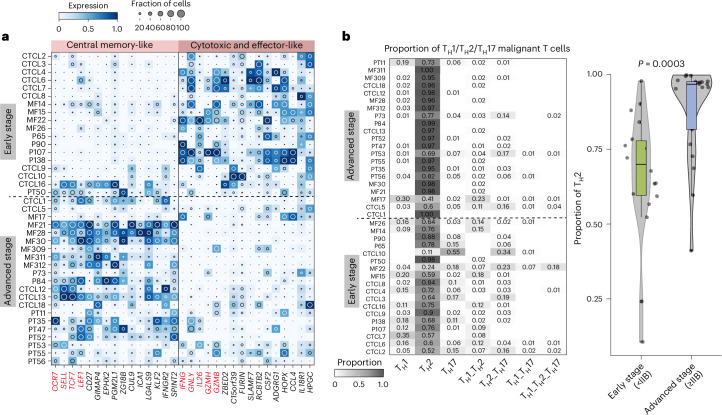
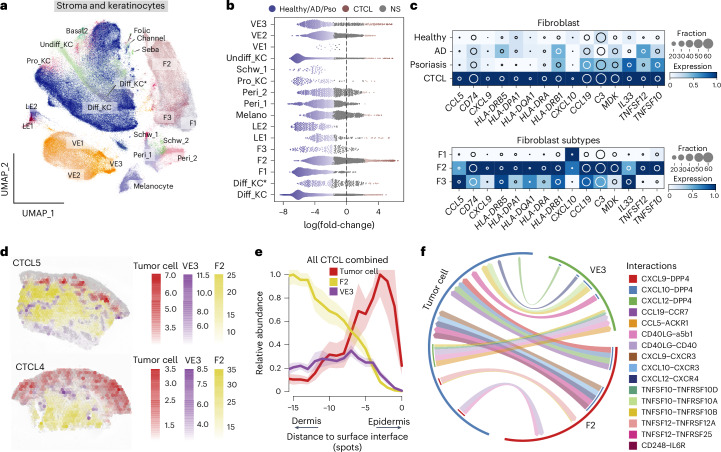
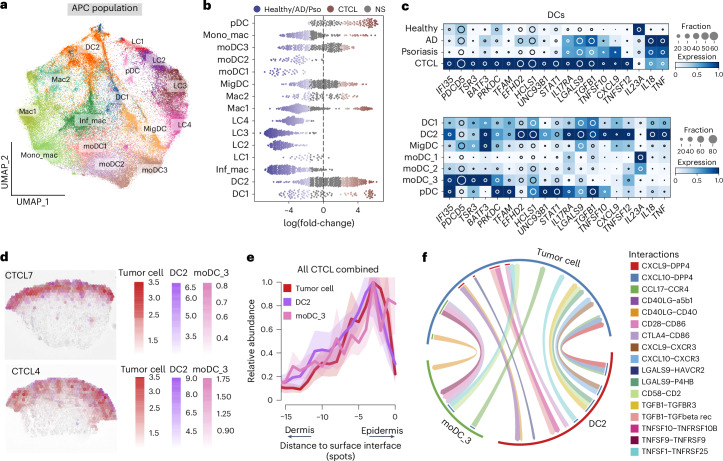
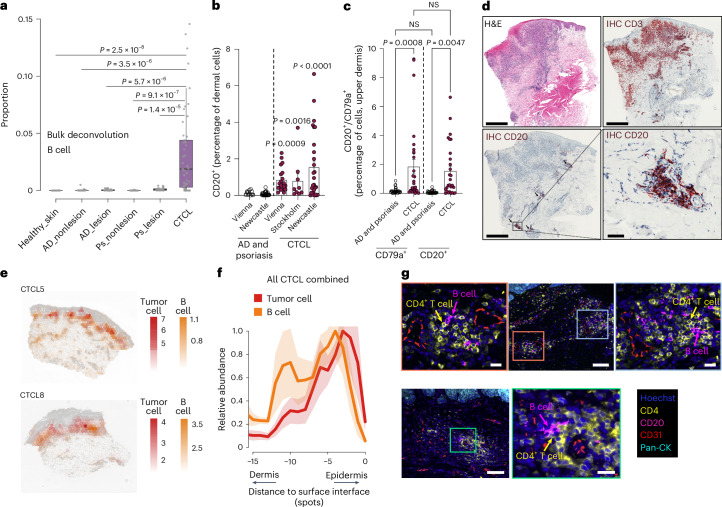
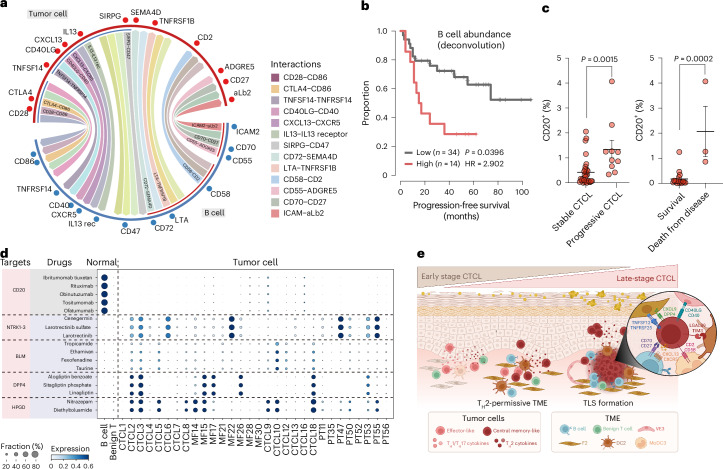
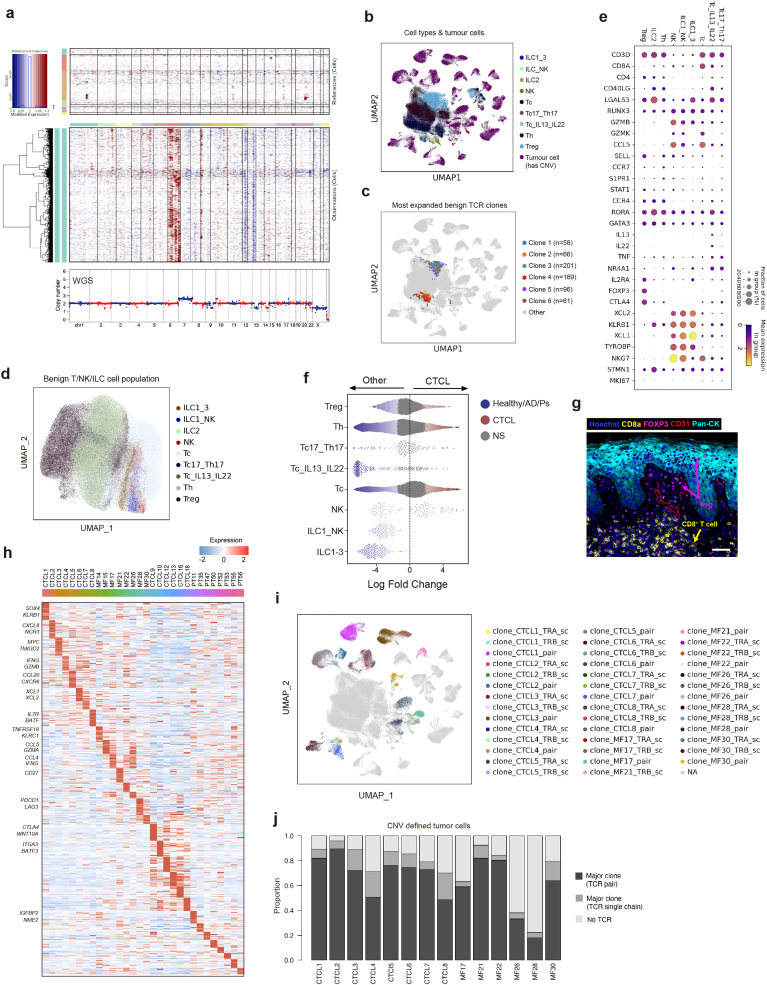
Cutaneous T cell lymphoma (CTCL) is a potentially fatal clonal malignancy of T cells primarily affecting the skin. The most common form of CTCL, mycosis fungoides, can be difficult to diagnose, resulting in treatment delay. We performed single-cell and spatial transcriptomics analysis of skin from patients with mycosis fungoides-type CTCL and an integrated comparative analysis with human skin cell atlas datasets from healthy and inflamed skin. We revealed the co-optation of T helper 2 (T2) cell-immune gene programs by malignant CTCL cells and modeling of the tumor microenvironment to support their survival. We identified MHC-II fibroblasts and dendritic cells that can maintain T2 cell-like tumor cells. CTCL tumor cells are spatially associated with B cells, forming tertiary lymphoid structure-like aggregates. Finally, we validated the enrichment of B cells in CTCL and its association with disease progression across three independent patient cohorts. Our findings provide diagnostic aids, potential biomarkers for disease staging and therapeutic strategies for CTCL.
皮肤 T 细胞淋巴瘤 (CTCL) 是一种潜在致命的 T 细胞克隆性恶性肿瘤,主要影响皮肤。蕈样真菌病是 CTCL 最常见的形式,其诊断较为困难,导致治疗延误。我们对蕈样真菌病型 CTCL 患者的皮肤进行了单细胞和空间转录组学分析,并与健康和炎症皮肤的人类皮肤细胞图谱数据集进行了综合比较分析。我们揭示了恶性 CTCL 细胞对辅助性 T 细胞 2(T2)细胞免疫基因程序的共调控,以及对肿瘤微环境的建模以支持其存活。我们鉴定了 MHC-II 成纤维细胞和树突状细胞,它们可以维持 T2 样肿瘤细胞。CTCL 肿瘤细胞与 B 细胞在空间上相关,形成类似三级淋巴结构的聚集物。最后,我们在三个独立的患者队列中验证了 CTCL 中 B 细胞的富集及其与疾病进展的相关性。我们的研究结果为 CTCL 提供了诊断辅助工具、疾病分期的潜在生物标志物和治疗策略。