
血液透析患者中由膜性结构引起的血管通路狭窄
Vascular Access Stenosis Caused by Membranous Structure in Patients on Hemodialysis.
作者信息
Kadoya Yoshisuke, Demachi Hiroshi, Mochizuki Kentaro, Abo Hitoshi, Saito Junko, Kanatani Mao, Miyakawa Kosuke, Takatori Masatoshi
机构信息
Department of Diagnostic Radiology, Toyama Prefectural Central Hospital, Japan.
出版信息
Interv Radiol (Higashimatsuyama). 2024 Jul 24;9(3):164-171. doi: 10.22575/interventionalradiology.2023-0028. eCollection 2024 Nov 1.
PURPOSE
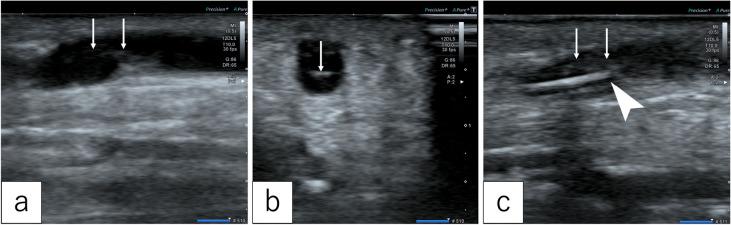
A membranous structure (MS) may be seen on ultrasound at a site of vascular access (VA) stenosis in patients on hemodialysis. It can also be encountered during percutaneous transluminal angioplasty (PTA) and be impassable from one side but easily passed from the other. This study aimed to examine the characteristics of MS cases and how to treat them.
MATERIAL AND METHOD
Percutaneous transluminal angioplasty performed at our hospital for arteriovenous fistula-vascular access stenosis between July 2021 and June 2022 were identified. They were divided into two groups: membranous structure and nonmembranous structure. Data of patients such as age, history of dialysis and vascular access use, number of percutaneous transluminal angioplastys performed for vascular access, and diabetes status were collected. Membranous structure cases were examined in terms of puncture direction.
RESULT
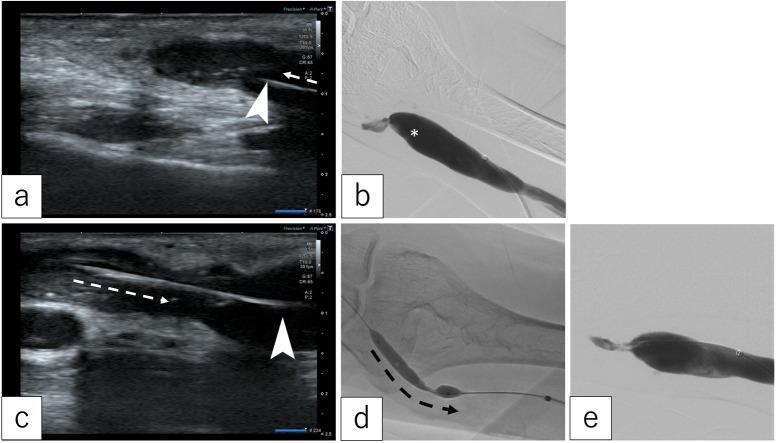
A total of 72 percutaneous transluminal angioplasty were performed in 37 patients. Membranous structure was identified in nine percutaneous transluminal angioplastys. Patients with membranous structure were older than those without membranous structure (mean age 75.3 ± 7.54 vs. 70.0 ± 10.8 years, = 0.21) and tended to have a history of vascular access use (57.6 ± 106 vs. 48.4 ± 59.8 months, = 0.28), a history of dialysis (152 ± 95.6 vs. 91.2 ± 116 months, = 0.02), fewer percutaneous transluminal angioplasty procedures (1.44 ± 0.726 vs. 3.24 ± 2.69, = 0.02), and lower incidence of diabetes (1 vs. 38 cases). In the nonmembranous structure group, all percutaneous transluminal angioplastys performed were successful. In the membranous structure group, six percutaneous transluminal angioplastys were successful, two were impassable, and one was acutely occluded. The successful cases and the acute obstruction case were passed by centrally directed puncture. Impassable cases involved peripheral directional puncture.
CONCLUSIONS
Vascular access stenosis can be caused by membranous structure and successfully treated by bidirectional puncture.
目的
血液透析患者血管通路(VA)狭窄部位在超声检查时可能会看到膜状结构(MS)。在经皮腔内血管成形术(PTA)过程中也可能遇到这种情况,且从一侧无法通过,但从另一侧很容易通过。本研究旨在探讨膜状结构病例的特征以及如何进行治疗。
材料与方法
确定2021年7月至2022年6月在我院进行的用于动静脉内瘘 - 血管通路狭窄的经皮腔内血管成形术。将其分为两组:膜状结构组和非膜状结构组。收集患者的年龄、透析史和血管通路使用情况、因血管通路进行经皮腔内血管成形术的次数以及糖尿病状况等数据。对膜状结构病例进行穿刺方向检查。
结果
37例患者共进行了72次经皮腔内血管成形术。在9次经皮腔内血管成形术中发现了膜状结构。有膜状结构的患者比没有膜状结构的患者年龄更大(平均年龄75.3±7.54岁对70.0±10.8岁,P = 0.21),且往往有血管通路使用史(57.6±106个月对48.4±59.8个月,P = 0.28)、透析史(152±95.6个月对91.2±116个月,P = 0.02),经皮腔内血管成形术的次数较少(1.44±0.726次对3.24±2.69次,P = 0.02),糖尿病发生率较低(1例对38例)。在非膜状结构组中,所有进行的经皮腔内血管成形术均成功。在膜状结构组中,6次经皮腔内血管成形术成功,2次无法通过,1次急性闭塞。成功病例和急性阻塞病例通过中心定向穿刺通过。无法通过的病例涉及外周定向穿刺。
结论
血管通路狭窄可由膜状结构引起,双向穿刺可成功治疗。




 Zotero 插件