Ministry of Health, Dakar, Senegal.
Centers for Disease Control and Prevention, Georgia, United States.
BMC Public Health. 2024 Nov 22;24(1):3246. doi: 10.1186/s12889-024-20692-6.
The COVID-19 pandemic highlights the importance of strong surveillance systems in detecting and responding to public health threats. We sought to evaluate attributes of Keur Massar district's existing COVID-19 surveillance system.
A descriptive, cross-sectional study was conducted in June 2022; desk review covered data collected from March 03, 2020 to May 31, 2022 in 18 health posts. Data were collected using a standardized questionnaire completed during a face-to-face interview and a desk review of surveillance data gathered from different notification platforms (Excel, ODK, DHIS2 aggregated, and tracker). Study was conducted in Keur Massar department, in the Dakar region. We conducted face-to-face interviews with 18 nurses in June 2022. We utilized a standardized, semi-structured questionnaire adapted from CDC guidelines for surveillance evaluation.
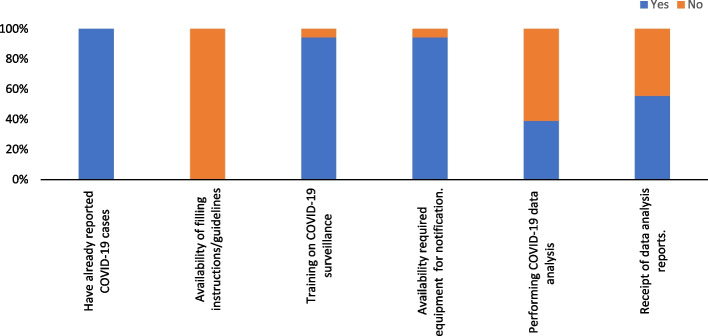
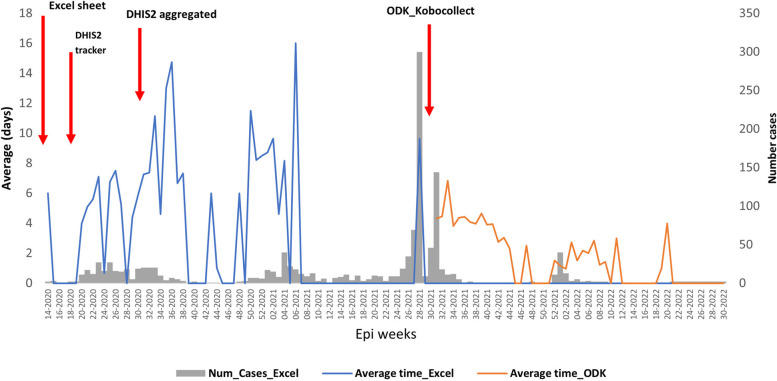
All 18 head nurses targeted, responded to the questionnaire, with an average age of 41.5 years and 63% aged between 30 and 44. The sex ratio (M/F) was 0.6, and respondents had an average of 15.1 years of experience. All nurses were involved in COVID-19 surveillance and had notified at least one suspected case. While 39% conducted COVID-19 data analysis, 55.6% received feedback from the national level. The usefulness score for the surveillance system was 77.7, with the lowest score (72.9) related to describing the pandemic's magnitude. Simplicity scored 63.3, with low scores for the availability of guidelines (0) but high scores for training and equipment (94.4). Acceptability scored 76.6, with strong support for COVID-19 surveillance but weak community involvement (48.6). While no cases were reported through the DHIS2 aggregated platform, 1327 PCR-positive SARS-CoV-2 cases were reported through the national Excel sheet and 278 PCR-positive cases were reported through the COVID-19 DHIS2 tracker during the same period. Timeliness varied, averaging 3 days using ODK and 7 days with the national Excel sheet, with a combined average of 5 days across both systems.
The study highlights challenges in COVID-19 surveillance due to limited human resources, multiple data systems, and delays in notification. While most nurses were trained and equipped, gaps in data quality, timeliness, and community support emphasize the need for streamlined processes and increased workforce capacity.
COVID-19 大流行凸显了强大监测系统在发现和应对公共卫生威胁方面的重要性。我们试图评估基尔马萨区现有 COVID-19 监测系统的属性。
2022 年 6 月进行了一项描述性、横断面研究;文献回顾涵盖了 2020 年 3 月 3 日至 2022 年 5 月 31 日期间从 18 个卫生站收集的数据。数据通过标准化问卷收集,由 18 名护士在 2022 年 6 月进行面对面访谈和对从不同通知平台(Excel、ODK、DHIS2 汇总和跟踪器)收集的监测数据进行文献回顾。研究在达喀尔地区的基尔马萨区进行。我们对 18 名护士长进行了面对面访谈,使用了从疾病预防控制中心监测评估指南改编的标准化半结构式问卷。
所有 18 名目标护士长均对问卷做出回应,平均年龄为 41.5 岁,63%的年龄在 30 至 44 岁之间。性别比(M/F)为 0.6,受访者平均有 15.1 年的经验。所有护士均参与 COVID-19 监测,并至少报告过一例疑似病例。虽然 39%的护士进行了 COVID-19 数据分析,但只有 55.6%的护士收到了来自国家层面的反馈。监测系统的有用性评分为 77.7,描述大流行规模的得分最低(72.9)。简单性得分为 63.3,指南的可用性得分较低(0),但培训和设备得分较高(94.4)。可接受性评分为 76.6,对 COVID-19 监测的支持强烈,但社区参与度低(48.6)。虽然通过 DHIS2 汇总平台没有报告病例,但在同一时期,通过国家 Excel 表报告了 1327 例 SARS-CoV-2 阳性 PCR 病例,通过 COVID-19 DHIS2 跟踪器报告了 278 例阳性病例。及时性各不相同,使用 ODK 平均需要 3 天,使用国家 Excel 表需要 7 天,两个系统的平均时间为 5 天。
该研究强调了 COVID-19 监测方面的挑战,原因是人力资源有限、多个数据系统以及通知延迟。虽然大多数护士都接受了培训并配备了设备,但数据质量、及时性和社区支持方面的差距强调了需要简化流程和增加劳动力能力。