CHRC - Comprehensive Health Research Centre, University of Évora, NOVA Medical School, Lisbon, 1150-082, Portugal.
Nursing Department, Higher School of Nursing, University of Évora, Évora, 7005-811, Portugal.
BMC Health Serv Res. 2024 Nov 21;24(1):1445. doi: 10.1186/s12913-024-11949-2.
Violence against health professionals is a growing problem that affects the quality of care provided and the well-being of workers. In the Alentejo region (Southern Portugal), the Regional Health Administration has been developing strategies to prevent and combat this phenomenon, namely, through the implementation of the Action Plan for the Prevention of Violence in the Health Sector. Violence in the health sector includes all situations in which a worker in the Ministry of Health's health institutions is exposed to any type of violence related to their work, putting their safety, well-being or health at risk, or that of others. The aim of this study was to analyze the perceptions and practices of local focal points (e.g.,departments, services, offices or functional units) on violence against health professionals in the Alentejo region.
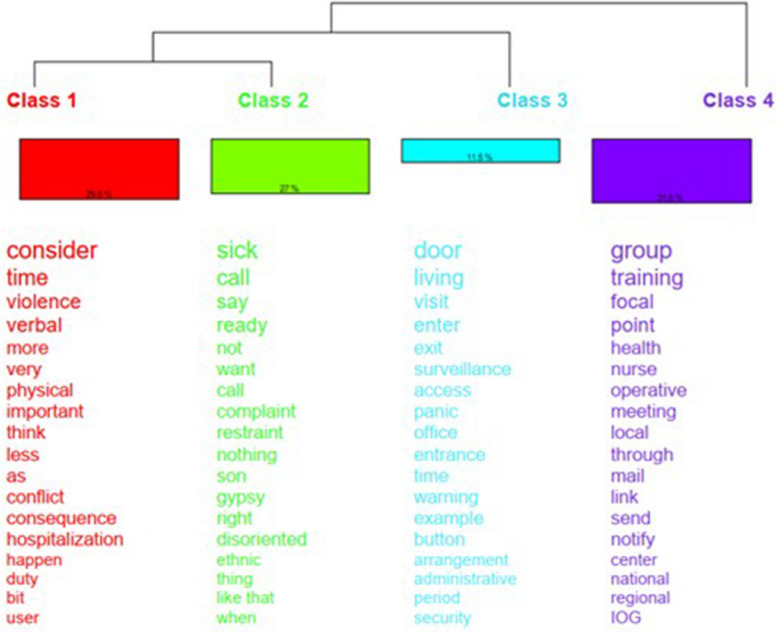
Semi-structured interviews were carried out local focal points in the Alentejo region. The sampling was selected for convenience from different health units. The interviews were recorded, transcribed and analyzed according to the analysis protocol of the IRaMuTeQ software (Interface de R pour les Analyses Multidimensionnelles de Textes et de Questionnaires) version 0.7 alpha 2.
In total, 43 interviews were conducted between February and April 2024. Interviews revealed that local focal points face various challenges in combating violence against health workers. The lack of specific training, the scarcity of security resources and the culture of underreporting were some of the obstacles identified. However, participants also stressed the importance of teamwork, effective communication and institutional support in dealing with this problem.
Violence against health professionals is a worrying reality that requires effective measures to prevent and combat it, requiring a coordinated and multifaceted response. Local focal points play a key role in this process, but they need adequate training, resources and institutional support. Comprehensive and regular training programs on violence, interpersonal communication and conflict management, and investment in security resources, including physical and technological measures, should be implemented in health facilities. Clear protocols should be created for dealing with situations of violence and a culture of reporting situations of violence to health professionals should be promoted, as well as the monitoring of victims by the authorities involved in cases of violence. Ongoing training and the simulation of real-life scenarios are crucial for preparing professionals to effectively manage situations of violence.
针对卫生专业人员的暴力行为是一个日益严重的问题,影响着提供的医疗质量和工作人员的福祉。在(葡萄牙南部)阿连特茹地区,区域卫生局一直在制定战略,以预防和打击这一现象,特别是通过实施《卫生部门预防暴力行为行动计划》。卫生部门的暴力行为包括卫生部所属医疗机构的工作人员在工作中遭受任何与工作相关的暴力行为,使他们的安全、福祉或健康受到威胁,或威胁到他人的安全、福祉或健康的所有情况。本研究旨在分析阿连特茹地区地方协调人(例如,部门、服务、办公室或职能单位)对卫生专业人员遭受暴力行为的看法和做法。
对阿连特茹地区的地方协调人进行了半结构化访谈。抽样是从不同的卫生单位中方便选择的。访谈按照 IRaMuTeQ 软件(Interface de R pour les Analyses Multidimensionnelles de Textes et de Questionnaires)版本 0.7 alpha 2 的分析协议进行记录、转录和分析。
2024 年 2 月至 4 月期间共进行了 43 次访谈。访谈显示,地方协调人在打击针对卫生工作者的暴力行为方面面临各种挑战。缺乏具体培训、安全资源匮乏以及报告不足的文化是确定的一些障碍。然而,参与者还强调了团队合作、有效沟通和机构支持在处理这一问题方面的重要性。
针对卫生专业人员的暴力行为是一个令人担忧的现实,需要采取有效措施加以预防和打击,需要协调和多方面的应对。地方协调人在这一过程中发挥着关键作用,但他们需要获得足够的培训、资源和机构支持。应在卫生机构中实施全面和定期的暴力行为、人际沟通和冲突管理培训计划,并投资安全资源,包括身体和技术措施。应制定明确的协议来处理暴力行为,并应促进向卫生专业人员报告暴力行为的情况,以及相关部门对暴力行为受害者的监测。持续的培训和对真实场景的模拟对于培训专业人员有效管理暴力行为至关重要。