Chih-Chieh Chang Alexander, Balic Marija, Bartholow Tanner, Bhargava Rohit, Brown Daniel D, Brown Lauren, Brufsky Adam, Cao Ye, Carleton Neil, Clark Amanda M, Cody Morgan, Ding Kai, Deible Christopher, Elangovan Ashuvinee, Foldi Julia, Geisler Daniel, Hodgdon Christine, Howard Naomi, Li Zheqi, Liu Jie Bin, Lopez-Nunez Oscar, Mary Dixcy Jaba Sheeba John, McGinn Olivia, Miller Lori, Mori Kanako, Pecar Geoffrey, Priedigkeit Nolan, Puhalla Shannon, Rosenzweig Margaret Q, Roy Partha, Savariau Laura, Walker Stephanie, Waltermire Hunter, Wedn Abdalla M, Wells Alan, Yates Megan E, Xavier Jennifer, Lee Adrian V, Oesterreich Steffi
Womens Cancer Research Center, UPMC Hillman Cancer Center, Magee-Women Research Institute, Pittsburgh PA, USA.
Department of Medicine, UPMC, Pittsburgh PA, USA.
bioRxiv. 2025 Mar 12:2024.11.06.621982. doi: 10.1101/2024.11.06.621982.
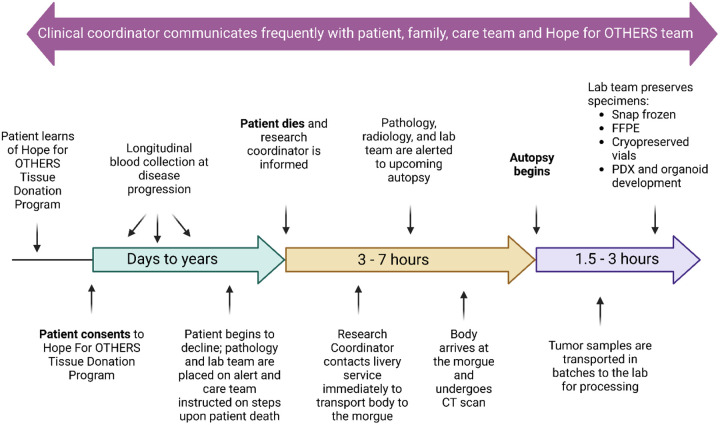
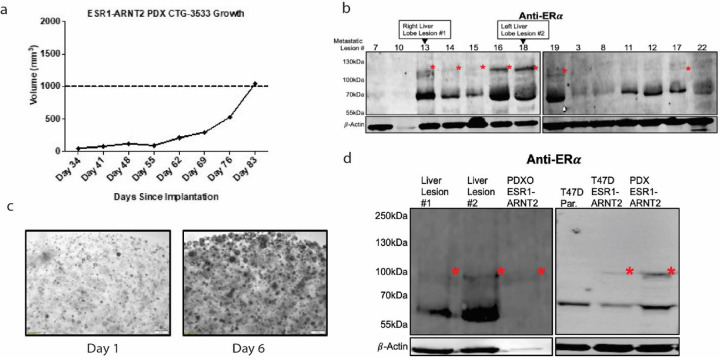
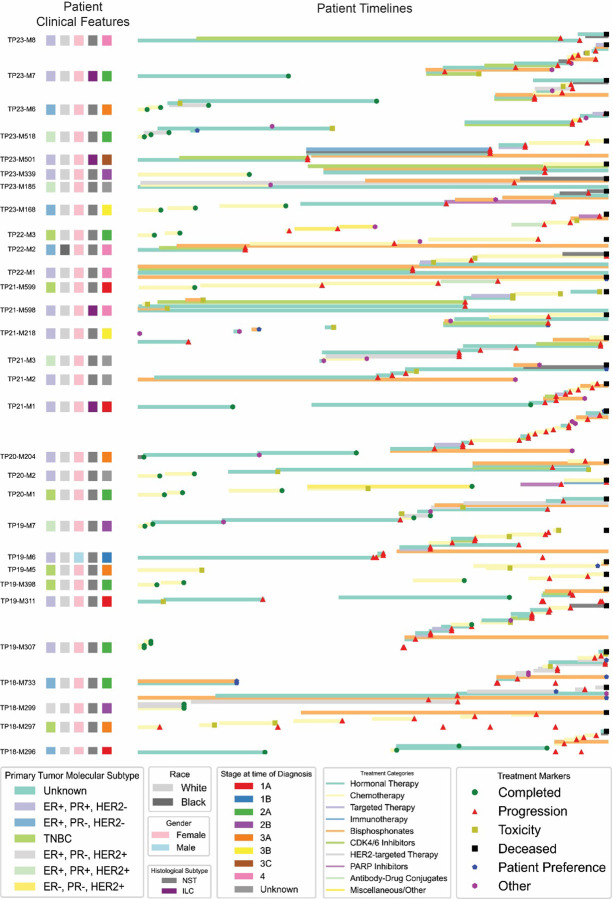
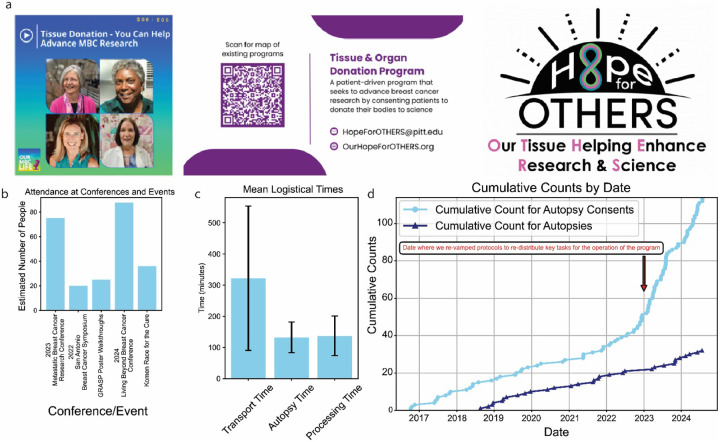
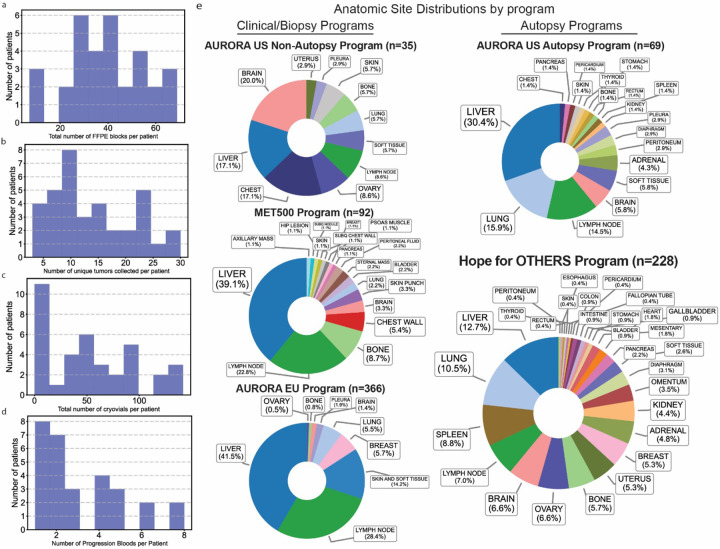
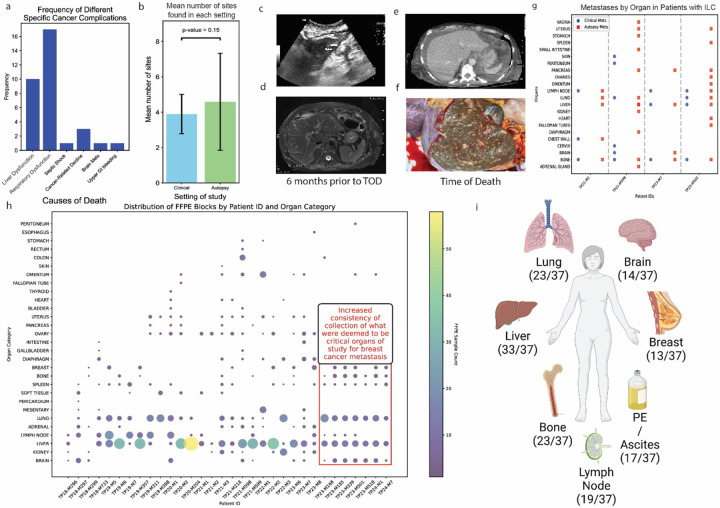
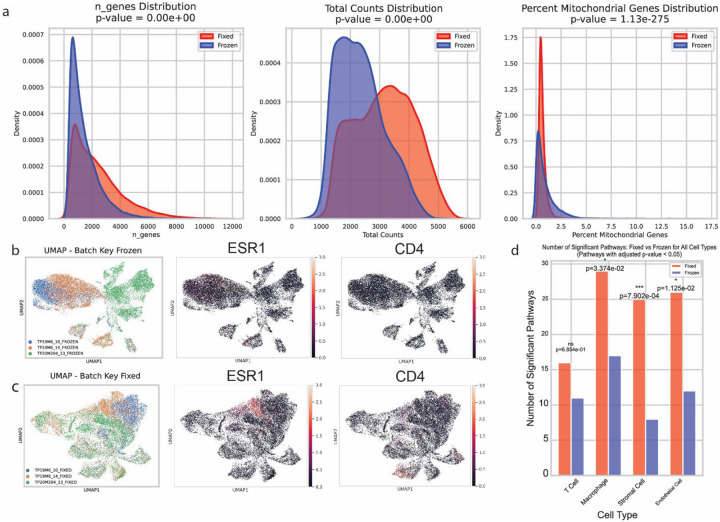
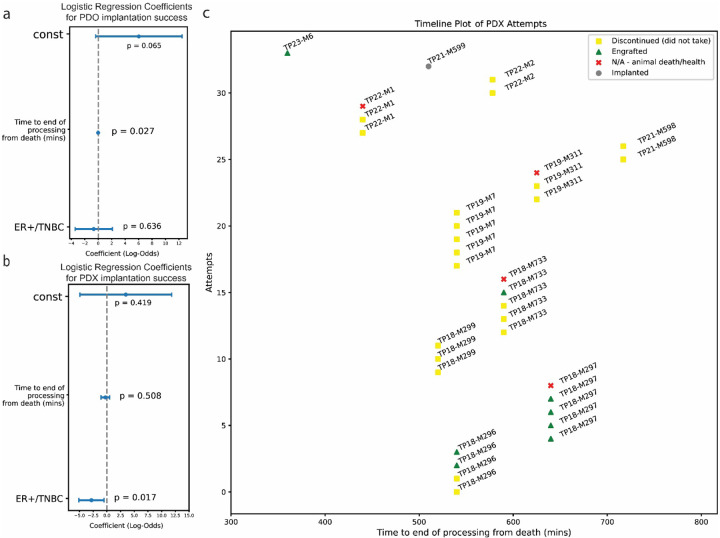
Breast cancer affects 1/8 of women throughout their lifetimes, with over 90% of cancer deaths being caused by metastasis. However, metastasis poses unique challenges to research, as complex changes in the microenvironment in different metastatic sites and difficulty obtaining tissue for study hinder the ability to examine in depth the changes that occur during metastasis. Rapid autopsy programs thus fill a unique need in advancing metastasis research. Here, we describe our protocol and processes for establishing and improving the US-based Hope for OTHERS (Our Tissue Helping Enhance Research and Science) program for organ donation in metastatic breast cancer. As of August 2024, we consented 114 patients and performed 37 autopsies, from which we collected 551 unique metastatic frozen tumor samples, 1244 FFPE blocks, 90 longitudinal liquid biopsy samples and developed 14 patient-derived organoid and 8 patient-derived xenograft models. We report in-depth clinical and histopathological information and discuss extensive new research and novel findings in patient outcomes, metastatic phylogeny, and factors in successful living model development. Our results reveal key logistical and protocol improvements that are uniquely beneficial to certain programs based on identifiable features, such as working closely with patient advocates, methods to rescue RNA quality in cases where tissue quality may degrade due to time delays, as well as guidelines and future expansions of our program.
乳腺癌在女性一生中的发病率为八分之一,超过90%的癌症死亡是由转移引起的。然而,转移给研究带来了独特的挑战,因为不同转移部位微环境的复杂变化以及获取用于研究的组织的困难阻碍了深入研究转移过程中发生的变化的能力。因此,快速尸检计划在推进转移研究方面满足了一种独特的需求。在这里,我们描述了我们建立和改进美国转移性乳腺癌器官捐赠的“为他人带来希望(我们的组织助力增强研究与科学)”计划的方案和流程。截至2024年8月,我们同意了114名患者的参与并进行了37次尸检,从中我们收集了551个独特的转移性冷冻肿瘤样本、1244个福尔马林固定石蜡包埋(FFPE)组织块、90个纵向液体活检样本,并建立了14个患者来源的类器官模型和8个患者来源的异种移植模型。我们报告了深入的临床和组织病理学信息,并讨论了在患者预后、转移系统发育以及成功建立活体模型的因素方面广泛的新研究和新发现。我们的结果揭示了关键的后勤和方案改进,这些改进基于可识别的特征对某些计划具有独特的益处,例如与患者权益倡导者密切合作、在组织质量可能因时间延迟而下降的情况下挽救RNA质量的方法,以及我们计划的指南和未来扩展。