Vanderbilt Translational and Clinical Cardiovascular Research Center, Vanderbilt University School of Medicine, Nashville, Tennessee, USA.
Phoenix Epidemiology and Clinical Research Branch, National Institute of Diabetes and Digestive and Kidney Diseases, NIH, Phoenix, Arizona, USA.
JCI Insight. 2024 Nov 22;9(22):e184279. doi: 10.1172/jci.insight.184279.
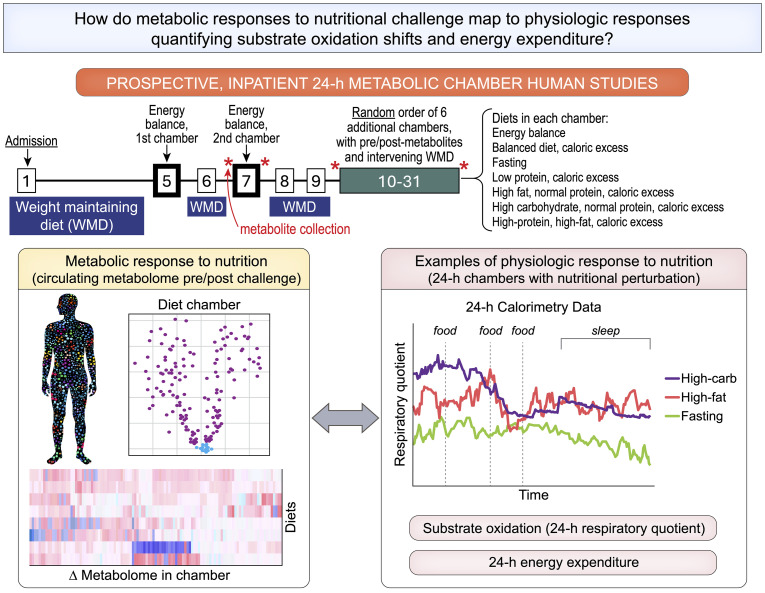
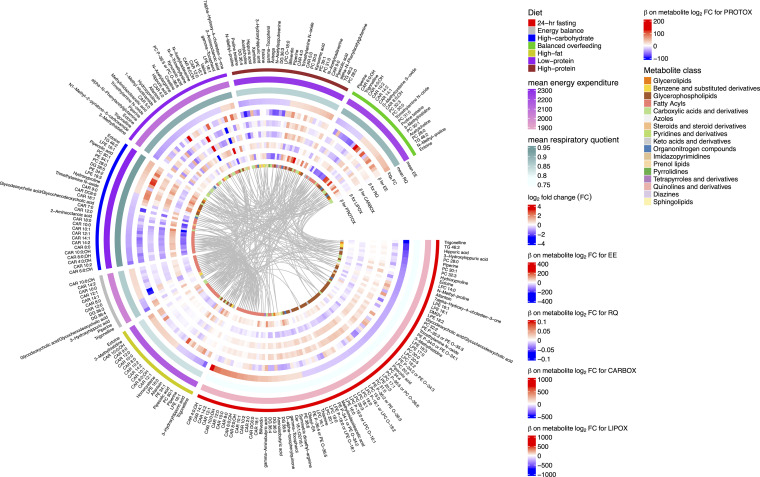
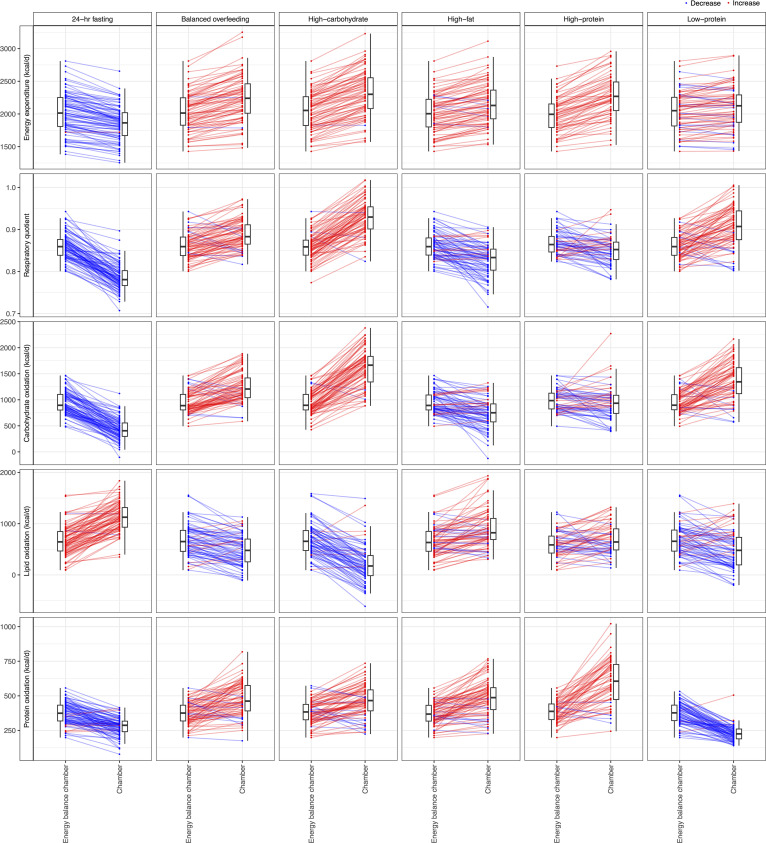
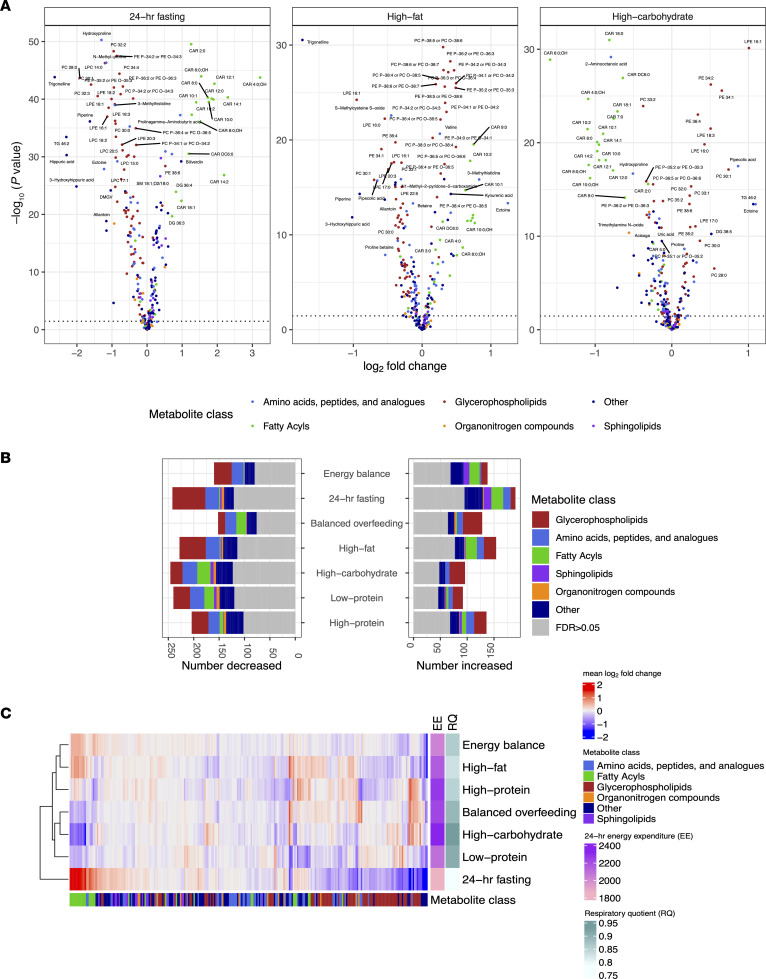
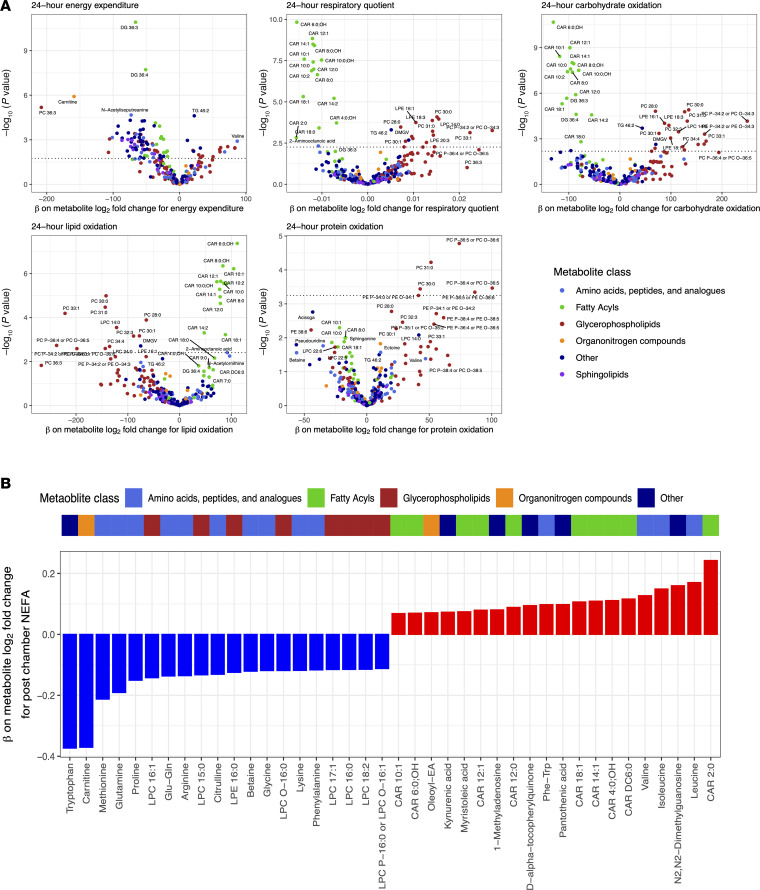
Human studies linking metabolism with organism-wide physiologic function have been challenged by confounding, adherence, and precisionHere, we united physiologic and molecular phenotypes of metabolism during controlled dietary intervention to understand integrated metabolic-physiologic responses to nutrition. In an inpatient study of individuals who underwent serial 24-hour metabolic chamber experiments (indirect calorimetry) and metabolite profiling, we mapped a human metabolome onto substrate oxidation rates and energy expenditure across up to 7 dietary conditions (energy balance, fasting, multiple 200% caloric excess overfeeding of varying fat, protein, and carbohydrate composition). Diets exhibiting greater fat oxidation (e.g., fasting, high-fat) were associated with changes in metabolites within pathways of mitochondrial β-oxidation, ketogenesis, adipose tissue fatty acid liberation, and/or multiple anapleurotic substrates for tricarboxylic acid cycle flux, with inverse associations for diets with greater carbohydrate availability. Changes in each of these metabolite classes were strongly related to 24-hour respiratory quotient (RQ) and substrate oxidation rates (e.g., acylcarnitines related to lower 24-hour RQ and higher 24-hour lipid oxidation), underscoring links between substrate availability, physiology, and metabolism in humans. Physiologic responses to diet determined by gold-standard human metabolic chambers are strongly coordinated with biologically consistent, interconnected metabolic pathways encoded in the metabolome.
人类代谢与全身生理功能的关联研究受到混杂因素、依从性和精确性的挑战。在这里,我们联合了受控饮食干预期间代谢的生理和分子表型,以了解营养对综合代谢-生理反应的影响。在一项对接受连续 24 小时代谢室实验(间接热量测定法)和代谢物谱分析的个体进行的住院研究中,我们根据底物氧化率和能量消耗,将人类代谢组映射到多达 7 种饮食条件(能量平衡、禁食、多次 200%热量过剩喂养,不同的脂肪、蛋白质和碳水化合物组成)上。表现出更高脂肪氧化(例如禁食、高脂肪)的饮食与线粒体β氧化、酮体生成、脂肪组织脂肪酸释放和/或三羧酸循环通量的多个补充底物代谢途径内的代谢物变化相关,而具有更高碳水化合物可用性的饮食则呈负相关。这些代谢物类别中的每一个变化都与 24 小时呼吸商(RQ)和底物氧化率密切相关(例如,酰基辅酶 A 与较低的 24 小时 RQ 和较高的 24 小时脂质氧化相关),突出了人类中底物可用性、生理学和代谢之间的联系。通过黄金标准人类代谢室确定的饮食生理反应与代谢组中编码的具有生物学一致性、相互关联的代谢途径密切协调。