Biochemistry Unit, Faculty of Medicine and Defence Health, National Defence University of Malaysia, Kuala Lumpur, Malaysia.
Anatomy Unit, Faculty of Medicine and Defence Health, National Defence University of Malaysia, Kuala Lumpur, Malaysia.
PLoS One. 2024 Nov 22;19(11):e0314280. doi: 10.1371/journal.pone.0314280. eCollection 2024.
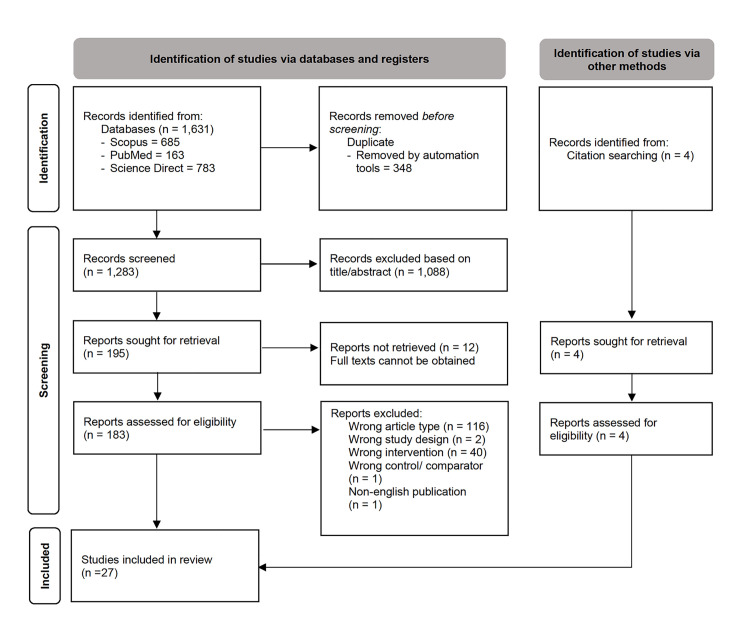
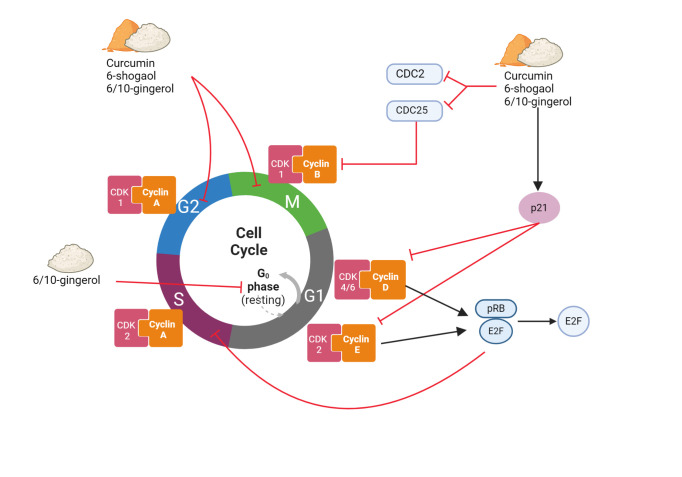
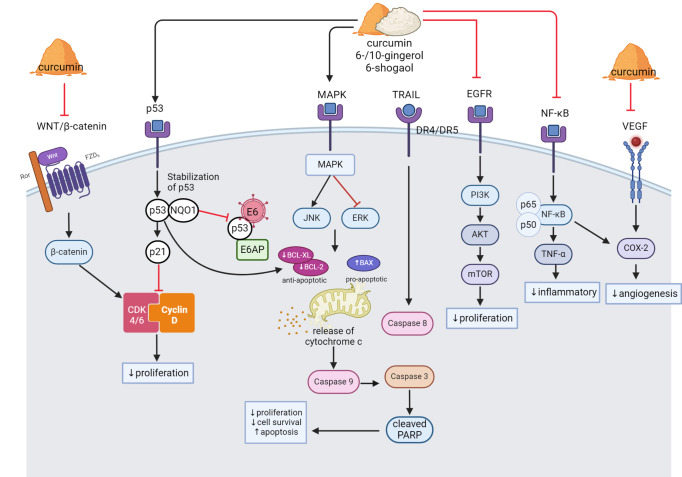
Cervical cancer ranked fourth most common malignancy among women worldwide despite the establishment of vaccination programmes. This systematic review evaluates the anti-cancer properties of turmeric and ginger bioactive compounds, specifically curcumin, 6/10-gingerol, and 6/10-shogaol, and their combination in cervical cancer through in-vitro and in-vivo models. A comprehensive electronic search was performed using Science Direct, PubMed, and Scopus from inception until the second week of June 2024 for studies published in English. Only studies investigating the effects of curcumin, gingerol, shogaol, and/or their combination in human cervical cancer cell lines and/or rodent animal models implanted with cervical cancer xenografts were included. Altogether, 27 studies were included in this review. The evidence gathered indicated that curcumin, 6/10-gingerol and 6-shogaol exert their anticancer action through modulation of cell signalling pathways, including AMPK, WNT, PI3K/AKT, and NF-κB pathway, and mediators including Bax/Bcl2, TNF-α, EGFR, COX-2, caspases-3, -9, p53, and pRb. However, the synergistic effect of these bioactive compounds is not known due to lack of evidence. In conclusion, curcumin, 6/10-gingerols, and 6-shogaols hold promise as therapeutic agents for cervical cancer. Yet, further research is essential to understand their combined efficacy, emphasising the need for additional studies exploring the synergistic anticancer effects of these bioactive compounds. Additional factors to explore include long-term effects and susceptibility of chemoresistant cervical cancer cells towards curcumin, shogaols, and gingerols.
尽管已经建立了疫苗接种计划,但宫颈癌仍是全球女性中第四大常见恶性肿瘤。本系统评价评估了姜黄和生姜生物活性化合物,特别是姜黄素、6/10-姜酚和 6/10-姜烯酚及其组合在宫颈癌中的抗癌特性,通过体外和体内模型进行。从开始到 2024 年 6 月第二周,使用 Science Direct、PubMed 和 Scopus 进行了全面的电子搜索,以查找发表在英语中的研究。仅包括研究姜黄素、姜酚、姜烯酚及其组合对人宫颈癌细胞系和/或植入宫颈癌异种移植物的啮齿动物动物模型的影响的研究。总共纳入了 27 项研究。收集的证据表明,姜黄素、6/10-姜酚和 6-姜烯酚通过调节细胞信号通路,包括 AMPK、WNT、PI3K/AKT 和 NF-κB 通路,以及 Bax/Bcl2、TNF-α、EGFR、COX-2、caspases-3、-9、p53 和 pRb 等介质发挥其抗癌作用。然而,由于缺乏证据,这些生物活性化合物的协同作用尚不清楚。总之,姜黄素、6/10-姜酚和 6-姜烯酚有望成为宫颈癌的治疗剂。然而,仍需要进一步研究以了解它们的联合疗效,强调需要更多研究探索这些生物活性化合物的协同抗癌作用。需要探索的其他因素包括长期影响和化学抗性宫颈癌细胞对姜黄素、姜烯酚和姜酚的敏感性。