Amancherla Kaushik, Schlendorf Kelly H, Chow Nelson, Sheng Quanhu, Freedman Jane E, Rathmell Jeffrey C
Division of Cardiovascular Medicine, Vanderbilt University Medical Center, Nashville, TN; Vanderbilt Translational and Clinical Cardiovascular Research Center, Vanderbilt University School of Medicine, Nashville, TN; Department of Medicine, Vanderbilt University Medical Center, Nashville, TN.
Division of Cardiovascular Medicine, Vanderbilt University Medical Center, Nashville, TN.
J Heart Lung Transplant. 2024 Nov 22. doi: 10.1016/j.healun.2024.11.017.
Cardiac allograft vasculopathy (CAV) is the leading cause of late graft failure and mortality after heart transplantation (HT). Current strategies for early diagnosis and effective treatment of CAV are lacking. Using single-cell RNA-sequencing in peripheral blood mononuclear cells (PBMCs), we sought to investigate cell-specific gene expression profiles and T cell receptor repertoires in CAV that may inform novel biomarkers and pathways to interrupt CAV pathogenesis.
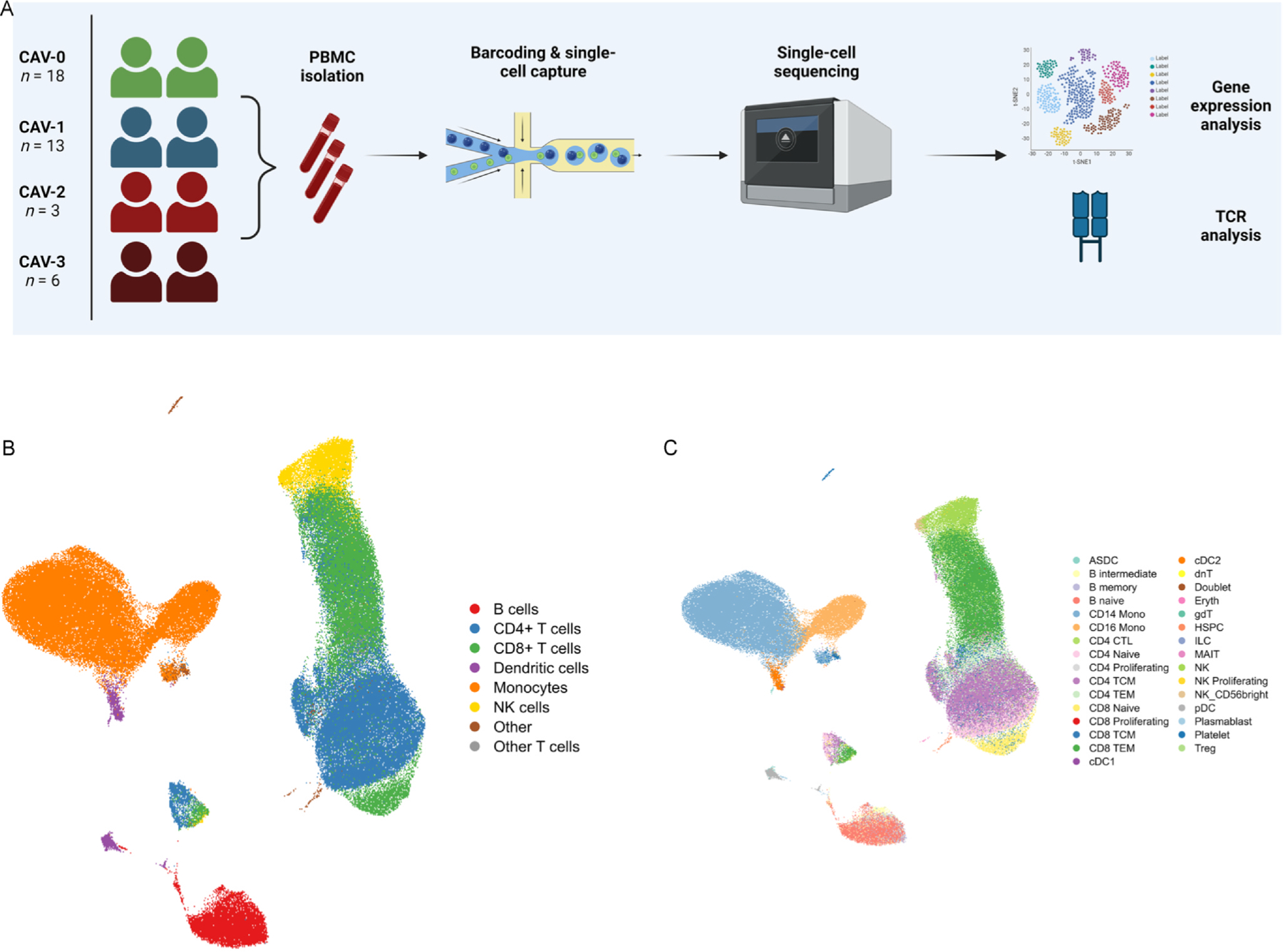
Whole blood was collected from 22 HT recipients with angiographically-confirmed CAV and 18 HT recipients without CAV. PBMCs were isolated and subjected to single-cell RNA-sequencing using a 10X Genomics microfluidic platform. Downstream analyses focused on differential expression of genes, cell compositional changes, and T cell receptor repertoire analyses.
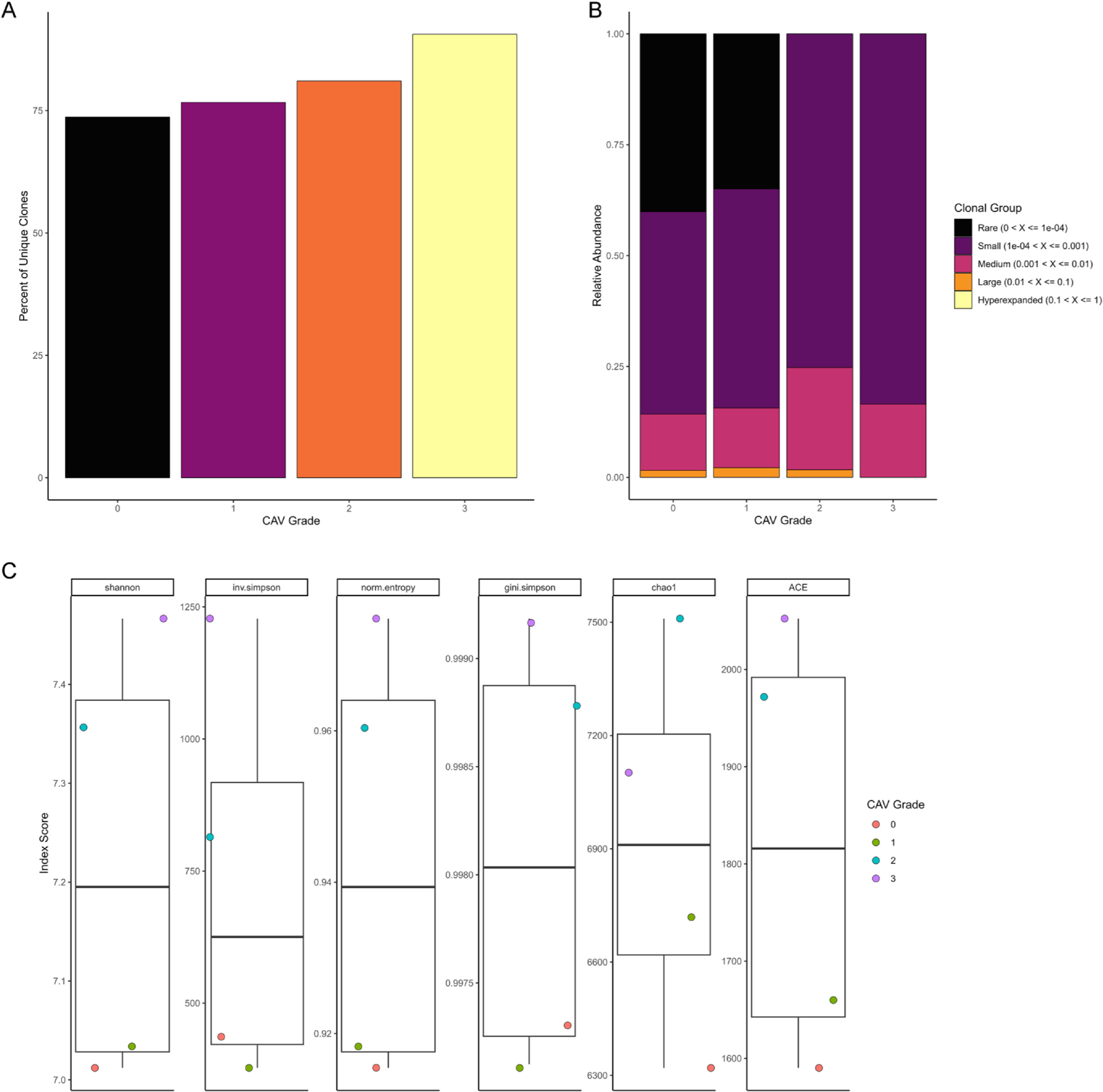
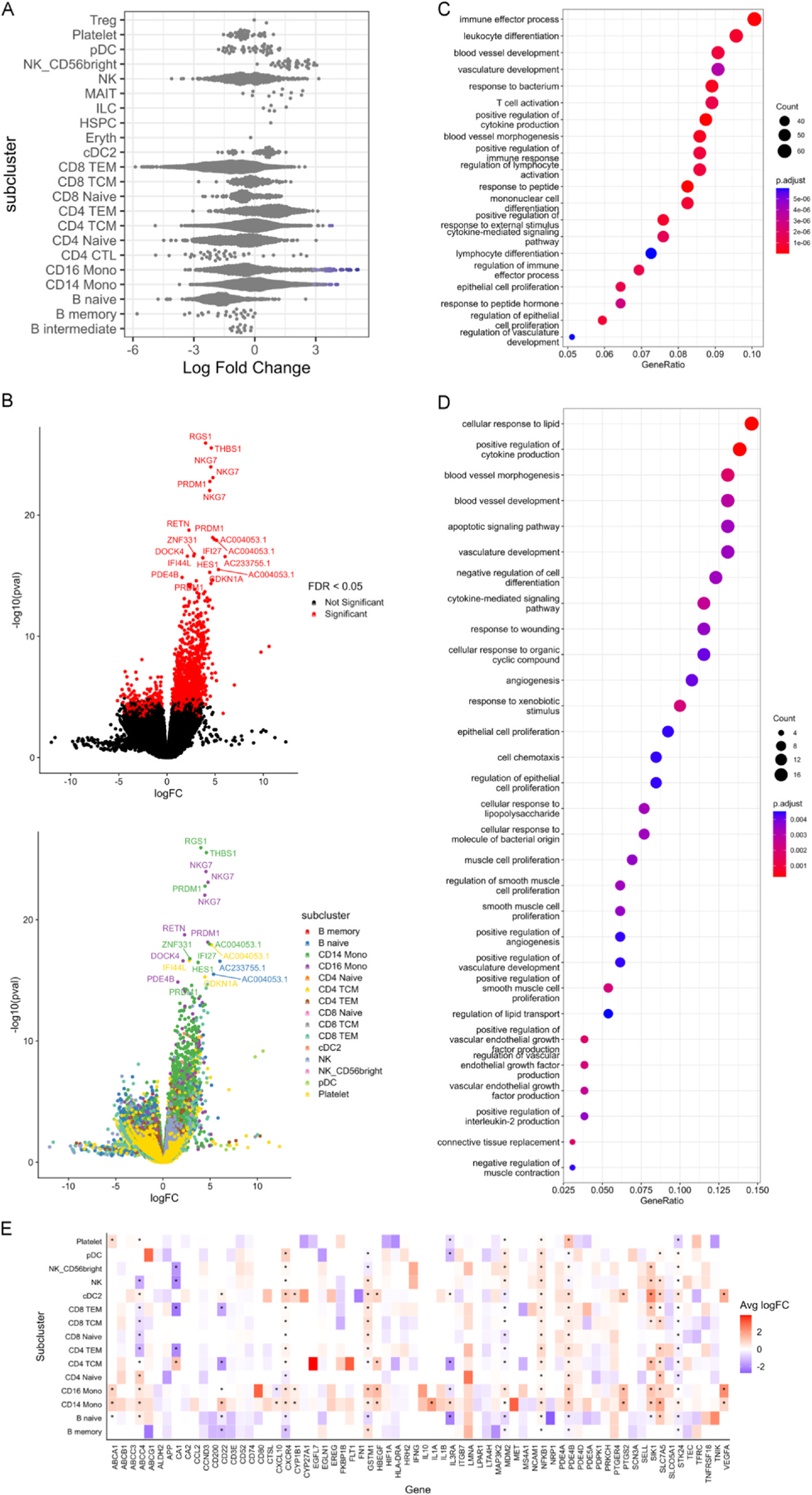
Across 40 PBMC samples, we isolated 134,984 cells spanning 31 cell types. Compositional analyses showed subtle, but significant increases in CD4+ T central memory cells, and CD14+ and CD16+ monocytes in high-grade CAV (CAV-2 and CAV-3). 745 genes were differentially expressed in a cell-specific manner in high-grade CAV, enriched for putative pathways involved in inflammation and angiogenesis. Intersection with the druggable genome prioritized 68 targets, including targets with approved drugs in cardiovascular disease (e.g., canakinumab). There were no significant differences in T cell clonality or diversity with increasing CAV severity.
Unbiased whole transcriptomic analyses at single-cell resolution identify unique, cell-specific gene expression patterns in CAV, suggesting the potential utility of peripheral gene expression biomarkers in diagnosing CAV. Furthermore, precision targeting of these pathways may offer opportunities to mitigate CAV pathogenesis.
心脏移植血管病变(CAV)是心脏移植(HT)后晚期移植物功能衰竭和死亡的主要原因。目前缺乏早期诊断和有效治疗CAV的策略。我们利用外周血单核细胞(PBMC)的单细胞RNA测序,试图研究CAV中细胞特异性基因表达谱和T细胞受体库,这可能为新的生物标志物和阻断CAV发病机制的途径提供线索。
从22例经血管造影证实患有CAV的HT受者和18例未患CAV的HT受者中采集全血。分离PBMC,并使用10X基因组学微流控平台进行单细胞RNA测序。下游分析集中在基因的差异表达、细胞组成变化和T细胞受体库分析。
在40个PBMC样本中,我们分离出134984个细胞,涵盖31种细胞类型。组成分析显示,在高级别CAV(CAV-2和CAV-3)中,CD4+T中央记忆细胞以及CD14+和CD16+单核细胞有细微但显著的增加。745个基因在高级别CAV中以细胞特异性方式差异表达,富集于与炎症和血管生成相关的假定途径。与可药物基因组的交集确定了68个靶点,包括心血管疾病中已有批准药物的靶点(如卡那单抗)。随着CAV严重程度的增加,T细胞克隆性或多样性没有显著差异。
在单细胞分辨率下进行的无偏全转录组分析确定了CAV中独特的、细胞特异性的基因表达模式,提示外周基因表达生物标志物在诊断CAV方面的潜在用途。此外,精准靶向这些途径可能为减轻CAV发病机制提供机会。