Wen Ting, Zhao Yiting, Fu Yanping, Chen Ying, Li Xiaodie, Shi Chaonan, Xian Dongyi, Zhao Wanchen, Yang Dan, Lu Chao, Wu Chuanbin, Pan Xin, Quan Guilan
School of Pharmaceutical Sciences, Sun Yat-sen University, Guangzhou, 510006, China.
College of Pharmacy, Jinan University, Guangzhou, 511443, China.
Mater Today Bio. 2024 Nov 6;29:101327. doi: 10.1016/j.mtbio.2024.101327. eCollection 2024 Dec.
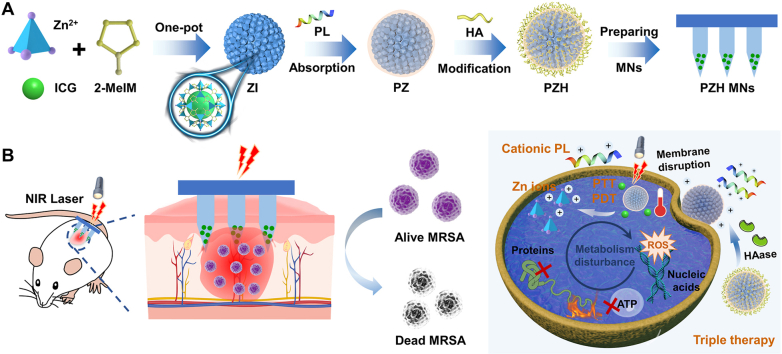
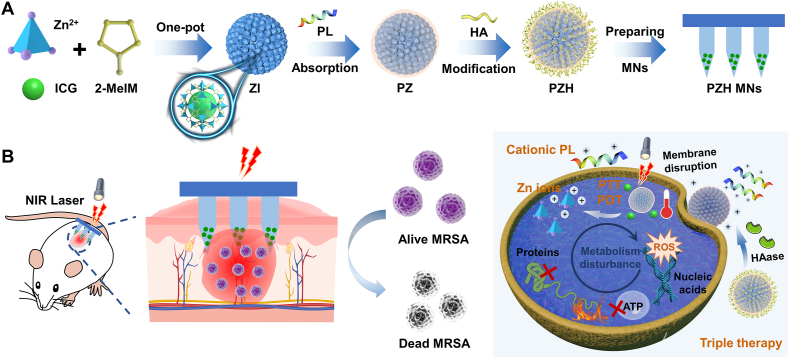
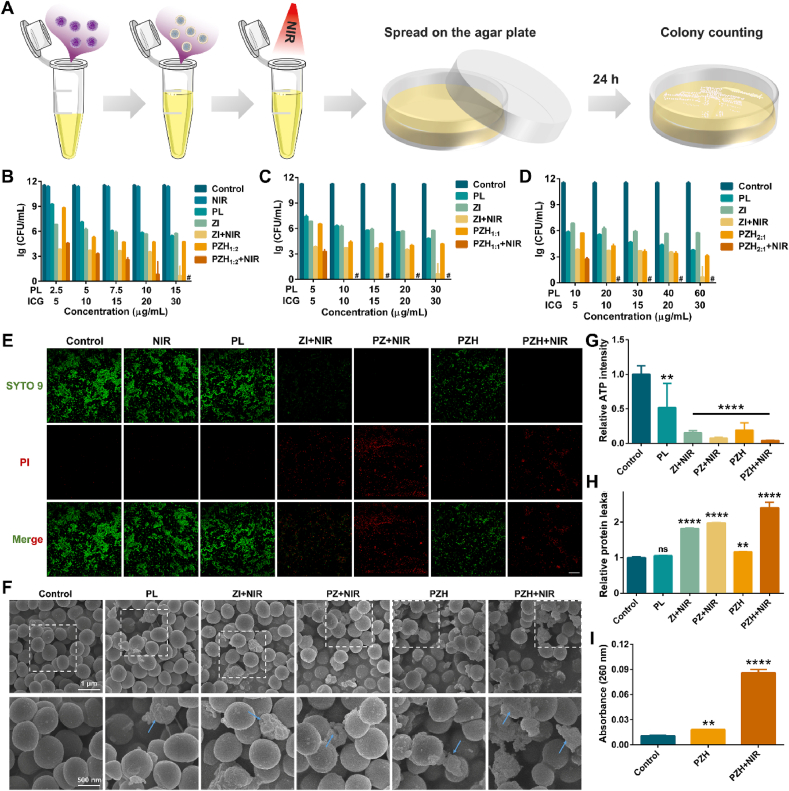
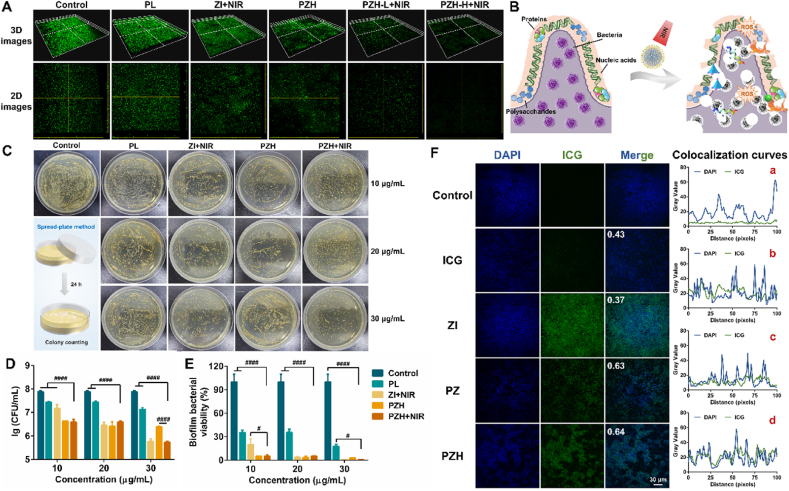
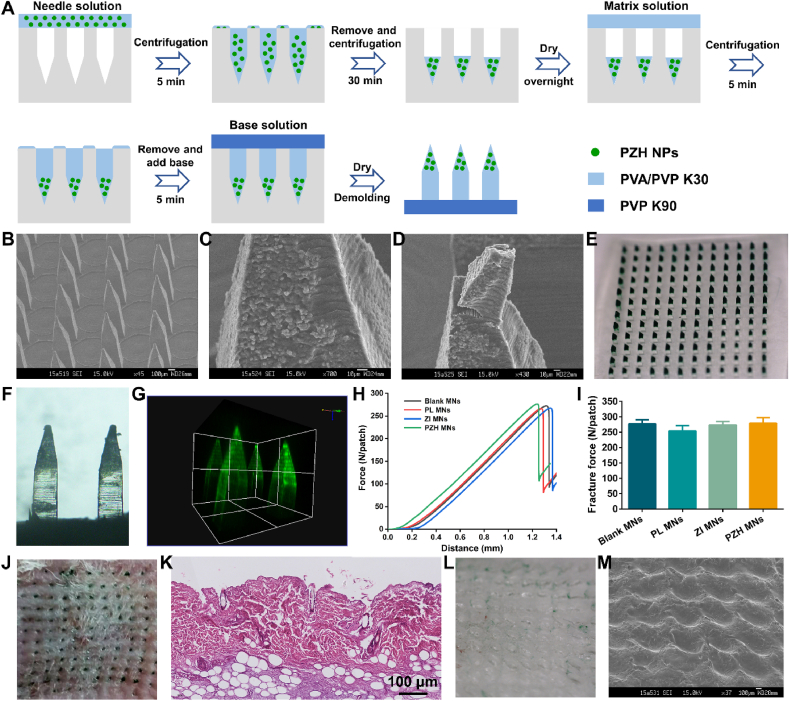
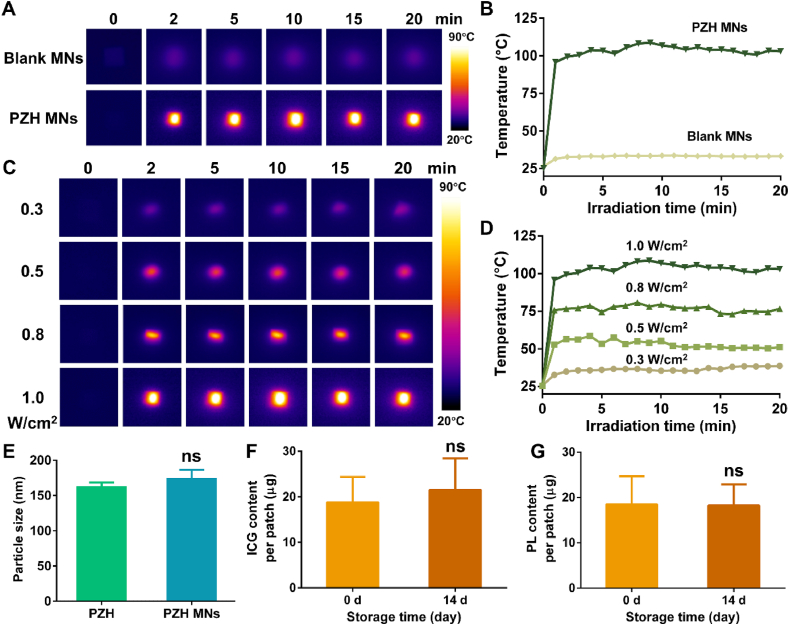
Phototherapy has emerged to eradicate recalcitrant bacteria without causing drug resistance, but it is often accompanied by considerable limitations owing to a high tolerance of recalcitrant bacteria to heat and oxidative damage, leading to low efficiency of monotherapy and unwanted side effects. Assuming that employing antimicrobial peptides (AMPs) to disrupt bacterial membranes could reduce bacterial tolerance, a multifunctional "on-demand" nanosystem based on zeolitic imidazolate framework-8 (ZIF-8) with metal ions for intrinsic antibacterial activity was constructed to potently kill methicillin-resistant (MRSA). Then, microneedles (MNs) were used to transdermally deliver the ZIF-8-based nanosystem for localized skin infection. After MNs insertion, the nanoplatform could specifically deliver the loaded therapeutic components to bacterial infection sites through employing hyaluronic acid (HA) as a capping agent, thus realizing the "on-demand" payload release triggered by excess hyaluronidase secreted by MRSA. The prepared nanosystem and MNs were confirmed to exert an amplified triple therapy originating from membranolytic effect, phototherapy, and ion therapy, thus displaying a powerful bactericidal and MRSA biofilm destruction ability. This intelligent antimicrobial strategy may bring a dawn of hope for eradicating multidrug-resistant bacteria and biofilms.
光疗法已出现用于根除顽固细菌而不产生耐药性,但由于顽固细菌对热和氧化损伤具有高耐受性,它常常伴随着相当大的局限性,导致单一疗法效率低下和出现不良副作用。假设使用抗菌肽(AMPs)破坏细菌膜可以降低细菌耐受性,构建了一种基于沸石咪唑酯骨架-8(ZIF-8)并带有具有内在抗菌活性的金属离子的多功能“按需”纳米系统,以有效杀死耐甲氧西林金黄色葡萄球菌(MRSA)。然后,使用微针(MNs)经皮递送基于ZIF-8的纳米系统用于局部皮肤感染。在插入微针后,该纳米平台可以通过使用透明质酸(HA)作为封端剂将负载的治疗成分特异性递送至细菌感染部位,从而实现由MRSA分泌的过量透明质酸酶触发的“按需” payload释放。所制备的纳米系统和微针被证实发挥了源自膜溶解作用、光疗法和离子疗法的放大三联疗法,从而展现出强大的杀菌和破坏MRSA生物膜的能力。这种智能抗菌策略可能为根除多重耐药细菌和生物膜带来希望的曙光。