Žigutytė Laura, Sorz-Nechay Thomas, Clusmann Jan, Kather Jakob Nikolas
Else Kroener Fresenius Center for Digital Health, Faculty of Medicine and University Hospital Carl Gustav Carus, TUD Dresden University of Technology, Dresden, Germany.
Division of Gastroenterology and Hepatology, Department of Internal Medicine III, Medical University of Vienna, Vienna, Austria.
JHEP Rep. 2024 Sep 6;6(12):101209. doi: 10.1016/j.jhepr.2024.101209. eCollection 2024 Dec.
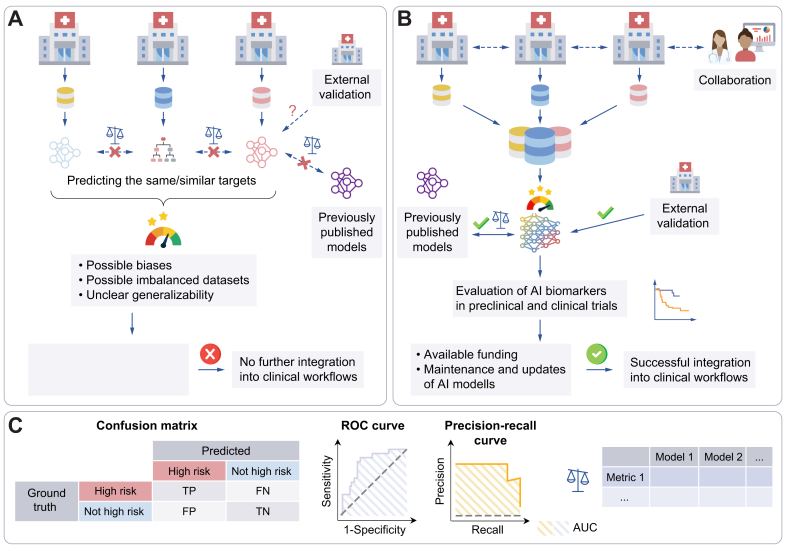
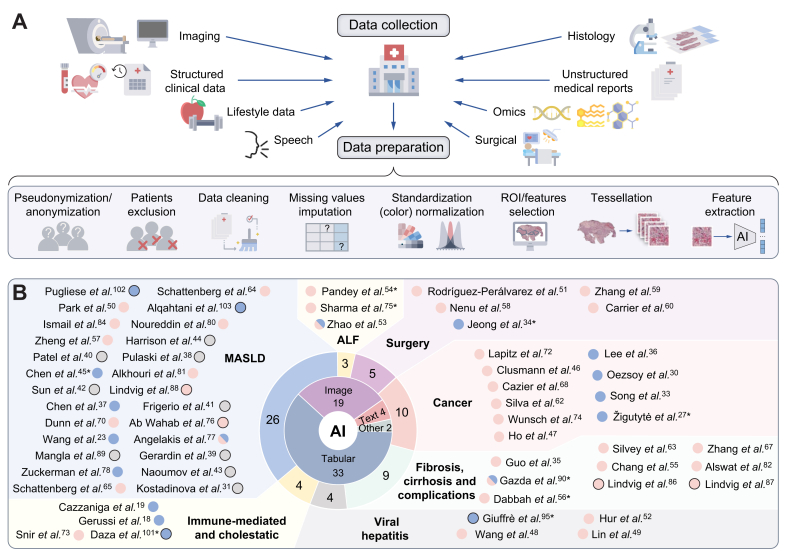
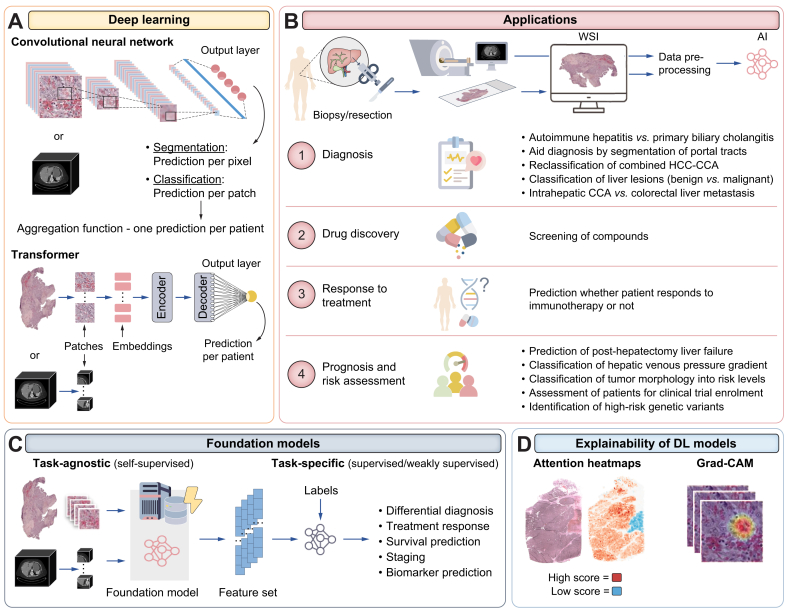
Artificial intelligence (AI) methods enable humans to analyse large amounts of data, which would otherwise not be feasibly quantifiable. This is especially true for unstructured visual and textual data, which can contain invaluable insights into disease. The hepatology research landscape is complex and has generated large amounts of data to be mined. Many open questions can potentially be addressed with existing data through AI methods. However, the field of AI is sometimes obscured by hype cycles and imprecise terminologies. This can conceal the fact that numerous hepatology research groups already use AI methods in their scientific studies. In this review article, we aim to assess the contemporaneous use of AI methods in hepatology in Europe. To achieve this, we systematically surveyed all scientific contributions presented at the EASL Congress 2024. Out of 1,857 accepted abstracts (1,712 posters and 145 oral presentations), 6 presentations (∼4%) and 69 posters (∼4%) utilised AI methods. Of these, 55 posters were included in this review, while the others were excluded due to missing posters or incomplete methodologies. Finally, we summarise current academic trends in the use of AI methods and outline future directions, providing guidance for scientific stakeholders in the field of hepatology.
人工智能(AI)方法使人类能够分析大量数据,否则这些数据将无法进行可行的量化。对于非结构化的视觉和文本数据而言尤其如此,这些数据可能包含对疾病的宝贵见解。肝病学研究领域十分复杂,已经产生了大量有待挖掘的数据。通过人工智能方法,利用现有数据有可能解决许多悬而未决的问题。然而,人工智能领域有时会被炒作周期和不精确的术语所掩盖。这可能会掩盖众多肝病学研究小组已经在其科学研究中使用人工智能方法这一事实。在这篇综述文章中,我们旨在评估欧洲肝病学领域对人工智能方法的当前应用情况。为实现这一目标,我们系统地调查了在2024年欧洲肝脏研究学会(EASL)大会上发表的所有科学成果。在1857篇被接受的摘要(1712篇海报展示和145篇口头报告)中,有6篇口头报告(约4%)和69篇海报展示(约4%)使用了人工智能方法。其中,55篇海报展示被纳入本综述,其他的则因海报缺失或方法不完整而被排除。最后,我们总结了当前使用人工智能方法的学术趋势并概述了未来方向,为肝病学领域的科研利益相关者提供指导。