Rojmala Janki V, Thakkar Anjali B, Joshi Dhruti, Waghela Bhargav N, Thakor Parth
Department of Microbiology, Atmiya University, Kalawad Road, Rajkot, Gujarat, India.
Post Graduate Department of Biosciences, Satellite Campus, Sardar Patel University, Vallabhvidyanagar, Gujarat, India.
Heliyon. 2024 Nov 7;10(22):e40211. doi: 10.1016/j.heliyon.2024.e40211. eCollection 2024 Nov 30.
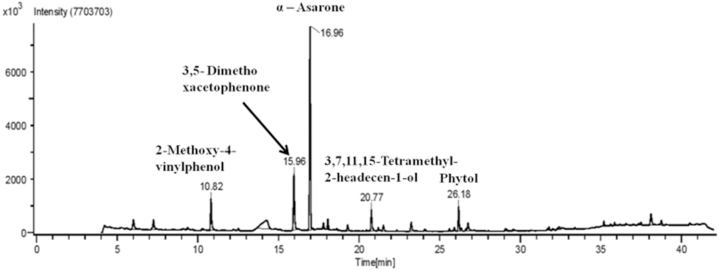
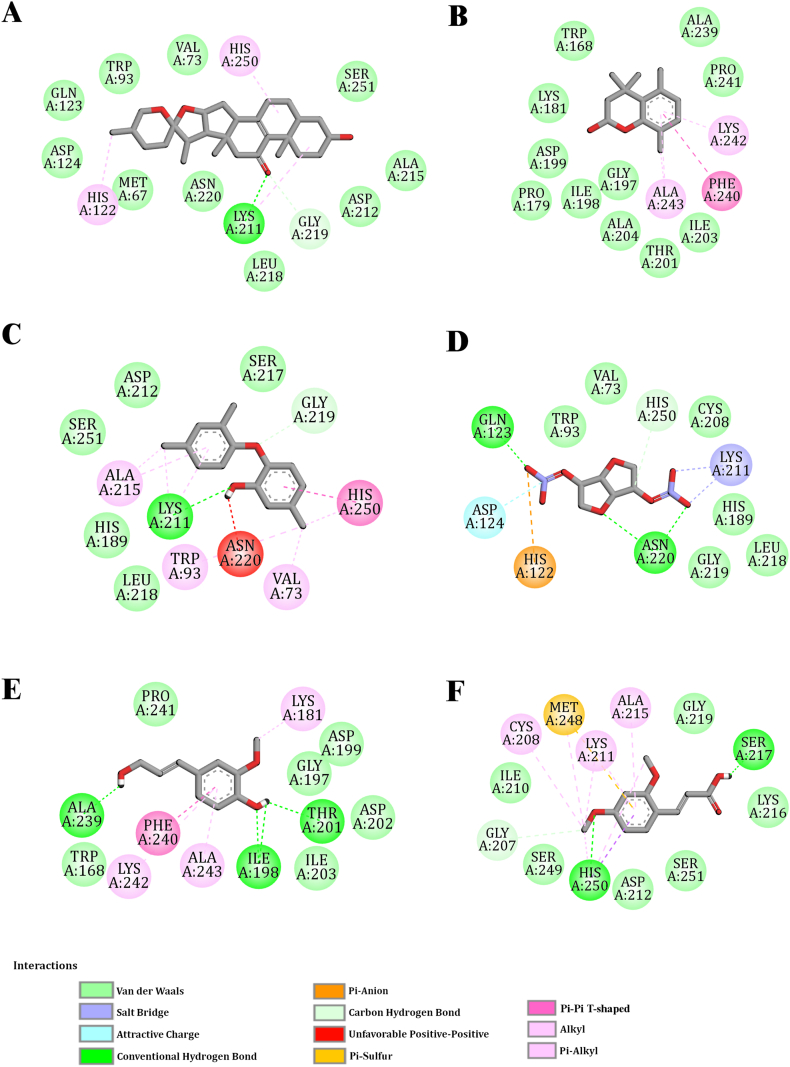
is a potent human pathogen and a prevalent ESKAPE ( and Enterobacter species). Considerably, becomes a major clinical problem due to numerous AMR genes [extended-spectrum β-lactamase, plasmid-mediated C, carbapenemases, tigecycline resistance, and New Delhi Metallo-β-lactamase-1 (NDM-1)] and can hydrolyze the majority of β-lactam antibiotics. Hence, targeting NDM-1 could be an effective approach to eradicate pathogenesis. A plethora of reports suggests that the plant compounds possess an anti-microbial activity and their utilization could be a promising strategy to develop novel antibiotics. Our study utilized the hydromethanolic leaves extract of L. (AC) to target NDM-1 containing using an approach. At first, we determined the phytochemical composition of AC using GC-HRMS. Further, the phytoconstituents were screened against the NDM-1 (PDB ID: 3ZR9) of through molecular docking studies. Our results revealed the compounds from AC such as (2R,4S,6R,7S,8R,9S,13S)-16-hydroxy-5',7,9,13-tetramethylspiro[5-oxapentacyclo[10.8.0.02,9.04,8.013,18]icos-1(12)-ene-6,2'-oxane]-11-one (-9.5 kcal/mol), 4,4,5,8-tetramethyl-2,3-dihydrochromen-2-ol (-6.6 kcal/mol), 5-chloro-2-(2,4-dichloro phenoxy)phenol (-6.0 kcal/mol), [(3S,3aS,6R,6aS)-3-nitrooxy-2,3,3a,5,6,6a-hexahydrofuro[3,2-b]furan-6-yl] nitrate (-5.7 kcal/mol), 4-(3-hydroxyprop-1-enyl)-2-methoxyphenol (-5.6 kcal/mol), and (E)-3-(2,4-dimethoxyphenyl)prop-2-enoic acid (-5.6 kcal/mol) possess substantial docking scores against NDM-1. Therefore, our study concludes that phytochemicals of AC may inhibit NDM-1-mediated resistance in and could be an alternative therapeutic strategy for targeting NDM-1-containing .
是一种强大的人类病原体,也是一种常见的ESKAPE(及肠杆菌属物种)。值得注意的是,由于众多抗菌药物耐药基因[超广谱β-内酰胺酶、质粒介导的C、碳青霉烯酶、替加环素耐药性以及新德里金属β-内酰胺酶-1(NDM-1)],它成为了一个主要的临床问题,并且能够水解大多数β-内酰胺抗生素。因此,靶向NDM-1可能是根除发病机制的有效方法。大量报告表明,植物化合物具有抗菌活性,其利用可能是开发新型抗生素的一种有前景的策略。我们的研究利用龙葵叶的水甲醇提取物,采用方法靶向含NDM-1的。首先,我们使用气相色谱-高分辨质谱法测定了龙葵叶提取物的植物化学成分。此外,通过分子对接研究针对的NDM-1(蛋白质数据银行编号:3ZR9)对植物成分进行了筛选。我们的结果显示,龙葵叶提取物中的化合物,如(2R,4S,6R,7S,8R,9S,13S)-16-羟基-5',7,9,13-四甲基螺[5-氧杂五环[10.8.0.02,9.04,8.013,18]二十碳-1(12)-烯-6,2'-氧杂环戊烷]-11-酮(-9.5千卡/摩尔)、4,4,5,8-四甲基-2,3-二氢色原酮-2-醇(-6.6千卡/摩尔)、5-氯-2-(2,4-二氯苯氧基)苯酚(-6.0千卡/摩尔)、[(3S,3aS,6R,6aS)-3-硝基氧基-2,3,3a,5,6,6a-六氢呋喃并[3,2-b]呋喃-6-基]硝酸盐(-5.7千卡/摩尔)、4-(3-羟基丙-1-烯基)-2-甲氧基苯酚(-5.6千卡/摩尔)和(E)-3-(2,4-二甲氧基苯基)丙烯酸(-5.6千卡/摩尔)对NDM-1具有显著的对接分数。因此,我们的研究得出结论,龙葵叶提取物的植物化学物质可能抑制中的NDM-1介导的耐药性,并且可能是针对含NDM-1的的一种替代治疗策略。