Kuhn Caroline, Hayibor Kenneth Mawuta, Acheampong Ama Twumwaa, Pires Luciana Salini Abrahão, Costa-Ribeiro Magda Clara Vieira, Burrone María Soledad, Vásquez-Almazán Carlos Roberto, Radon Katja, Soto María Teresa Solis
Center for International Health at Ludwig-Maximilian-University Hospital, Munich, Germany.
Federal University of Paraná, Curitiba, Brazil.
One Health. 2024 Nov 8;19:100929. doi: 10.1016/j.onehlt.2024.100929. eCollection 2024 Dec.
The recent COVID-19 pandemic and the emergence of infectious diseases at the human-animal interface highlight the global challenge of mitigating zoonotic risks. The One Health approach emphasizes the interconnectedness of human, animal, and environmental health, urging for holistic and interdisciplinary strategies in disease prevention. Despite growing interest, the attention to wildlife in pandemic prevention remains limited. This systematic literature review aims to evaluate recent One Health research on zoonotic diseases and wildlife in terms of study design, interdisciplinary collaboration, and participatory approaches. Key questions addressed include the consideration of One Health domains, disciplinary involvement, and the inclusion of non-academic stakeholders.
Following PRISMA guidelines, PubMed and Web of Science were searched for primary research papers on zoonotic diseases and wildlife from 2018 to 2023. Eligibility criteria included a focus on wildlife, zoonotic diseases, and adoption of the One Health approach.
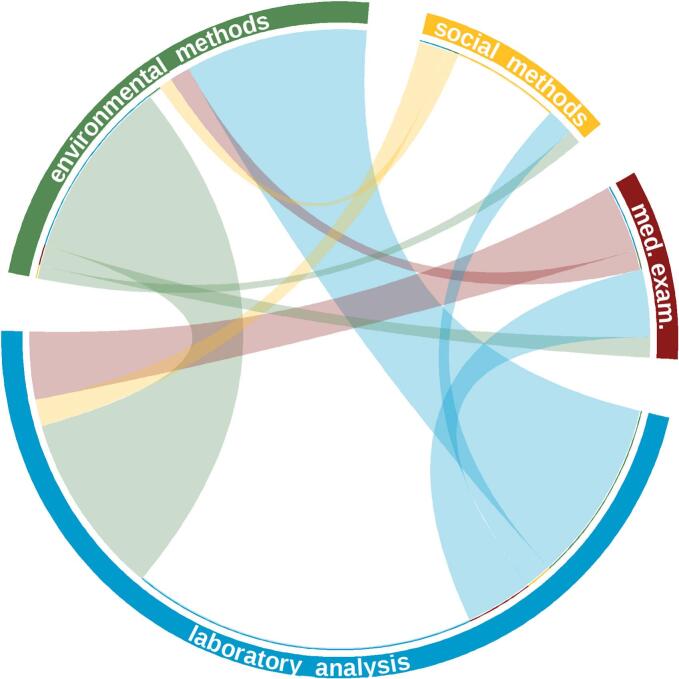
A total of 228 primary research papers were retrieved. Out of these, 105 studies were included in the review. Few studies integrated human, animal, and environmental domains simultaneously in data collection (4.8 %) and knowledge generation (29.5 %). While extensive knowledge was generated for animal health (97.1 %) and human health (84.8 %), environmental health (34.3 %) remained underrepresented. Laboratory methods predominated (82.9 %), with limited integration of social science methodologies (19 %). The majority were epidemiological studies (86.7 %), yet analytical design within these was sparse (17.1 %). Participation of non-academic stakeholders was limited (36.2 % included non-academics; 3.8 % encompassed participative approaches).
The synthesis of the domains human, animal and environmental health remained fragmentary in the studies reviewed. Environmental health is underrepresented and the interdisciplinary involvement of social sciences lacks. Neglecting these fields of competence impedes comprehensive understanding of disease dynamics and hampers effective zoonosis prevention strategies. In result, greater inter- and transdisciplinary collaboration, along with participatory approaches, are still needed for advancing One Health research.
近期的新冠疫情以及人畜共患病在人兽界面的出现凸显了减轻人畜共患病风险这一全球挑战。“同一健康”方法强调人类、动物和环境健康的相互联系,敦促在疾病预防中采取整体和跨学科策略。尽管人们的兴趣日益浓厚,但在大流行预防中对野生动物的关注仍然有限。本系统文献综述旨在从研究设计、跨学科合作和参与性方法方面评估近期关于人畜共患病和野生动物的“同一健康”研究。所涉及的关键问题包括对“同一健康”领域的考虑、学科参与以及非学术利益相关者的纳入。
按照PRISMA指南,在PubMed和Web of Science中检索2018年至2023年关于人畜共患病和野生动物的原始研究论文。纳入标准包括关注野生动物、人畜共患病以及采用“同一健康”方法。
共检索到228篇原始研究论文。其中,105项研究被纳入综述。很少有研究在数据收集(4.8%)和知识生成(29.5%)过程中同时整合人类、动物和环境领域。虽然在动物健康(97.1%)和人类健康(84.8%)方面产生了大量知识,但环境卫生(34.3%)的研究仍然较少。实验室方法占主导(82.9%),社会科学方法的整合有限(19%)。大多数是流行病学研究(86.7%),但其中的分析设计较少(17.1%)。非学术利益相关者的参与有限(36.2%的研究纳入了非学术人员;3.8%采用了参与性方法)。
在所综述的研究中,人类、动物和环境卫生领域的综合仍然是零散的。环境卫生研究较少,社会科学的跨学科参与不足。忽视这些专业领域会妨碍对疾病动态的全面理解,并阻碍有效的人畜共患病预防策略。因此,仍需要加强跨学科和跨领域合作以及采用参与性方法来推进“同一健康”研究。