Institute of Clinical and Molecular Virology, Universitätsklinikum Erlangen, Friedrich-Alexander-Universität Erlangen-Nürnberg, Erlangen, Germany.
School of Infection & Immunity, University of Glasgow, Glasgow, UK.
Nat Commun. 2024 Nov 25;15(1):10200. doi: 10.1038/s41467-024-54605-3.
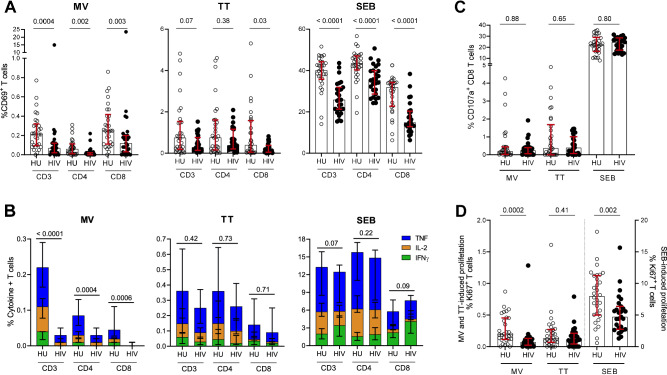
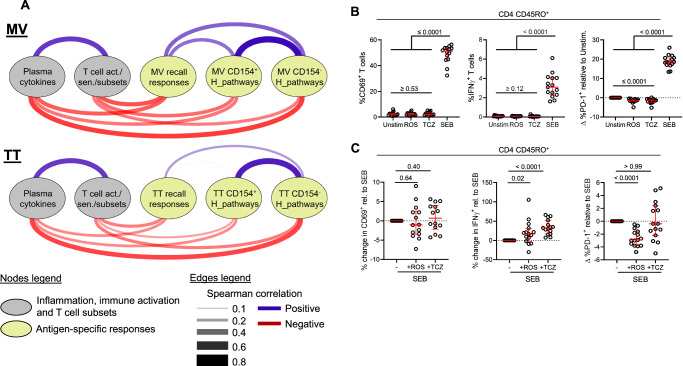
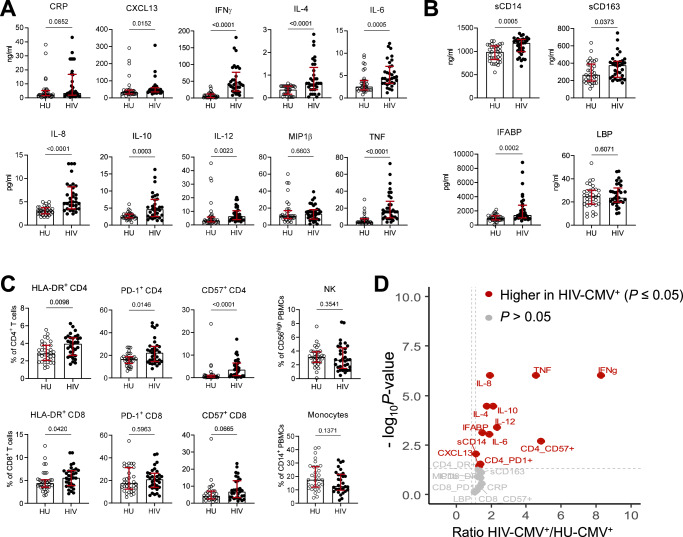
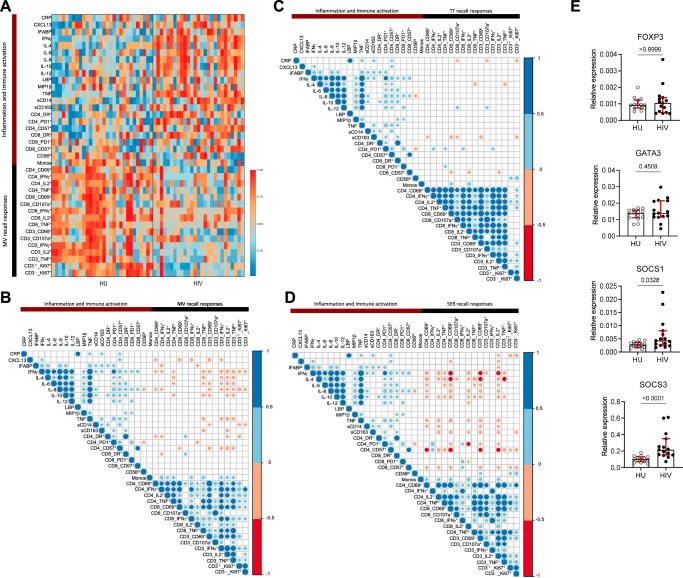
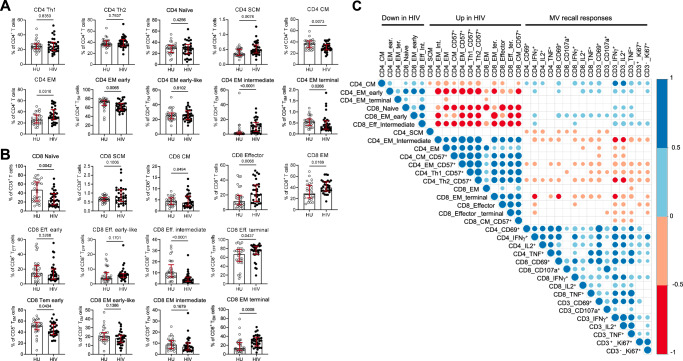
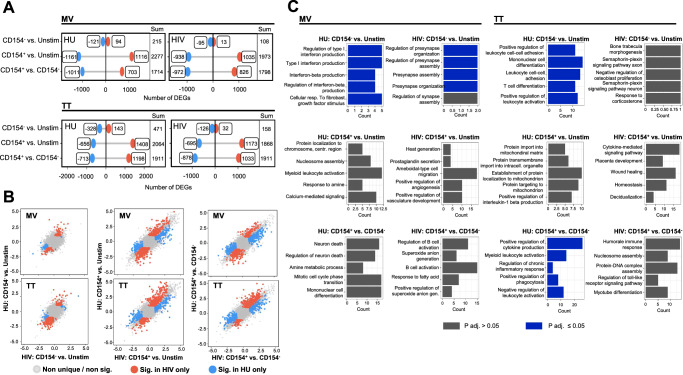
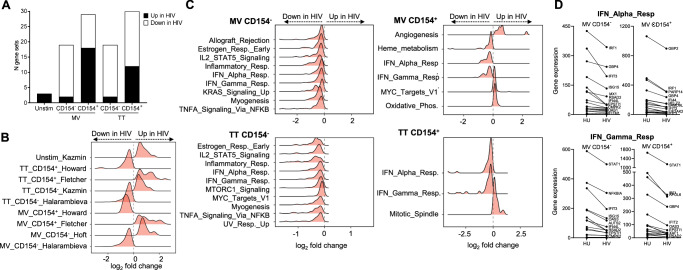
To date, our understanding of how HIV infection impacts vaccine-induced cellular immunity is limited. Here, we investigate inflammation, immune activation and antigen-specific T cell responses in HIV-uninfected and antiretroviral-treated HIV-infected people. Our findings highlight lower recall responses of antigen-specific CD4 T cells that correlate with high plasma cytokines levels, T cell hyperactivation and an altered composition of the T subsets enriched with more differentiated cells in the HIV-infected group. Transcriptomic analysis reveals that antigen-specific CD4 T cells of the HIV-infected group have a reduced expression of gene sets previously reported to correlate with vaccine-induced pathogen-specific protective immunity and further identifies a consistent impairment of the IFNα and IFNγ response pathways as mechanism for the functional loss of recall CD4 T cell responses in antiretroviral-treated people. Lastly, in vitro treatment with drugs that reduce inflammation results in higher memory CD4 T cell IFNγ responses. Together, our findings suggest that vaccine-induced cellular immunity may benefit from strategies to counteract inflammation in HIV infection.
迄今为止,我们对 HIV 感染如何影响疫苗诱导的细胞免疫的理解还很有限。在这里,我们研究了未感染 HIV 和接受抗逆转录病毒治疗的 HIV 感染者的炎症、免疫激活和抗原特异性 T 细胞反应。我们的研究结果突出了抗原特异性 CD4 T 细胞的回忆反应较低,这与高血浆细胞因子水平、T 细胞过度激活以及 HIV 感染组中富含更分化细胞的 T 细胞亚群的组成改变有关。转录组分析表明,HIV 感染组的抗原特异性 CD4 T 细胞表达先前报道与疫苗诱导的病原体特异性保护性免疫相关的基因集的水平降低,进一步确定 IFNα 和 IFNγ 反应途径的一致损伤是抗逆转录病毒治疗人群中回忆性 CD4 T 细胞反应功能丧失的机制。最后,体外用降低炎症的药物治疗可导致记忆性 CD4 T 细胞 IFNγ 反应增加。综上所述,我们的研究结果表明,针对 HIV 感染中炎症的策略可能有益于疫苗诱导的细胞免疫。