Lu Xiaolin, Ge Li-Ping, Liu Zhaopei, Zhu Yu, Ye Dingwei, Chang Yuan
Department of Urology, Fudan University Shanghai Cancer Center, Shanghai, China.
Department of Oncology, Shanghai Medical College, Fudan University, Shanghai, China.
Front Oncol. 2024 Nov 11;14:1498579. doi: 10.3389/fonc.2024.1498579. eCollection 2024.
Increasing evidence suggests that the CXC chemokine receptor 6 (CXCR6) is involved in tumor progression and the regulation of tumor immunity. However, its role in muscle-invasive bladder cancer (MIBC) remains largely unexplored.
Data from 391 MIBC patients in the TCGA, 212 patients from GEO, 131 patients from our center, 195 patients in the IMvigor210 cohort, and single-cell RNA sequencing (scRNA-seq) data from 9 bladder cancer patients (GSE222315) were analyzed. Additionally, data from the GEPIA 2, TISCH2, TIMER2.0, and UALCAN platforms were utilized to investigate the prognostic and immunotherapeutic significance of CXCR6 in MIBC.
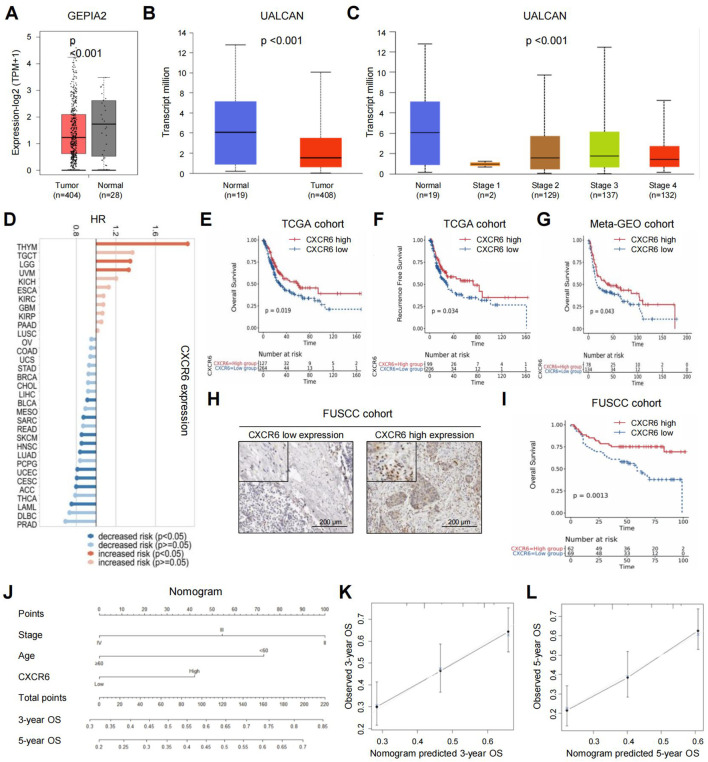
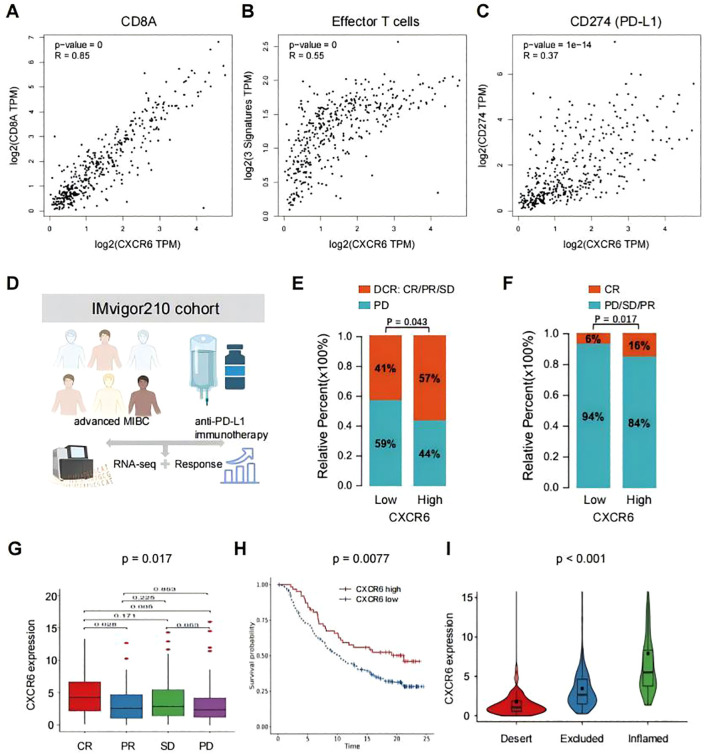
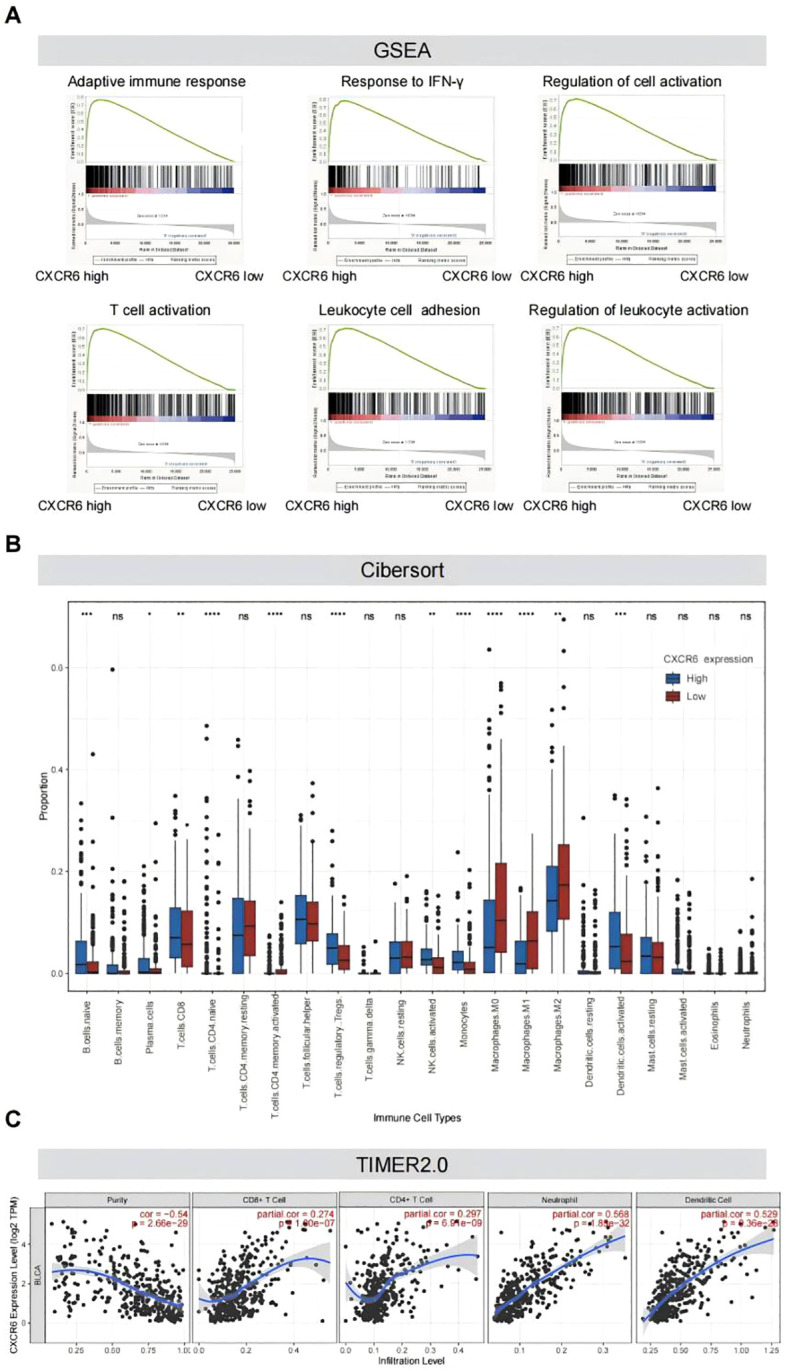
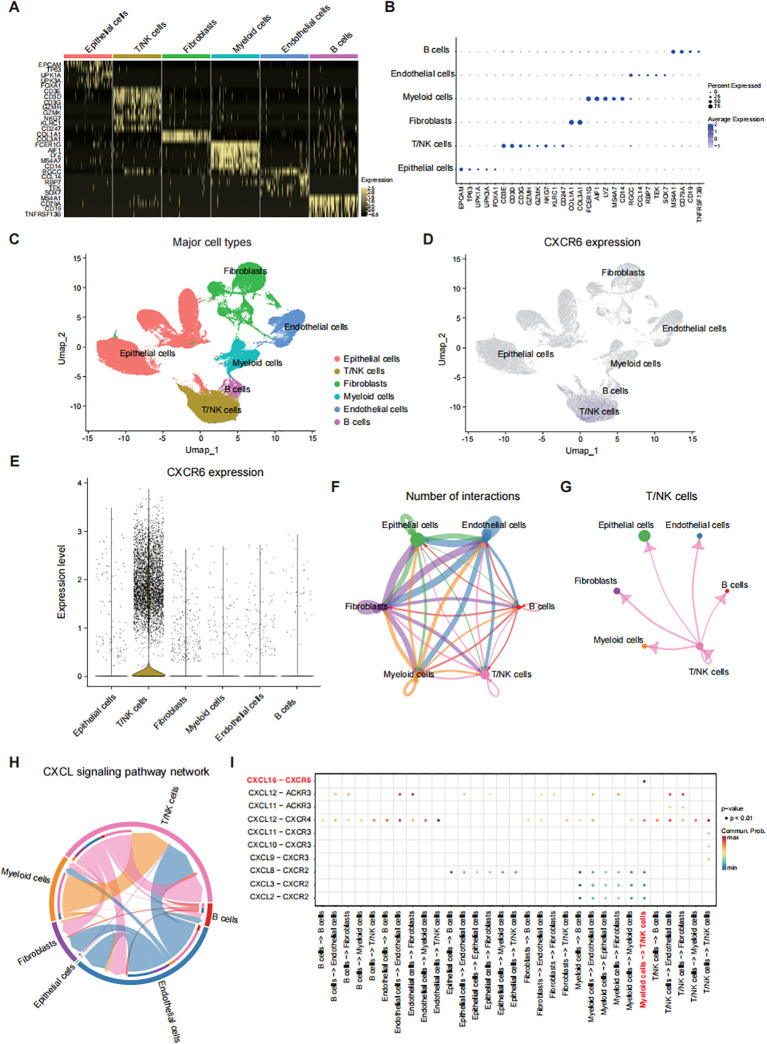
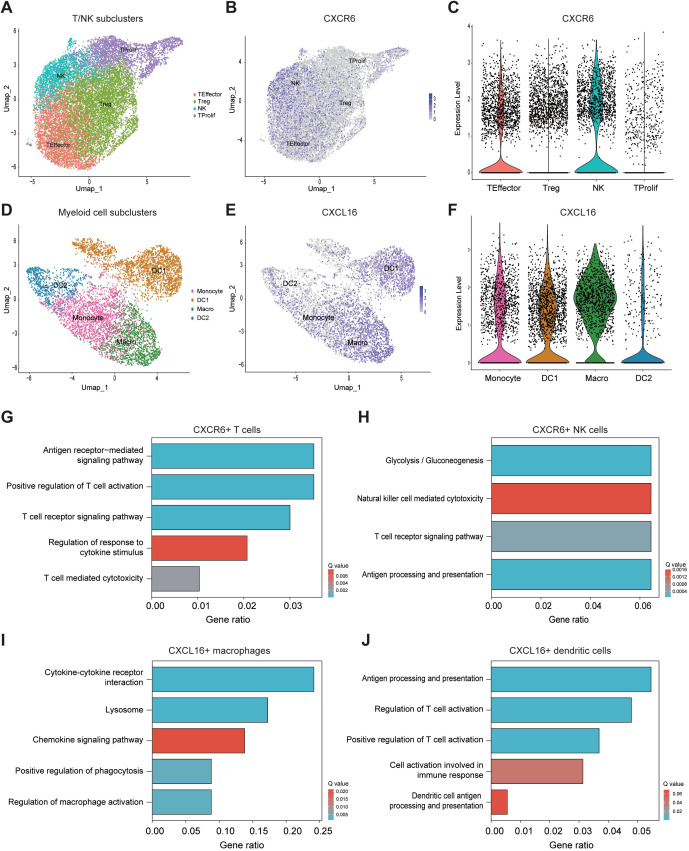
We observed that CXCR6 expression was significantly reduced in bladder cancer tumors and correlated with tumor stage and grade. Low CXCR6 expression was associated with poor recurrence-free survival (RFS) and overall survival (OS) in the TCGA cohort, a finding validated in both the meta-GEO dataset and our center's cohort. Multivariate analysis confirmed that low CXCR6 expression was an independent predictor of poor OS and RFS. A nomogram incorporating CXCR6 expression and other independent prognostic factors was developed to accurately predict 3- and 5-year OS. Gene set enrichment analysis indicated that immune activation-related pathways were significantly enriched in tumors with high CXCR6 expression. CIBERSORT analysis revealed that CXCR6 expression was positively correlated with CD8+ T cells, CD4+ T cells, activated NK cells, M1 macrophages, and activated dendritic cells in TCGA, findings further validated by TIMER2.0. scRNA-seq data showed that CXCR6 was predominantly expressed in T and NK cells and facilitated T/NK-myeloid interaction via the CXCR6-CXCL16 axis. Importantly, CXCL16+ macrophages and dendritic cells recruited CXCR6+ T and NK cells, which exhibited enhanced cytotoxicity, thereby amplifying anti-tumor immunity. Clinically, in the IMvigor210 immunotherapy cohort, higher CXCR6 expression was associated with improved anti-PD-L1 therapeutic outcomes.
Our findings highlight CXCR6 as a critical biomarker for predicting prognosis and immunotherapeutic response in MIBC.
越来越多的证据表明,CXC趋化因子受体6(CXCR6)参与肿瘤进展和肿瘤免疫调节。然而,其在肌层浸润性膀胱癌(MIBC)中的作用仍 largely未被探索。
分析了来自TCGA的391例MIBC患者的数据、来自GEO的212例患者的数据、来自我们中心的131例患者的数据、IMvigor210队列中的195例患者的数据以及9例膀胱癌患者(GSE222315)的单细胞RNA测序(scRNA-seq)数据。此外,利用来自GEPIA 2、TISCH2、TIMER2.0和UALCAN平台的数据来研究CXCR6在MIBC中的预后和免疫治疗意义。
我们观察到CXCR6表达在膀胱癌肿瘤中显著降低,且与肿瘤分期和分级相关。在TCGA队列中,低CXCR6表达与无复发生存期(RFS)和总生存期(OS)较差相关,这一发现在meta-GEO数据集和我们中心的队列中均得到验证。多变量分析证实,低CXCR6表达是OS和RFS较差的独立预测因子。构建了一个纳入CXCR6表达和其他独立预后因素的列线图,以准确预测3年和5年OS。基因集富集分析表明,免疫激活相关通路在CXCR6高表达的肿瘤中显著富集。CIBERSORT分析显示,在TCGA中,CXCR6表达与CD8 + T细胞、CD4 + T细胞、活化的NK细胞、M1巨噬细胞和活化的树突状细胞呈正相关,TIMER2.0进一步验证了这些发现。scRNA-seq数据显示,CXCR6主要在T细胞和NK细胞中表达,并通过CXCR6-CXCL16轴促进T/NK-髓系相互作用。重要的是,CXCL16 +巨噬细胞和树突状细胞招募CXCR6 + T细胞和NK细胞,这些细胞表现出增强的细胞毒性,从而放大抗肿瘤免疫。临床上,在IMvigor210免疫治疗队列中,较高的CXCR6表达与抗PD-L1治疗效果改善相关。
我们的研究结果突出了CXCR6作为预测MIBC预后和免疫治疗反应的关键生物标志物。