Centro de Controle de Zoonoses, Secretaria Municipal de Saúde de Foz do Iguaçu, Foz do Iguaçu, Brazil.
Laboratório de Mosquitos Transmissores de Hematozoários, Instituto Oswaldo Cruz, Fiocruz, Rio de Janeiro, Brazil.
JMIR Public Health Surveill. 2024 Nov 14;10:e62759. doi: 10.2196/62759.
Dengue fever, transmitted by Aedes aegypti and Aedes albopictus mosquitoes, poses a significant public health challenge in tropical and subtropical regions. Dengue surveillance involves monitoring the incidence, distribution, and trends of infections through systematic data collection, analysis, interpretation, and dissemination. It supports public health decision-making, guiding interventions like vector control, vaccination campaigns, and public education.
Herein, we report the development of a surveillance system already in use to support public health managers against dengue transmission in Foz do Iguaçu, a dengue-endemic Brazilian city located in the Triple Border with Argentina and Paraguay.
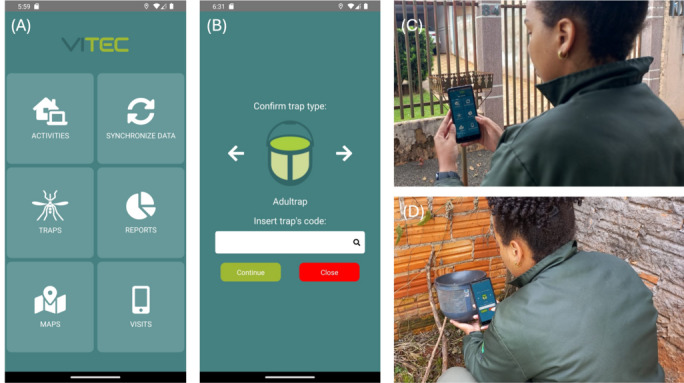
We present data encompassing the fieldwork organization of more than 100 health agents; epidemiological and entomological data were gathered from November 2022 to April 2024, totalizing 18 months of data collection.
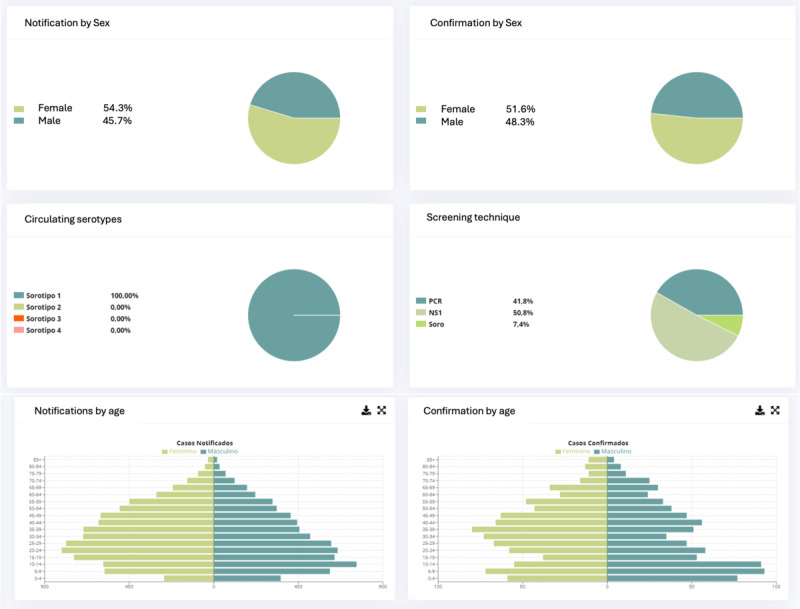
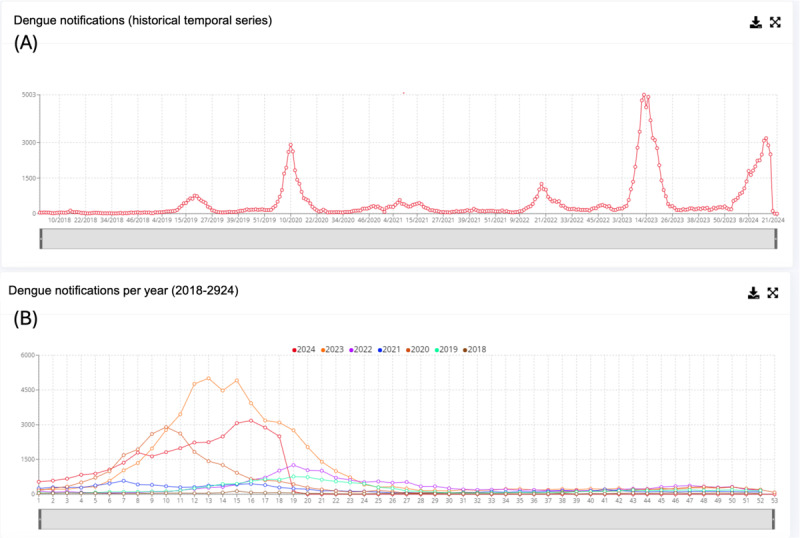
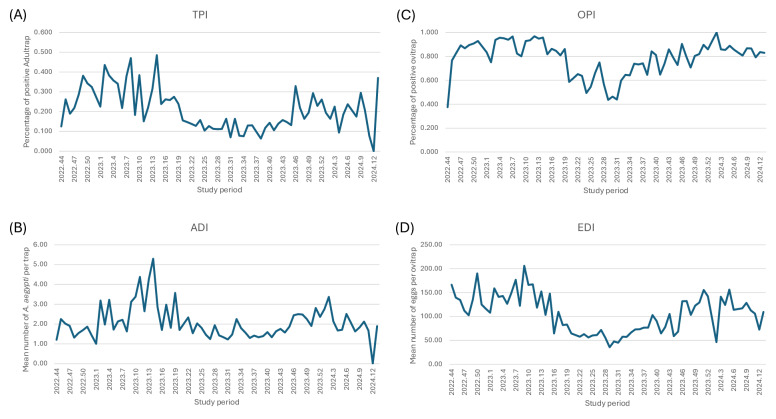
By registering health agents, we were able to provide support for those facing issues to fill their daily milestone of inspecting 16 traps per working day. We filtered dengue transmission in the city by patient age, gender, and reporting units, as well as according to dengue virus serotype. The entomological indices presented a strong seasonal pattern, as expected. Several longtime established routines in Foz do Iguaçu have been directly impacted by the adoption of Vigilância Integrada com Tecnologia (VITEC).
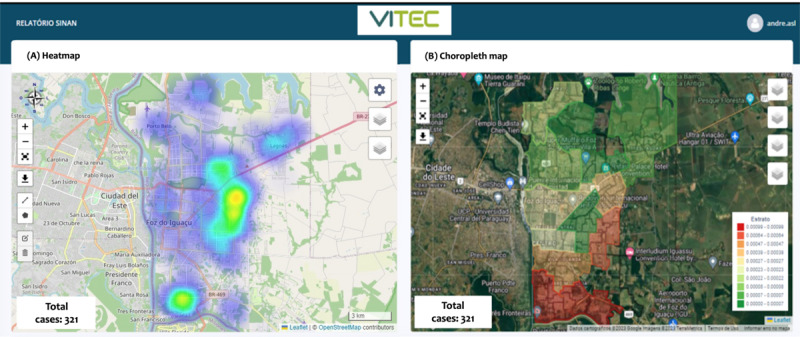
The implementation of VITEC has enabled more efficient and accurate diagnostics of local transmission risk, leading to a better understanding of operational activity patterns and risks. Lately, local public health managers can easily identify hot spots of dengue transmission and optimize interventions toward those highly sensitive areas.
登革热由埃及伊蚊和白纹伊蚊传播,对热带和亚热带地区的公共卫生构成重大挑战。登革热监测通过系统的数据收集、分析、解释和传播,监测感染的发病率、分布和趋势。它支持公共卫生决策,指导病媒控制、疫苗接种运动和公众教育等干预措施。
本文报告了一个监测系统的开发情况,该系统已在用于支持福斯杜伊瓜苏(Foz do Iguaçu)的公共卫生管理者对抗登革热传播,福斯杜伊瓜苏是巴西一个位于阿根廷和巴拉圭三国边界的登革热流行城市。
我们介绍了组织 100 多名卫生人员开展现场工作的数据;从 2022 年 11 月至 2024 年 4 月,共收集了 18 个月的流行病学和昆虫学数据。
通过登记卫生人员,我们为那些在每天检查 16 个诱蚊器方面遇到问题的人员提供了支持。我们根据患者年龄、性别和报告单位以及登革热病毒血清型对城市中的登革热传播进行了筛选。正如预期的那样,昆虫学指标呈现出强烈的季节性模式。福斯杜伊瓜苏市长期以来确立的一些常规工作直接受到综合技术监测(VITEC)的采用的影响。
VITEC 的实施使得对当地传播风险的诊断更加高效和准确,从而更好地了解运营活动模式和风险。最近,当地公共卫生管理者可以轻松识别登革热传播的热点,并针对这些高度敏感地区优化干预措施。