Coussirou Julie, Ravoire Magali, Stancu Alma, Vazquez Léa
Institut du Cancer Avignon Provence, 250 Chemin de Baigne-Pieds, 84000 Avignon, France.
Curr Oncol. 2024 Nov 4;31(11):6891-6897. doi: 10.3390/curroncol31110509.
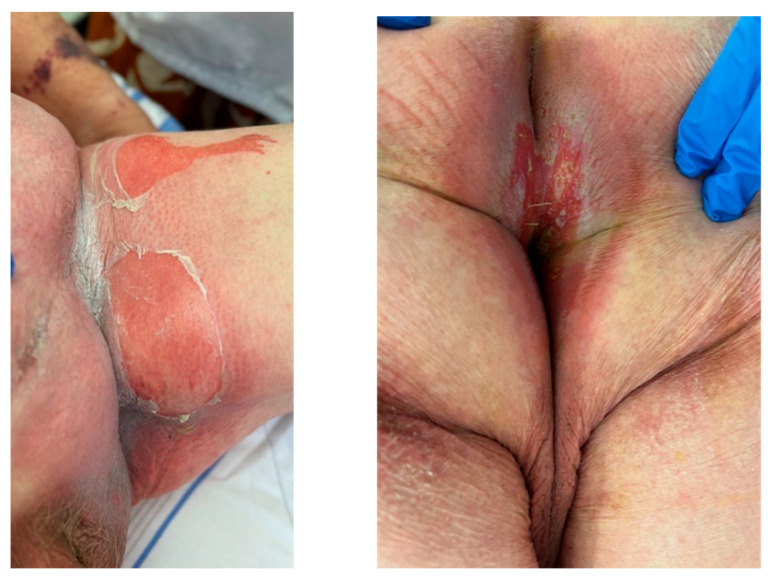
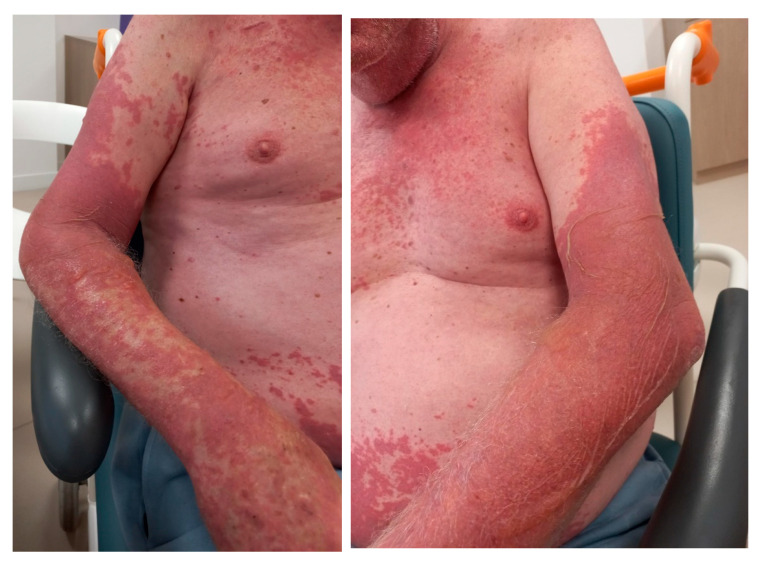
Lyell's syndrome or Toxic Epidermal Necrolysis (TEN) is a rare and life-threatening dermatological disease. Most commonly, this syndrome is drug-induced, and is a result of an immune-allergic reaction to medications. Anti-cancer drugs were not the most frequent groups of therapeutic agents related to Lyell's syndrome, but the emergence of new therapeutic classes, particularly targeted therapy and immunotherapy, is changing current data. We present two cases of Lyell's syndrome induced by anticancer drugs. (1) TEN in a man treated for metastatic urothelial carcinoma with Enfortumab Vedotin. (2) TEN in a man with metastatic melanoma treated with Nivolumab and Ipilimumab. Despite quick medical treatment and transfer to a severe burn unit, both patients died of TEN.
莱尔综合征或中毒性表皮坏死松解症(TEN)是一种罕见且危及生命的皮肤病。最常见的是,该综合征由药物引起,是对药物的免疫过敏反应所致。抗癌药物并非与莱尔综合征相关的最常见治疗药物类别,但新治疗类别(尤其是靶向治疗和免疫治疗)的出现正在改变当前数据。我们报告两例由抗癌药物引起的莱尔综合征病例。(1)一名接受安佛他明(Enfortumab Vedotin)治疗转移性尿路上皮癌的男性发生TEN。(2)一名接受纳武单抗(Nivolumab)和伊匹单抗(Ipilimumab)治疗转移性黑色素瘤的男性发生TEN。尽管进行了快速治疗并转至重度烧伤病房,但两名患者均死于TEN。