Zhang Meng, Sun Yingxin, Lv Zeliang, Lin Hongmei, Han Mei, Yang Limin
Co-constructing Key Laboratory by Province and the Ministry of Science and Technology of Ecological Restoration and Ecosystem Management, College of Chinese Medicinal Material, Jilin Agricultural University, Changchun 130118, China.
Curr Issues Mol Biol. 2024 Oct 30;46(11):12260-12278. doi: 10.3390/cimb46110728.
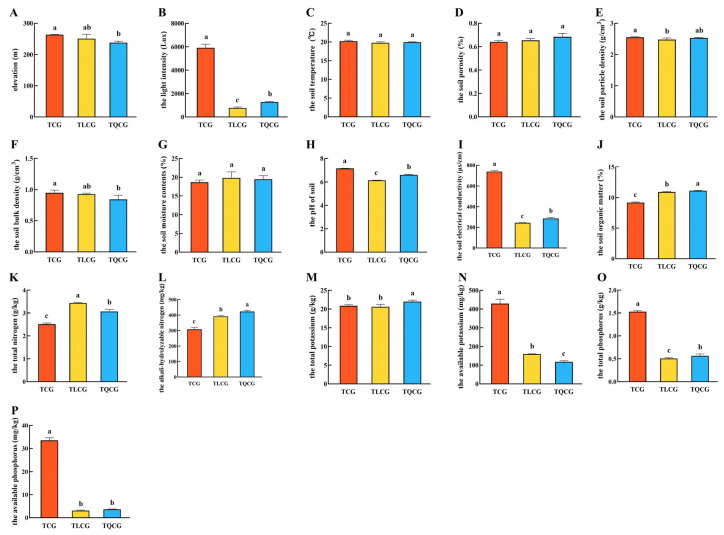
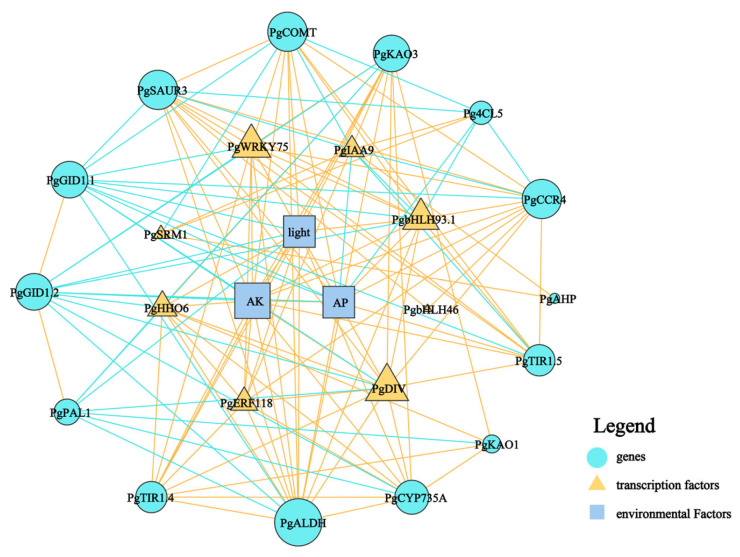
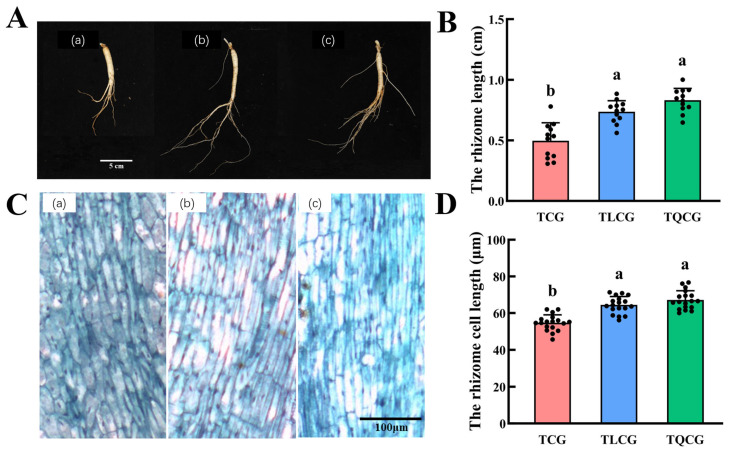
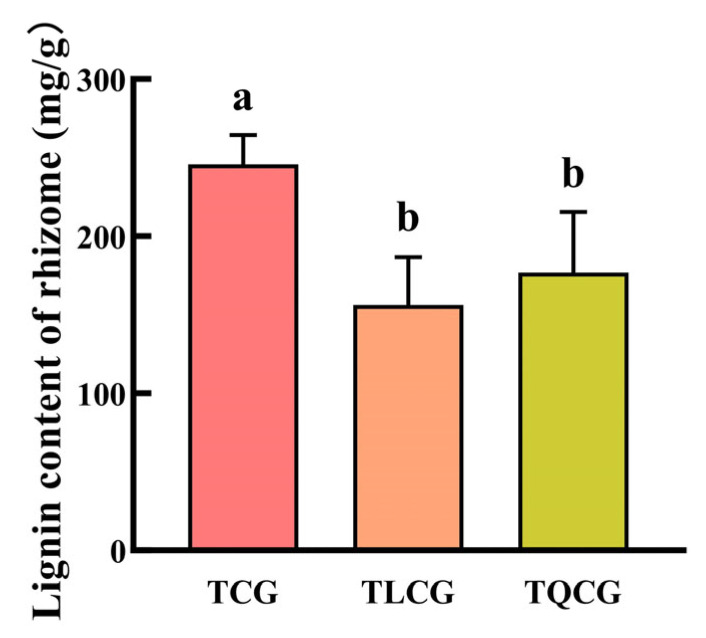
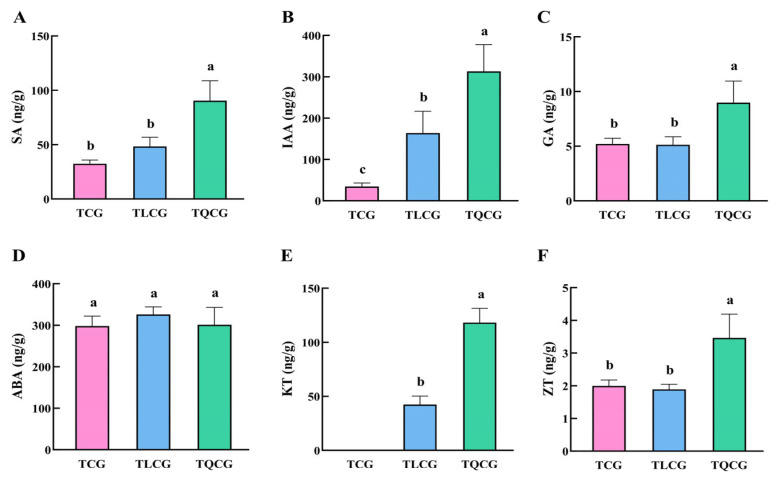
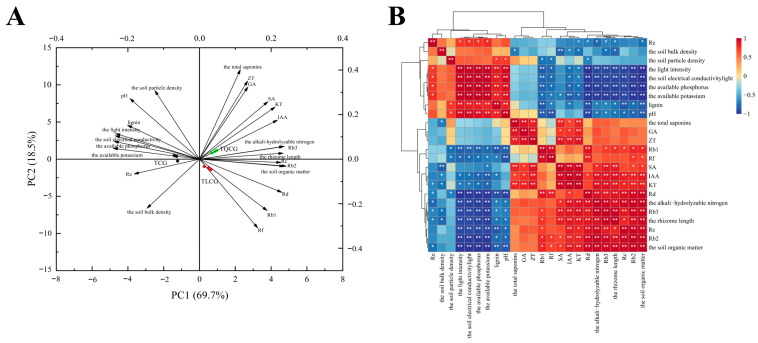
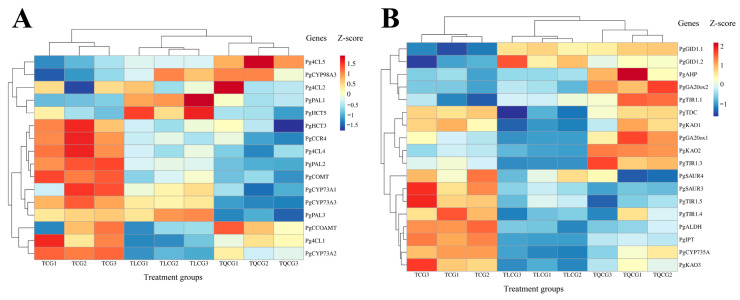
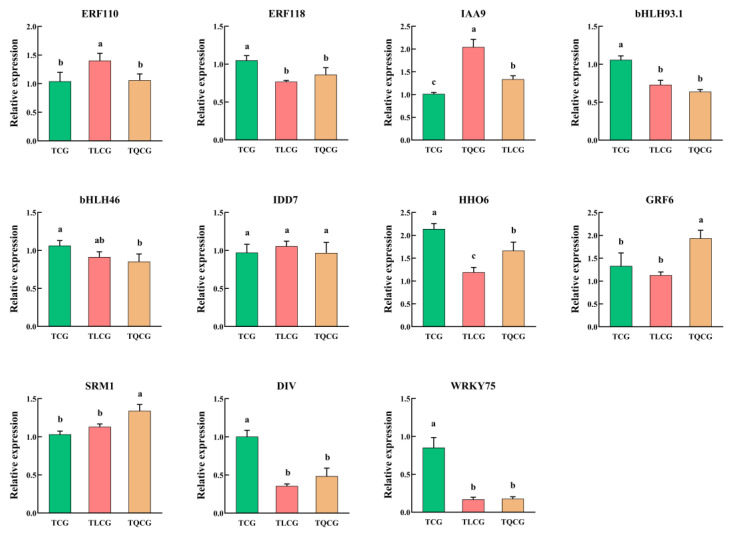
, a perennial medicinal plant, utilizes its dried roots and rhizomes for medicinal purposes. Currently, in China, ginseng cultivation employs two methods: under-forest and farmland planting. These methods create distinct habitats, significantly influencing the ginseng's rhizome morphology and, consequently, its economic value. In this study, two-year-old ginsengs were transplanted into farmland (TCG), a larch forest (TLCG) and a forest (TQCG) to analyze the differences in rhizome phenotypes caused by habitat changes. The results showed that there were significant differences in light intensity and the soil's available phosphorus and potassium contents between farmland and forest environments. The differences in habitats led to different adaptability of the ginseng's rhizome morphology. Compared with TCG, the rhizomes of TLCG and TQCG were significantly elongated by 48.36% and 67.34%, respectively. After the rhizomes' elongation in TLCG and TQCG, there was an increase in indole-3-acetic acid (IAA) contents and a decrease in lignin contents. By analyzing the expression of key genes, we found that, compared with TCG, the expression of key enzymes of lignin biosynthesis genes such as and were down-regulated. The difference in ginseng's rhizome length is related to the signal transduction pathway of auxin and gibberellin. In addition, we preliminarily screened out transcription factors , and , which can actively respond to habitat changes and play important roles in the elongation of ginseng rhizomes. In summary, this study elucidates the phenotypic plasticity strategy of ginseng rhizomes in response to habitat changes and delineates the regulatory mechanism behind phenotypic adaptation, offering novel insights into ginseng's morphogenesis.
人参,一种多年生药用植物,利用其干燥的根和根茎入药。目前在中国,人参种植采用两种方法:林下种植和农田种植。这些方法创造了不同的生境,显著影响人参的根茎形态,进而影响其经济价值。在本研究中,将两年生人参移植到农田(TCG)、落叶松林(TLCG)和某森林(TQCG)中,以分析生境变化引起的根茎表型差异。结果表明,农田和森林环境之间的光照强度以及土壤有效磷和钾含量存在显著差异。生境差异导致人参根茎形态的适应性不同。与TCG相比,TLCG和TQCG的根茎分别显著伸长了48.36%和67.34%。TLCG和TQCG根茎伸长后,吲哚-3-乙酸(IAA)含量增加,木质素含量降低。通过分析关键基因的表达,我们发现,与TCG相比,木质素生物合成基因如[具体基因名称1]和[具体基因名称2]等关键酶的表达下调。人参根茎长度的差异与生长素和赤霉素的信号转导途径有关。此外,我们初步筛选出转录因子[转录因子名称1]、[转录因子名称2]和[转录因子名称3],它们能积极响应生境变化并在人参根茎伸长中发挥重要作用。总之,本研究阐明了人参根茎响应生境变化的表型可塑性策略,并描绘了表型适应背后的调控机制,为人参的形态发生提供了新的见解。