
非支配排序遗传算法(NSGA-III)与径向基函数(RBF)插值在减轻智能隐形眼镜节点位移中的应用。
Application of non-dominated sorting genetic algorithm (NSGA-III) and radial basis function (RBF) interpolation for mitigating node displacement in smart contact lenses.
作者信息
Chang Hanjui, Sun Yue, Lu Shuzhou, Lin Daiyao
机构信息
Department of Mechanical Engineering, College of Engineering, Shantou University, Shantou, 515063, China.
Intelligent Manufacturing Key Laboratory of Ministry of Education, Shantou University, Shantou, 515063, China.
出版信息
Sci Rep. 2024 Nov 26;14(1):29348. doi: 10.1038/s41598-024-79640-4.
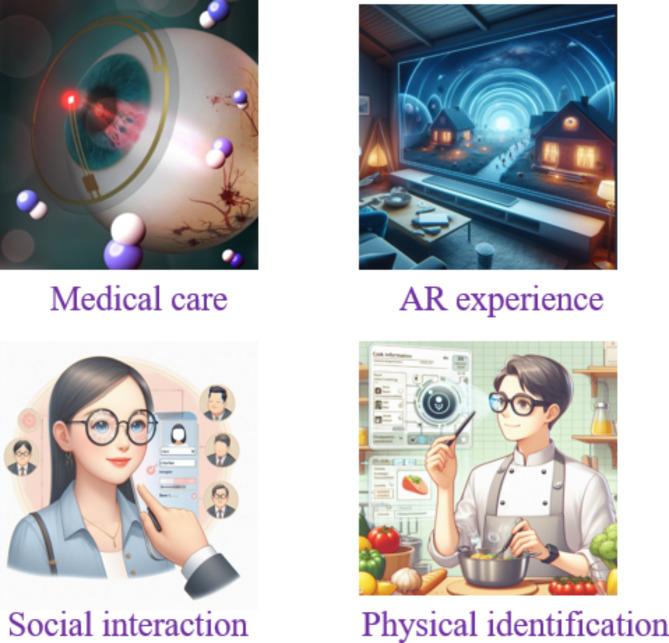
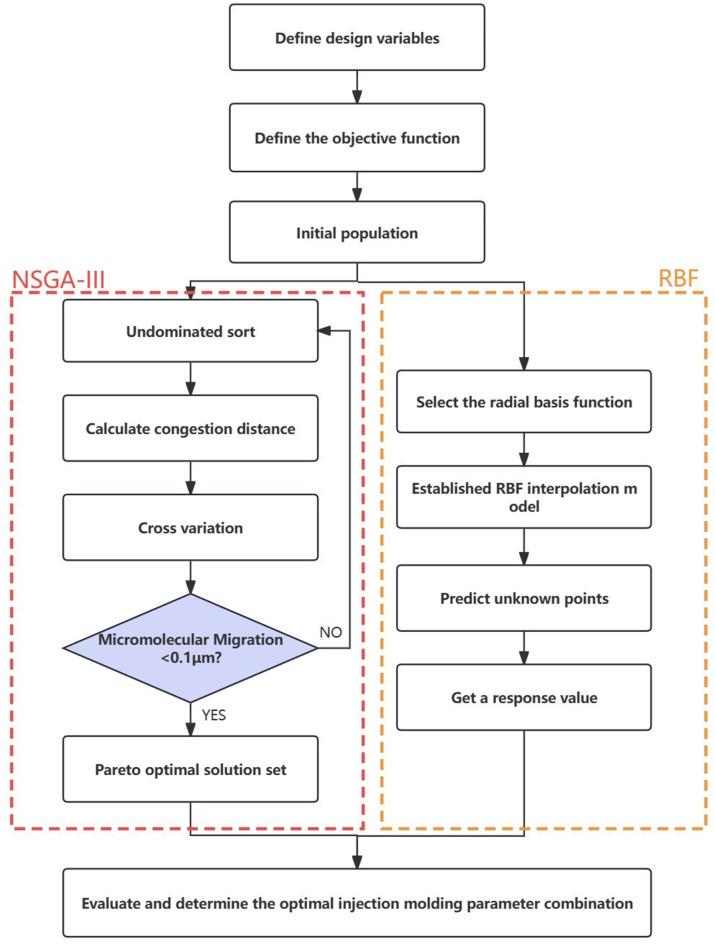
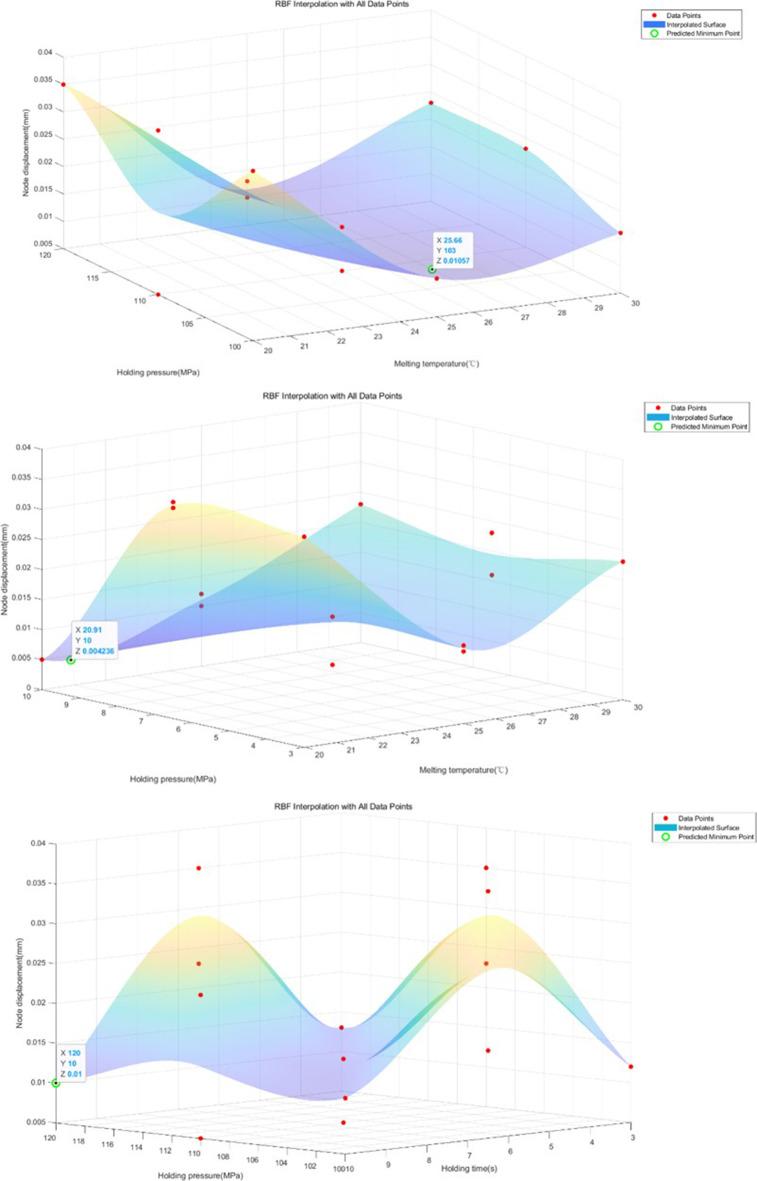
With the rapid development of wearable technology, smart contact lenses (SCL) are gradually gaining attention as a breakthrough innovation. The emergence of these products suggests that smart glasses, which incorporate electronic components and visual aids, are expected to become the mainstream of human-computer interaction in the future. However, realizing this vision requires not only advanced electronics but also highly sophisticated manufacturing processes. Therefore, this paper provides an in-depth discussion on the process of manufacturing smart contact lenses using in-mold electronic decoration technology and focuses on the multi-objective problem of optimizing injection parameters such as melt temperature and holding pressure to achieve on micro-molecular displacements as well as residual stresses. First, the background and technical requirements of smart contact lenses are described in detail, emphasizing the prospect of SCL for a wide range of applications in augmented reality, healthcare, and smart assistance. Subsequently, the key role of IME technology in SCL manufacturing is discussed. Focusing on the optimization of melting temperature, holding pressure and holding time, the effects of these three key parameters on eyewear were systematically analyzed with the goal of improving the overall performance and biocompatibility of SCL. The multi-objective optimization of melting temperature and holding pressure was achieved by NSGA-III. Radial basis function interpolation was used as an auxiliary method to provide finer optimization results for NSGA-III. During the multi-objective optimization process, efforts were made to achieve uniform flow of melt temperature and optimal adjustment of holding pressure to maximize the transparency, stability and comfort of SCL. The final results obtained achieved an optimization rate of 95.60% and 93.47% for nodal displacement and residual stress, respectively, compared with the initially recommended process parameters.
随着可穿戴技术的迅速发展,智能隐形眼镜(SCL)作为一项突破性创新正逐渐受到关注。这些产品的出现表明,融合了电子元件和视觉辅助设备的智能眼镜有望在未来成为人机交互的主流。然而,要实现这一愿景,不仅需要先进的电子技术,还需要高度精密的制造工艺。因此,本文深入探讨了采用模内电子装饰技术制造智能隐形眼镜的过程,并着重研究了优化注射参数(如熔体温度和保压压力)以实现微观分子位移和残余应力的多目标问题。首先,详细描述了智能隐形眼镜的背景和技术要求,强调了SCL在增强现实、医疗保健和智能辅助等广泛应用中的前景。随后,讨论了模内电子(IME)技术在SCL制造中的关键作用。围绕熔体温度、保压压力和保压时间的优化,系统分析了这三个关键参数对眼镜的影响,旨在提高SCL的整体性能和生物相容性。通过NSGA-III实现了熔体温度和保压压力的多目标优化。采用径向基函数插值作为辅助方法,为NSGA-III提供更精细的优化结果。在多目标优化过程中,努力实现熔体温度的均匀流动和保压压力的优化调整,以最大化SCL的透明度、稳定性和舒适度。与最初推荐的工艺参数相比,最终获得的结果在节点位移和残余应力方面的优化率分别达到了95.60%和93.47%。







 Zotero 插件