Ju Seyoung, Kwon Yongseok, Yeum Kyung-Jin
Department of Food and Nutrition, College of Biomedical and Health Science, Konkuk University, Chungju-si 27478, Chungchungbuk-do, Republic of Korea.
National Institute of Agricultural Sciences, 166 Nongsaengmyeong-ro, Jeonju 55365, Jeonbuk-do, Republic of Korea.
Foods. 2024 Nov 7;13(22):3568. doi: 10.3390/foods13223568.
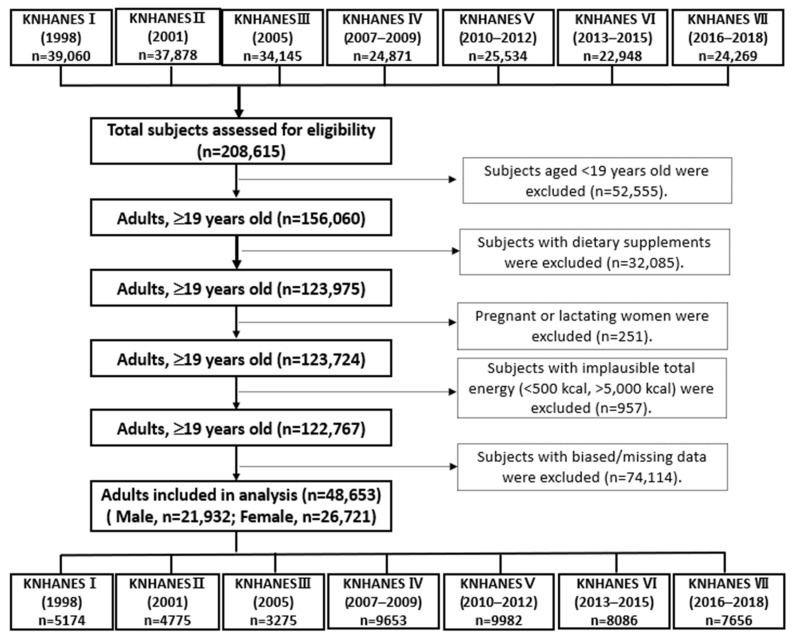
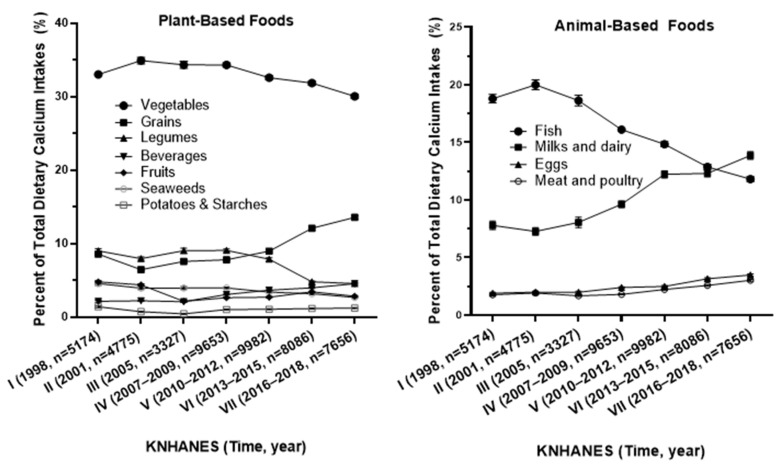
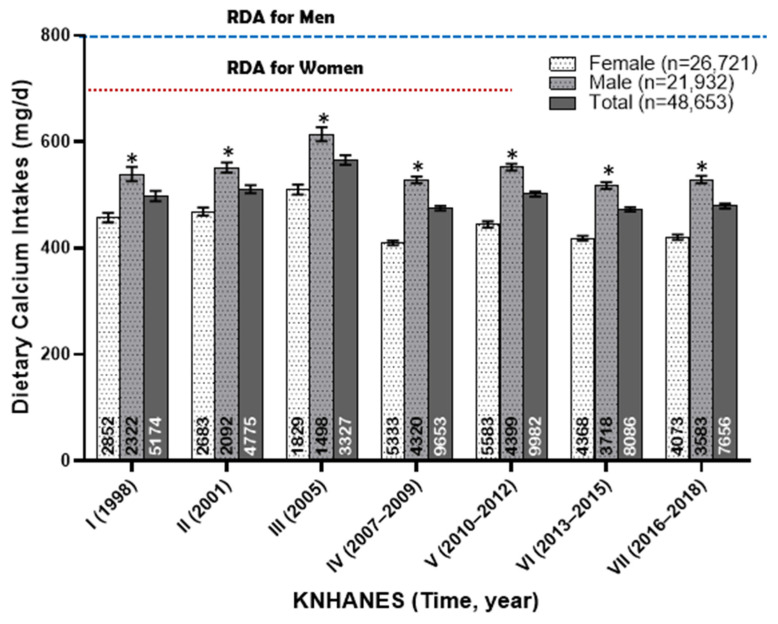
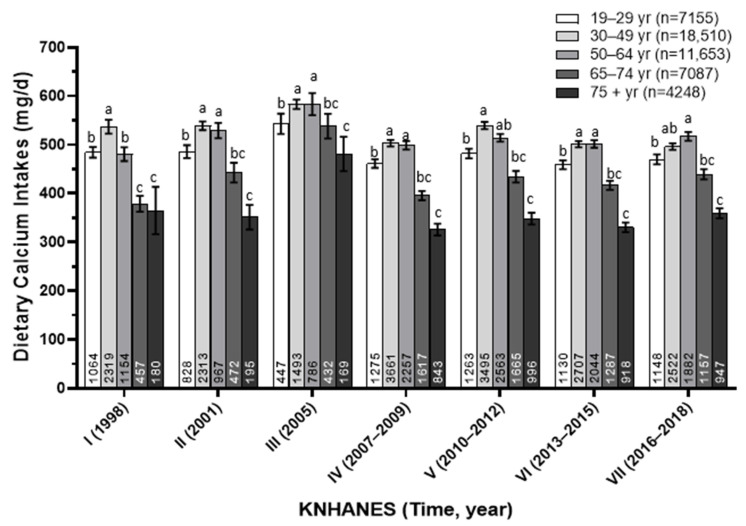
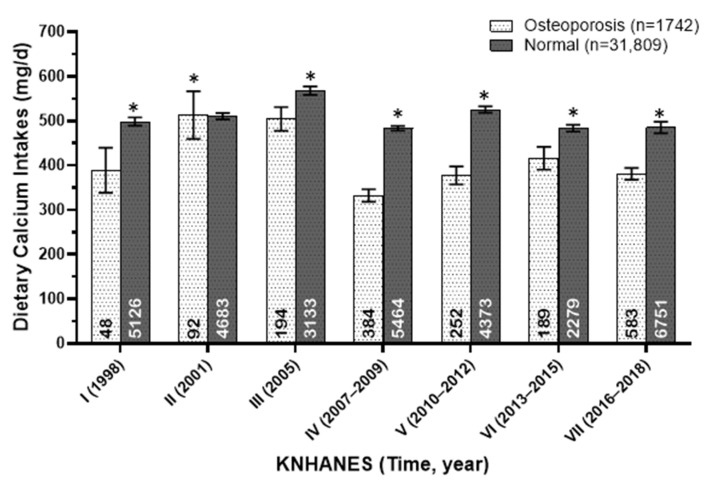
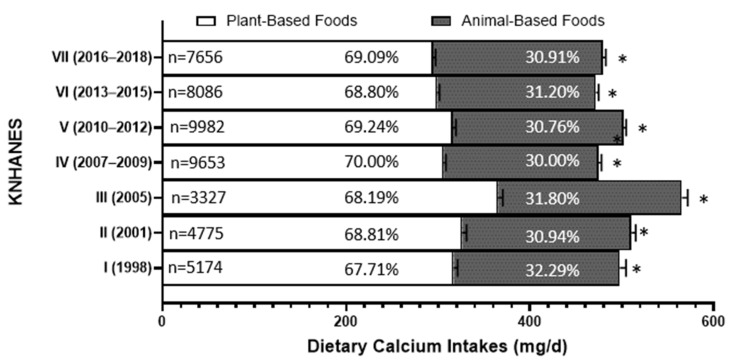
Calcium inadequacy in Asian populations has been well documented, but whether it has improved over time remains uncertain. We analyzed dietary calcium intake and its association with osteoporosis prevalence over a 20-year period in 48,653 adults (21,932 men and 26,721 women, aged 19 years and older) in Korea, using data from the first to the seventh Korea National Health and Nutrition Examination Survey (1998-2018). Over the past 20 years, Korean adults consistently fell short of the recommended dietary calcium intake, with women and older adults particularly affected, typically consuming only 40-80% of the recommended levels. The 30-49 age group had the highest calcium intake (497-568 mg/day), while those aged 75+ had the lowest (319-457 mg/day). A significant inverse relationship was found between calcium intake and osteoporosis risk, with lower calcium intake associated with higher odds of developing osteoporosis, as determined by both physician diagnoses and bone mineral density measurements ( < 0.001). Notably, over the past 20 years, 68-70% of dietary calcium consistently came from plant-based foods. This study strongly emphasizes the urgent need to enhance calcium-rich food availability and implement targeted interventions to increase calcium intake among those most affected by inadequacy, particularly the elderly and women. Further research with recent data would be valuable for understanding current intake levels and evolving nutritional needs.
亚洲人群钙摄入不足的情况已有充分记录,但随着时间推移其是否有所改善仍不确定。我们利用韩国第一次至第七次全国健康与营养检查调查(1998 - 2018年)的数据,分析了韩国48,653名成年人(21,932名男性和26,721名女性,年龄在19岁及以上)在20年期间的膳食钙摄入量及其与骨质疏松症患病率的关联。在过去20年中,韩国成年人一直未达到推荐的膳食钙摄入量,女性和老年人尤其受影响,通常仅摄入推荐水平的40 - 80%。30 - 49岁年龄组的钙摄入量最高(497 - 568毫克/天),而75岁及以上人群的钙摄入量最低(319 - 457毫克/天)。通过医生诊断和骨密度测量均发现,钙摄入量与骨质疏松症风险之间存在显著的负相关关系,钙摄入量较低与患骨质疏松症的几率较高相关(<0.001)。值得注意的是,在过去20年中,68 - 70%的膳食钙一直来自植物性食物。这项研究强烈强调迫切需要增加富含钙的食物供应,并实施有针对性的干预措施,以增加受钙摄入不足影响最大的人群,特别是老年人和女性的钙摄入量。利用最新数据进行进一步研究对于了解当前的摄入水平和不断变化的营养需求将很有价值。