Institute of Biochemistry and Molecular Medicine, University of Bern, 3012 Bern, Switzerland.
Cells. 2024 Nov 5;13(22):1825. doi: 10.3390/cells13221825.
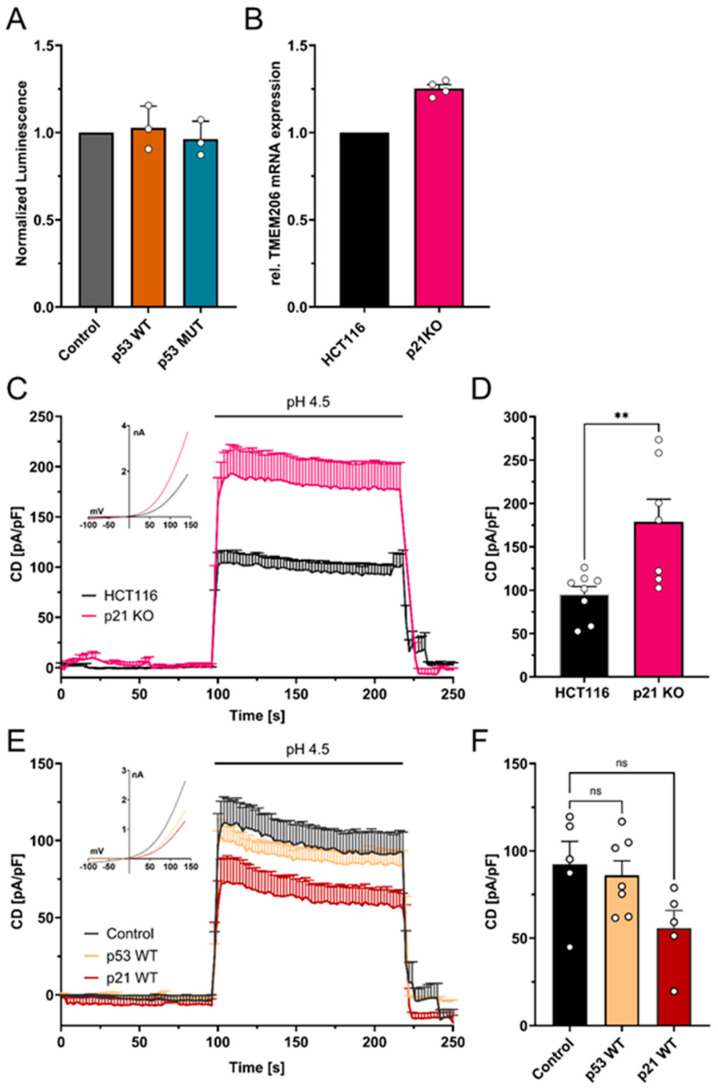
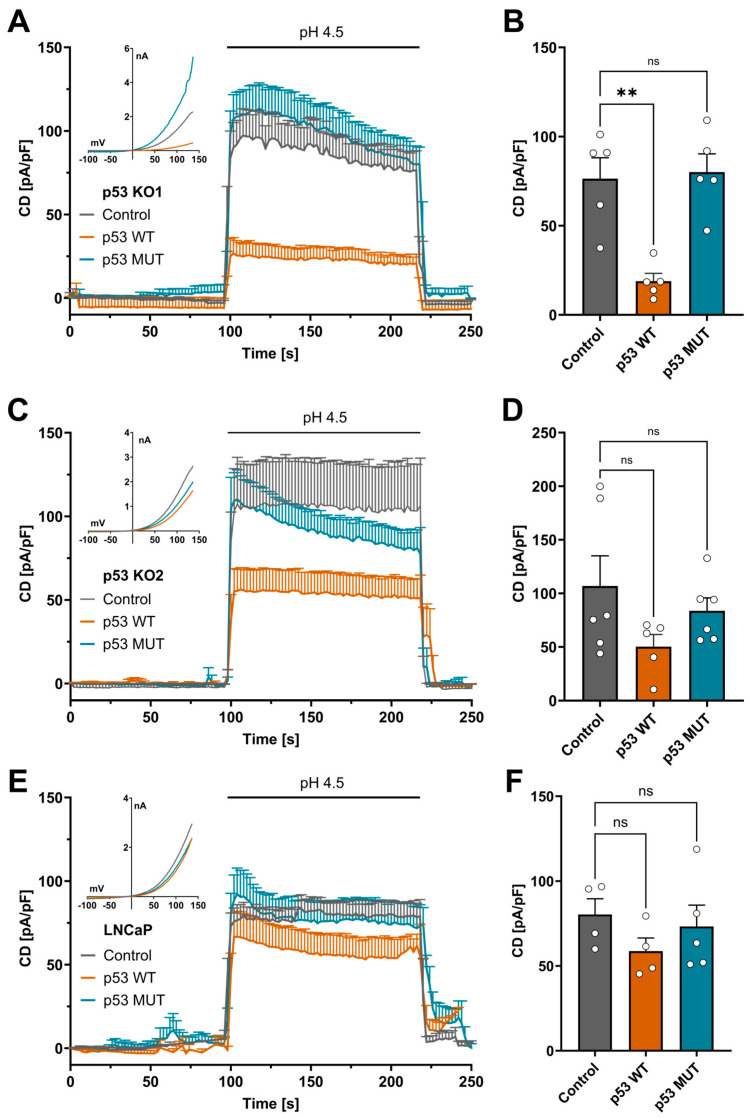
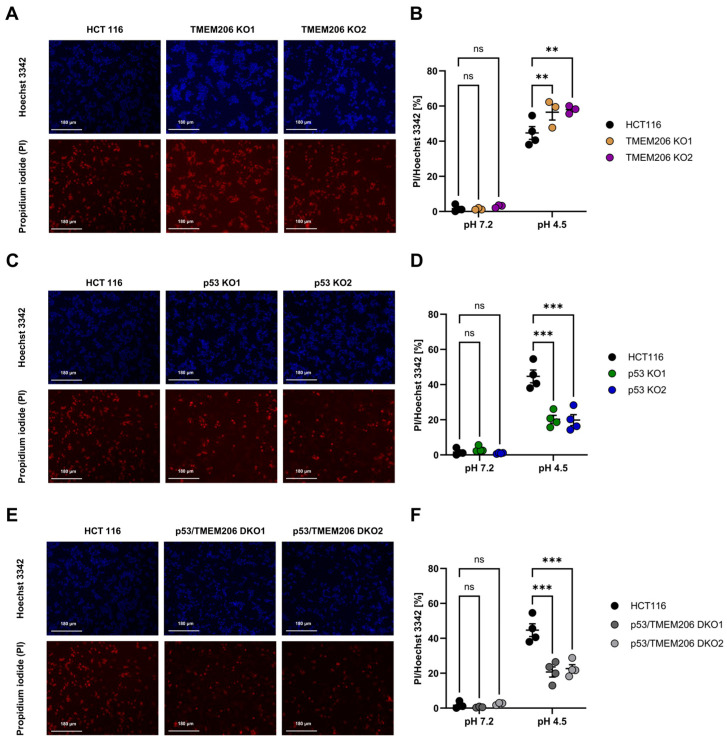
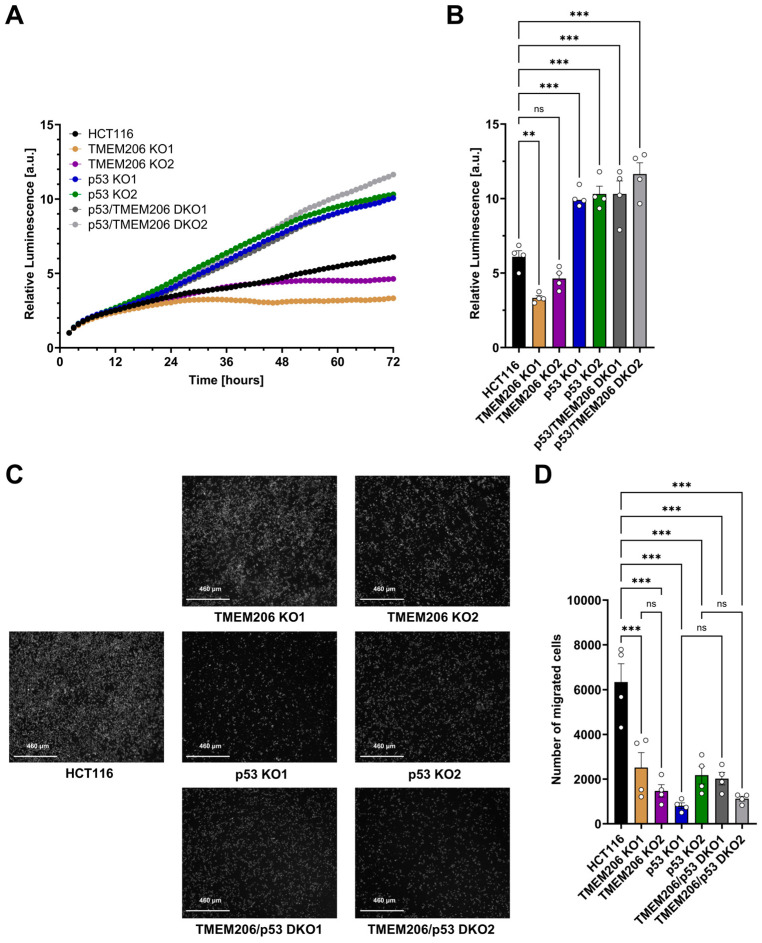
Acid-induced ion flux plays a role in pathologies where tissue acidification is prevalent, including cancer. In 2019, TMEM206 was identified as the molecular component of acid-induced chloride flux. Localizing to the plasma membrane, TMEM206 contributes to cellular processes like acid-induced cell death. Since over 50% of human cancers carry loss of function mutations in the p53 gene, we aimed to analyze how TMEM206 is regulated by p53 and its role in cancer hallmark function and acid-induced cell death in HCT116 colorectal cancer (CRC) cells. We generated p53-deficient HCT116 cells and assessed TMEM206-mediated Cl currents and transcriptional regulation using the patch-clamp and a dual-luciferase reporter assay, respectively. To investigate the contribution of TMEM206 to cancer hallmark functions, we performed migration and metabolic activity assays. The role of TMEM206 in p53-mediated acid-induced cell death was assessed with cell death assays. The TMEM206 mRNA level was significantly elevated in human primary CRC tumors. TMEM206 knockout increased acid-induced cell death and reduced proliferation and migration, indicating a role for TMEM206 in these cancer hallmark functions. Furthermore, we observed increased TMEM206 mRNA levels and currents in HCT116 p53 knockout cells. This phenotype can be rescued by transient overexpression of p53 but not by overexpression of dysfunctional p53. In addition, our data suggest that TMEM206 may mediate cancer hallmark functions within p53-associated pathways. TMEM206 promoter activity is not altered by p53 overexpression. Conversely, knockout of p21, a major target gene of p53, increased TMEM206-mediated currents, suggesting expression control of TMEM206 by p21 downstream signaling. Our results show that in colorectal cancer cells, TMEM206 expression is elevated, contributes to cancer hallmark functions, and its regulation is dependent on p53 through a p21-dependent mechanism.
酸诱导的离子通量在组织酸化普遍存在的病理学中起作用,包括癌症。2019 年,TMEM206 被鉴定为酸诱导氯通量的分子组成部分。定位于质膜,TMEM206 有助于细胞过程,如酸诱导的细胞死亡。由于超过 50%的人类癌症携带 p53 基因的功能丧失突变,我们旨在分析 TMEM206 如何被 p53 调节及其在癌症标志功能和酸诱导的 HCT116 结直肠癌细胞死亡中的作用。我们生成了 p53 缺陷型 HCT116 细胞,并分别使用膜片钳和双荧光素酶报告基因测定来评估 TMEM206 介导的 Cl 电流和转录调节。为了研究 TMEM206 对癌症标志功能的贡献,我们进行了迁移和代谢活性测定。使用细胞死亡测定评估 TMEM206 在 p53 介导的酸诱导细胞死亡中的作用。TMEM206 mRNA 水平在人原发性 CRC 肿瘤中显著升高。TMEM206 敲除增加了酸诱导的细胞死亡,并减少了增殖和迁移,表明 TMEM206 在这些癌症标志功能中起作用。此外,我们观察到 HCT116 p53 敲除细胞中 TMEM206 mRNA 水平和电流增加。这种表型可以通过瞬时过表达 p53 来挽救,但不能通过过表达功能失调的 p53 来挽救。此外,我们的数据表明 TMEM206 可能在 p53 相关途径中介导癌症标志功能。p53 的过表达不会改变 TMEM206 启动子活性。相反,p53 的主要靶基因 p21 的敲除增加了 TMEM206 介导的电流,表明 TMEM206 的表达受 p21 下游信号的控制。我们的结果表明,在结直肠癌细胞中,TMEM206 的表达上调,有助于癌症标志功能,其调节依赖于 p53 通过 p21 依赖性机制。