Department of Physiology, Medical School, National and Kapodistrian University of Athens, 75 Mikras Asias Str., 11527 Athens, Greece.
Department of Biological Chemistry, Medical School, National and Kapodistrian University of Athens, 75 Mikras Asias Str., 11527 Athens, Greece.
Cells. 2024 Nov 5;13(22):1827. doi: 10.3390/cells13221827.
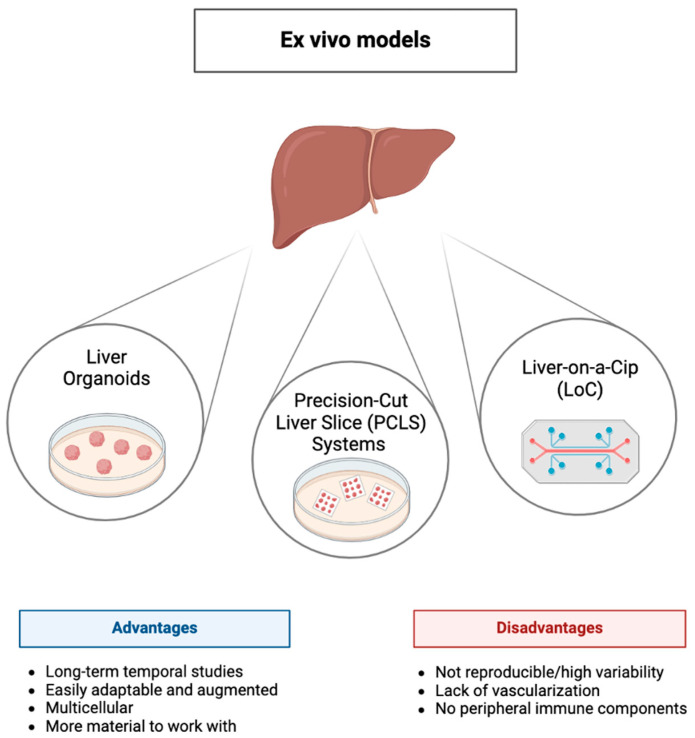
Metabolic dysfunction-associated fatty liver disease (MASLD) presents a growing global health challenge with limited therapeutic choices. This review delves into the array of ex vivo tools and models utilized in MASLD research, encompassing liver-on-a-chip (LoC) systems, organoid-derived tissue-like structures, and human precision-cut liver slice (PCLS) systems. Given the urgent need to comprehend MASLD pathophysiology and identify novel therapeutic targets, this paper aims to shed light on the pivotal role of advanced ex vivo models in enhancing disease understanding and facilitating the development of potential therapies. Despite challenges posed by the elusive disease mechanism, these innovative methodologies offer promise in reducing the utilization of in vivo models for MASLD research while accelerating drug discovery and biomarker identification, thereby addressing critical unmet clinical needs.
代谢相关脂肪性肝病(MASLD)是一个日益严峻的全球性健康挑战,目前的治疗选择有限。本综述深入探讨了 MASLD 研究中使用的各种离体工具和模型,包括肝芯片(LoC)系统、类器官衍生的组织样结构和人源精确切割肝切片(PCLS)系统。鉴于迫切需要了解 MASLD 的病理生理学并确定新的治疗靶点,本文旨在强调先进的离体模型在增强疾病认识和促进潜在治疗方法的开发方面的关键作用。尽管 MASLD 的发病机制难以捉摸,但这些创新方法有希望减少 MASLD 研究中对体内模型的使用,同时加速药物发现和生物标志物的鉴定,从而满足关键的未满足的临床需求。