Departments of Pharmacology, Frederick P. Whiddon College of Medicine, University of South Alabama, Mobile, AL 36688, USA.
Program in Molecular Medicine, University of Massachusetts Chan Medical School, Worcester, MA 01605, USA.
Int J Mol Sci. 2024 Nov 13;25(22):12168. doi: 10.3390/ijms252212168.
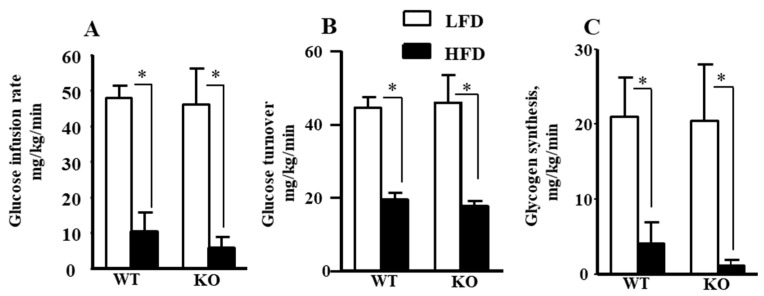
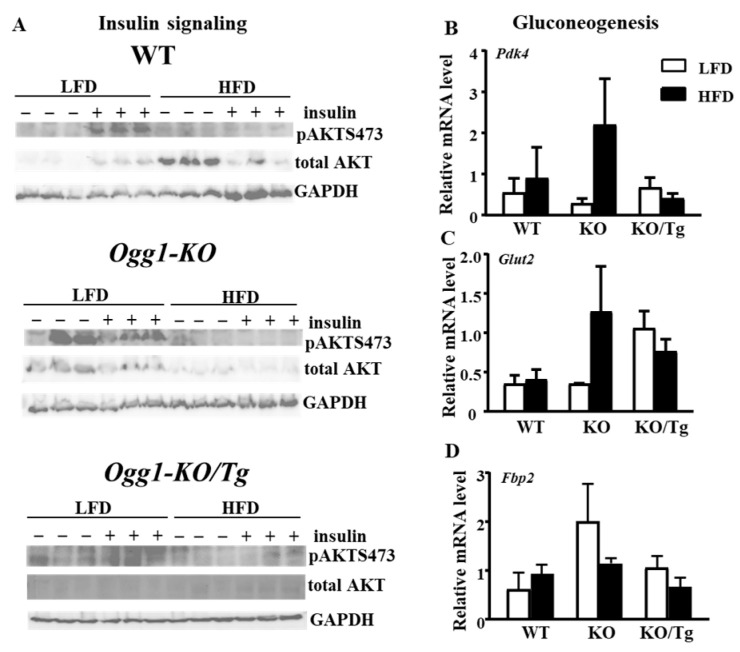
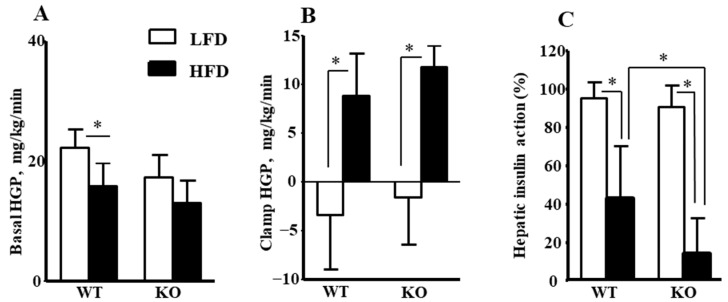
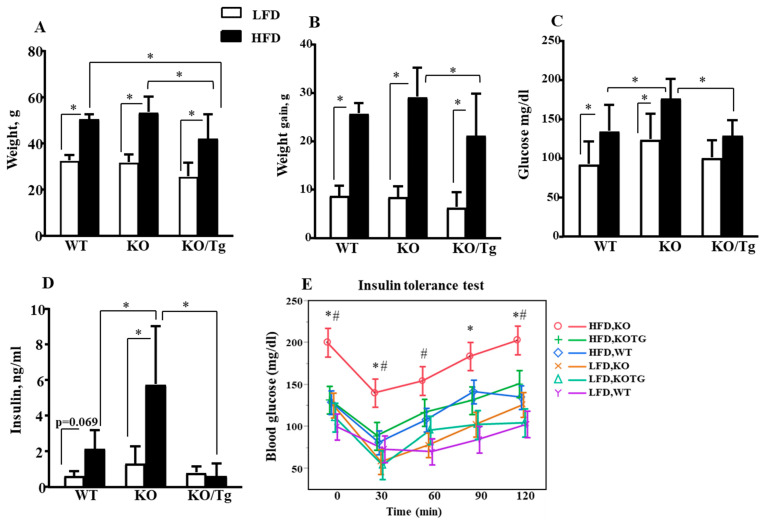
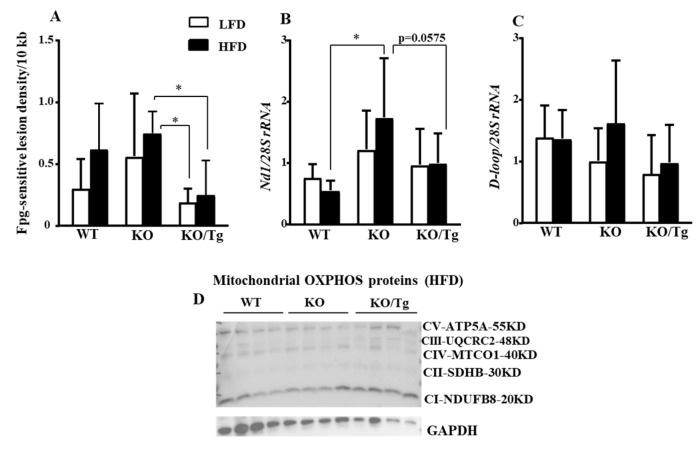
8-oxoguanine DNA glycosylase-1 (OGG1) is a DNA glycosylase mediating the first step in base excision repair which removes 7,8-dihydro-8-oxoguanine (8-oxoG) and repairs oxidized nuclear and mitochondrial DNA. Previous studies showed that OGG1 deficiency results in an increased susceptibility to high-fat diet (HFD)-induced obesity and metabolic dysfunction in mice, suggesting a crucial role of OGG1 in metabolism. However, the tissue-specific mechanisms of how OGG1 deficiency leads to insulin resistance is unknown. Thus, in the current study, we used a hyperinsulinemic-euglycemic clamp to evaluate in-depth glucose metabolism in male wild-type (WT) mice and () mice fed an HFD. mice fed HFD were more obese, with significantly lower hepatic insulin action compared to WT/HFD mice. Targeting human OGG1 to mitochondria protected against HFD-induced obesity, insulin resistance, oxidative mitochondrial DNA damage in the liver and showed decreased expression of liver gluconeogenic genes in mice, suggesting a putative protective mechanism. Additionally, several subunits of oxidative phosphorylation protein levels were noticeably increased in compared to mice fed an HFD which was associated with improved insulin signaling. Our findings demonstrate the crucial role of mitochondrial hOGG1 in HFD-induced insulin resistance and propose several protective mechanisms which can further direct the development of therapeutic treatment.
8-氧鸟嘌呤 DNA 糖基化酶-1(OGG1)是一种 DNA 糖基化酶,介导碱基切除修复的第一步,该修复过程可去除 7,8-二氢-8-氧鸟嘌呤(8-oxoG)并修复氧化的核和线粒体 DNA。先前的研究表明,OGG1 缺乏会导致小鼠对高脂肪饮食(HFD)诱导的肥胖和代谢功能障碍的易感性增加,这表明 OGG1 在代谢中起着至关重要的作用。然而,OGG1 缺乏如何导致胰岛素抵抗的组织特异性机制尚不清楚。因此,在本研究中,我们使用高胰岛素-正常血糖钳夹技术评估了雄性野生型(WT)小鼠和高脂肪饮食喂养的 ()小鼠的深入葡萄糖代谢情况。高脂肪饮食喂养的 小鼠更肥胖,与 WT/HFD 小鼠相比,肝胰岛素作用明显降低。将人 OGG1 靶向线粒体可预防高脂肪饮食引起的肥胖、胰岛素抵抗、肝脏氧化线粒体 DNA 损伤,并降低高脂肪饮食喂养的 小鼠中肝脏糖异生基因的表达,这表明存在一种潜在的保护机制。此外,与高脂肪饮食喂养的 小鼠相比,几种氧化磷酸化蛋白的亚基水平在 中明显增加,这与胰岛素信号的改善有关。我们的研究结果表明,线粒体 hOGG1 在高脂肪饮食诱导的胰岛素抵抗中起着至关重要的作用,并提出了几种可能的保护机制,这可能进一步指导治疗方法的开发。