Department of Pediatrics, Taipei Veterans General Hospital, Taipei 112, Taiwan.
Department of Healthcare Administration, Asia Eastern University of Science and Technology, New Taipei City 220, Taiwan.
Int J Mol Sci. 2024 Nov 18;25(22):12372. doi: 10.3390/ijms252212372.
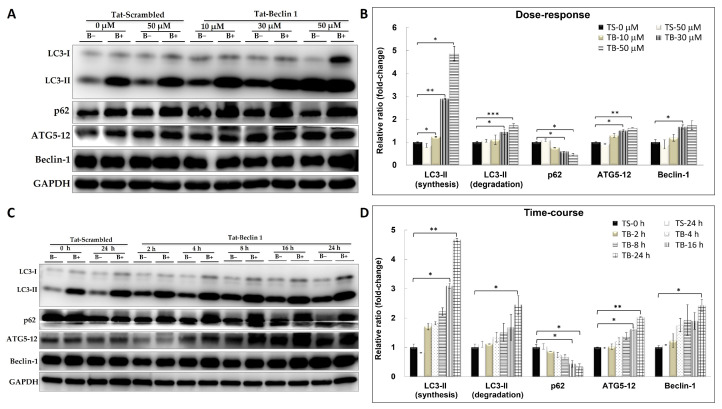
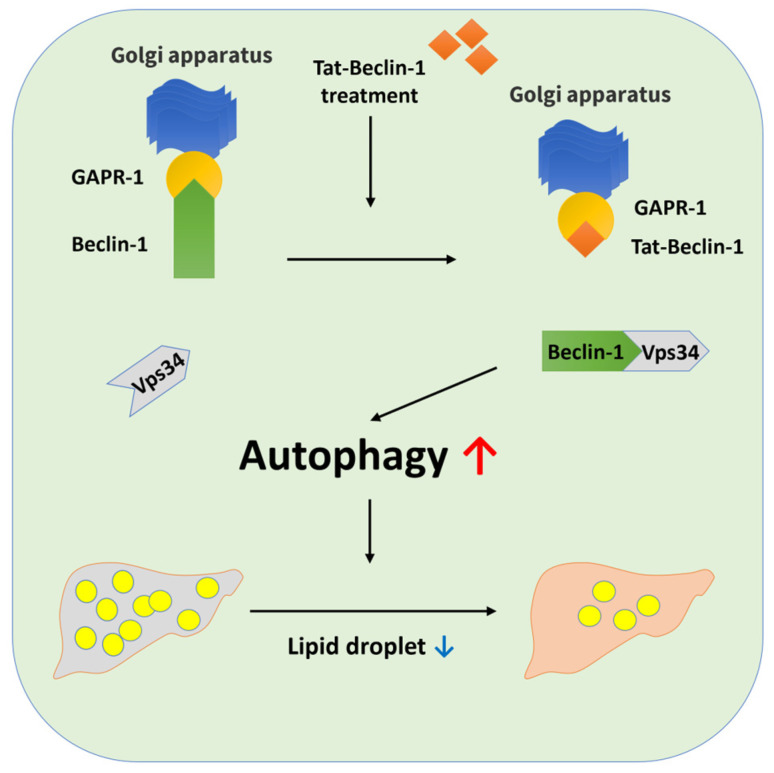
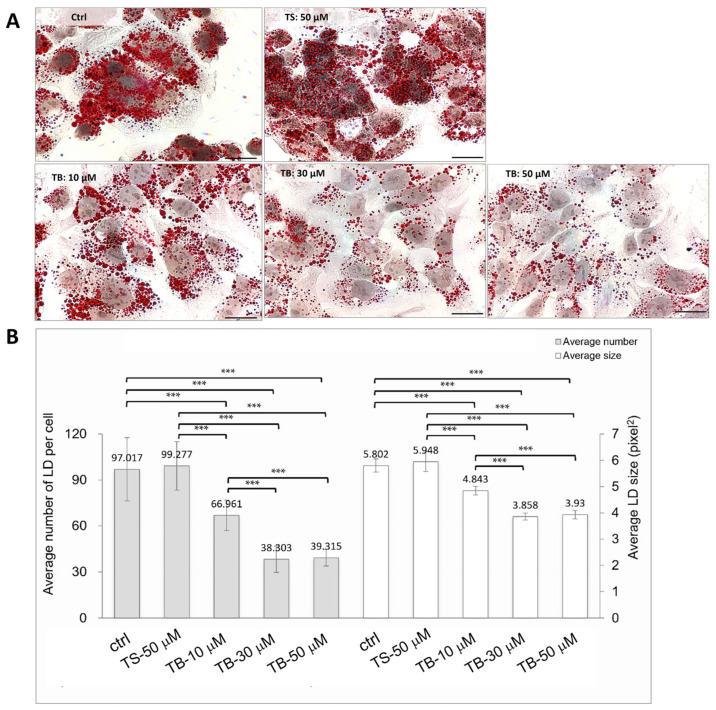
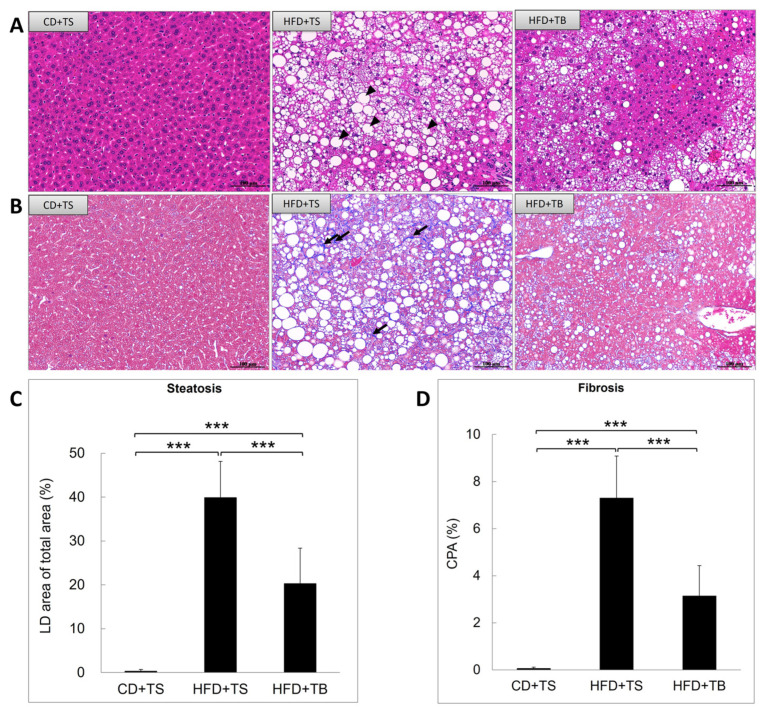
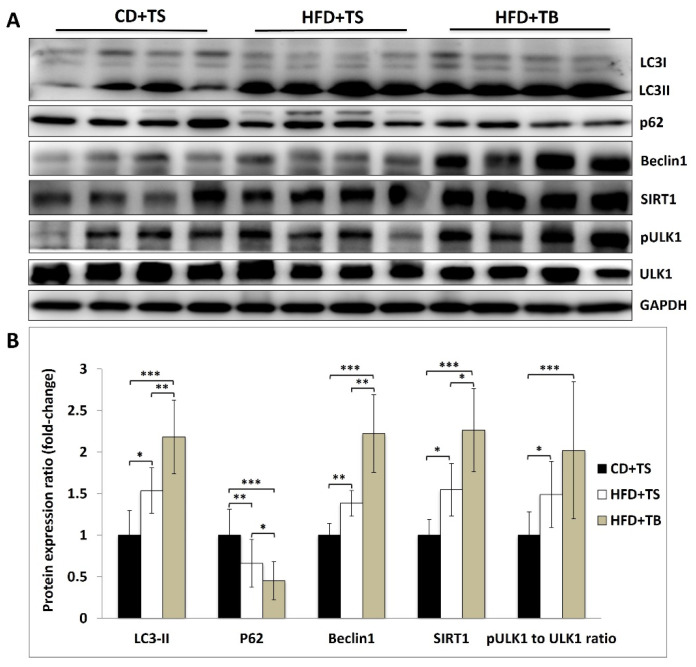
Autophagy plays a crucial role in hepatic lipid metabolism, making it a key therapeutic target for addressing metabolic dysfunction-associated steatotic liver disease (MASLD). This study evaluates the efficacy of the Tat-Beclin-1 (TB-1) peptide, a specific autophagy inducer, in mitigating MASLD. Initially, we examined the impact of the TB-1 peptide on autophagic activity and intracellular lipid metabolism in HepG2 cells treated with oleic acid, using a Tat scrambled (TS) control peptide for comparison. Subsequently, we established a MASLD mouse model by feeding a high-fat diet (HFD) for 16 weeks, followed by intraperitoneal administration of TB-1 or TS. Assessments included liver histopathology, serum biochemistry, and autophagy marker analysis. Our findings indicate that the TB-1 peptide significantly increased the LC3II/β-actin ratio in a dose- and time-dependent manner while promoting the expression of key autophagy markers Beclin-1 and ATG5-12. Furthermore, TB-1 treatment led to a marked reduction in both the size and number of lipid droplets in HepG2 cells. In vivo, HFD-fed mice exhibited increased liver weight, elevated serum alanine aminotransferase levels, and impaired oral glucose tolerance. TB-1 administration effectively mitigated these hepatic and metabolic disturbances. Histological analysis further revealed a substantial reduction in the severity of hepatic steatosis and fibrosis in TB-1-treated mice compared to TS controls. In conclusion, the TB-1 peptide shows significant potential in reducing the severity of MASLD in both HepG2 cell models and HFD-induced MASLD mouse models. Enhancing autophagy through TB-1 represents a promising therapeutic strategy for treating MASLD.
自噬在肝脏脂质代谢中发挥着关键作用,使其成为治疗代谢功能障碍相关脂肪性肝病 (MASLD) 的关键治疗靶点。本研究评估了 Tat-Beclin-1 (TB-1) 肽,一种特定的自噬诱导剂,在减轻 MASLD 中的功效。首先,我们使用 Tat 随机肽 (TS) 对照肽来比较 TB-1 肽对油酸处理的 HepG2 细胞中自噬活性和细胞内脂质代谢的影响。随后,我们通过用高脂肪饮食 (HFD) 喂养 16 周,然后腹膜内给予 TB-1 或 TS,建立 MASLD 小鼠模型。评估包括肝组织病理学、血清生物化学和自噬标志物分析。我们的研究结果表明,TB-1 肽在剂量和时间依赖性方式下显著增加 LC3II/β-actin 比值,同时促进关键自噬标志物 Beclin-1 和 ATG5-12 的表达。此外,TB-1 处理导致 HepG2 细胞中脂质滴的大小和数量明显减少。在体内,HFD 喂养的小鼠表现出肝重增加、血清丙氨酸氨基转移酶水平升高和口服葡萄糖耐量受损。TB-1 给药有效减轻了这些肝和代谢紊乱。组织学分析进一步显示,与 TS 对照组相比,TB-1 处理的小鼠肝脂肪变性和纤维化的严重程度显著降低。总之,TB-1 肽在 HepG2 细胞模型和 HFD 诱导的 MASLD 小鼠模型中均显示出显著减轻 MASLD 严重程度的潜力。通过 TB-1 增强自噬代表了治疗 MASLD 的一种有前途的治疗策略。