Fan Yanzhe, Jia Zihan, Zhang Zhuo, Gu Shengfei, Du Wenya, Lin Dabin
School of Opto-Electronical Engineering, Xi'an Technological University, Xi'an 710021, China.
Young Talent Program from China Association for Science and Technology and Ministry of Education, Beijing Science Center, Beijing 100190, China.
Micromachines (Basel). 2024 Oct 22;15(11):1280. doi: 10.3390/mi15111280.
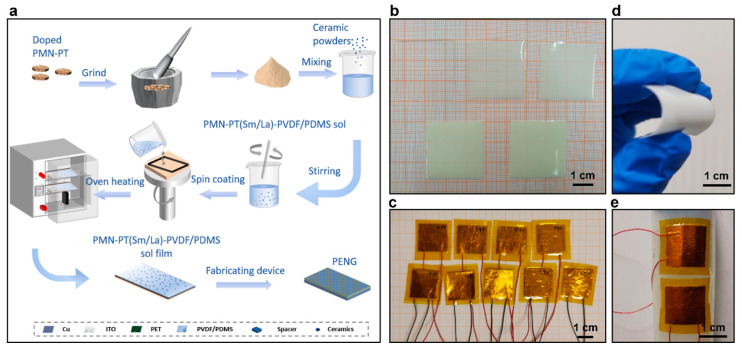
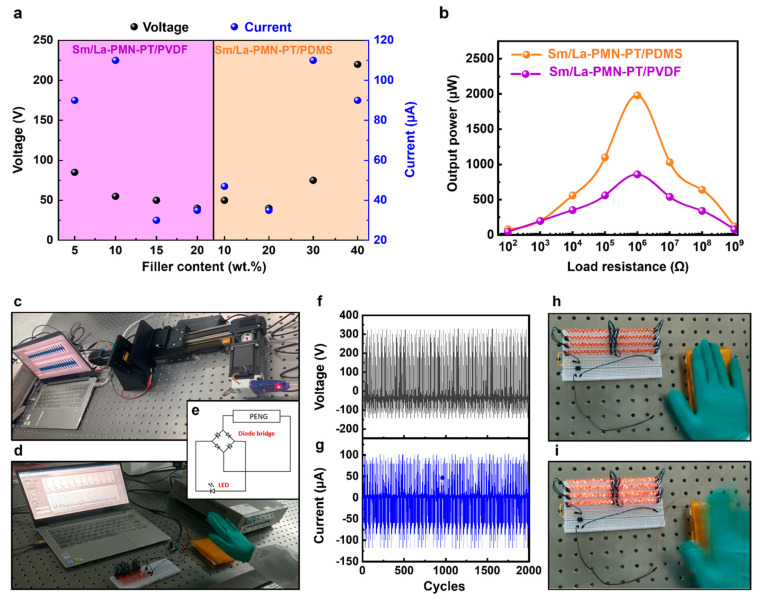
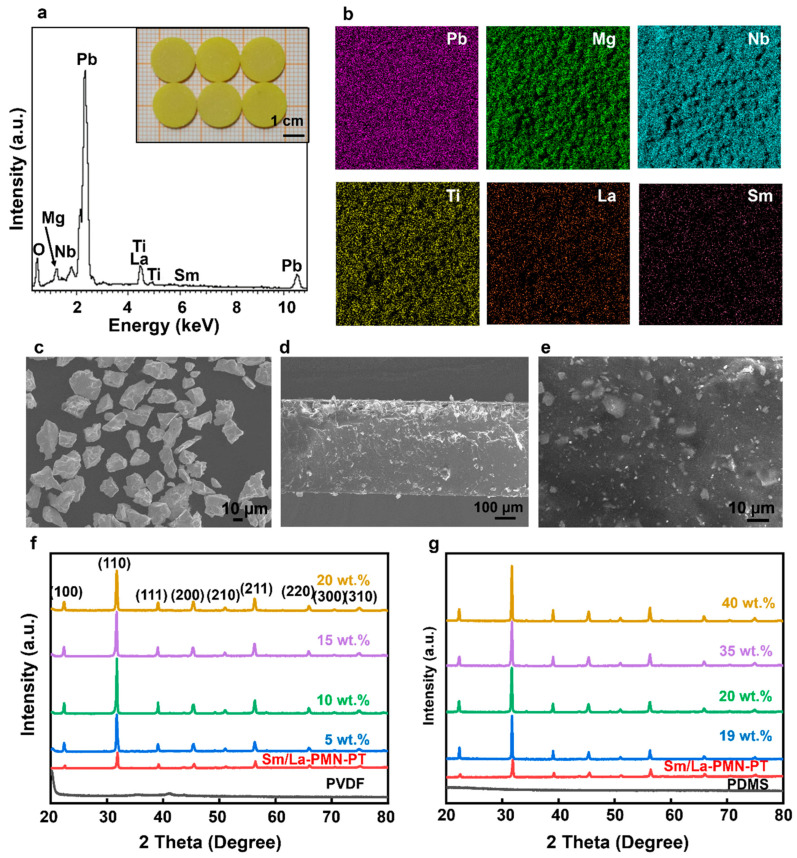
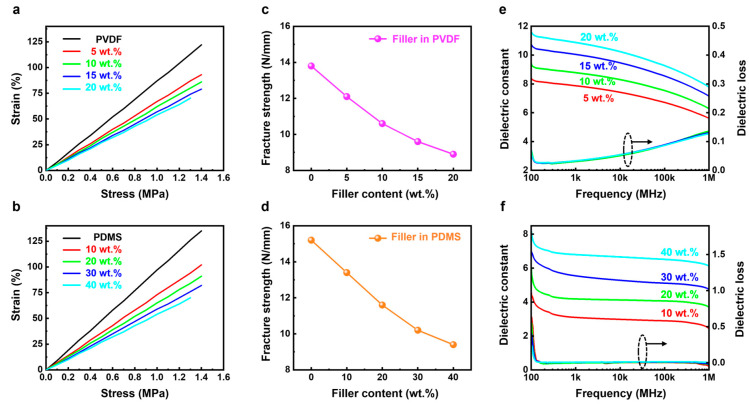
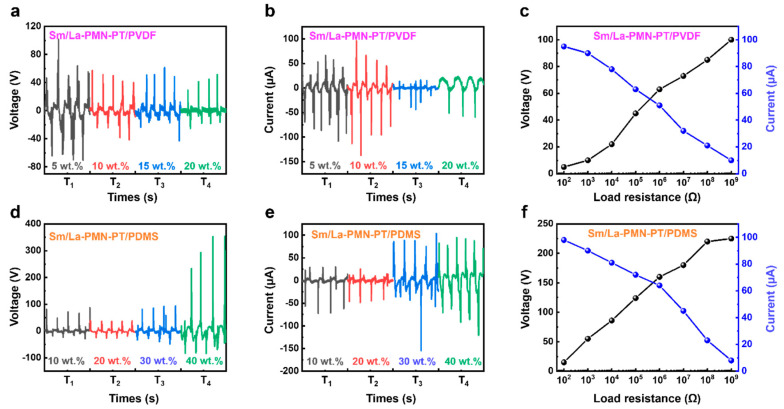
Energy harvesting plays an important role in advancing personalized wearables by enabling continuous monitoring, enhancing wearable functionality and facilitating sustainable solutions. We aimed to develop a flexible piezoelectric energy harvesting system based on inorganic piezoelectric materials that convert mechanical energy into electricity to power a wide range of mobile and portable electronic devices. There is significant interest in flexible piezoelectric energy harvesting systems that use inorganic piezoelectric materials due to their exceptional physical features and prospective applications. Herein, we successfully demonstrated a flexible piezoelectric nanogenerator (PENG) designed by the co-doped rare-earth element ceramics (RE-PMN-PT) embedded in PVDF and PDMS composite film and attained a significant output performance while avoiding electrical poling process. The impact of dielectric characteristics on the electrical output of nanogenerators was investigated, together with the structure of the composites. The Sm/La-PMN-PT particles effectively amplify both the voltage and current output, showcasing their potential to power portable and wearable devices, as demonstrated by their capacity to illuminate LEDs. The maximal output power of 2 mW was correlated with the high voltage (220 V) and current (90 µA) of Sm/La-PMN-PT/PVDF, which demonstrated that the device has the potential for energy harvesting in biomedical applications.
能量采集通过实现连续监测、增强可穿戴设备功能并促进可持续解决方案,在推动个性化可穿戴设备发展方面发挥着重要作用。我们旨在开发一种基于无机压电材料的柔性压电能量采集系统,该系统可将机械能转化为电能,为各种移动和便携式电子设备供电。由于其优异的物理特性和潜在应用,使用无机压电材料的柔性压电能量采集系统引起了广泛关注。在此,我们成功展示了一种柔性压电纳米发电机(PENG),它由嵌入聚偏氟乙烯(PVDF)和聚二甲基硅氧烷(PDMS)复合薄膜中的共掺杂稀土元素陶瓷(RE-PMN-PT)设计而成,在避免电极化过程的同时实现了显著的输出性能。研究了复合材料结构以及介电特性对纳米发电机电输出的影响。钐/镧 - PMN - PT颗粒有效放大了电压和电流输出,通过其点亮发光二极管(LED)的能力证明了它们为便携式和可穿戴设备供电的潜力。钐/镧 - PMN - PT/PVDF的2毫瓦最大输出功率与高电压(220伏)和电流(90微安)相关,这表明该设备在生物医学应用中具有能量采集潜力。