Minici Roberto, Venturini Massimo, Guzzardi Giuseppe, Fontana Federico, Coppola Andrea, Piacentino Filippo, Spinetta Marco, Costa Davide, Brunese Maria Chiara, Guerriero Pasquale, Apollonio Biagio, Team Mgjr Research, Rosi Nicola De, Serra Raffaele, Laganà Domenico
Radiology Unit, University Hospital Dulbecco, 88100 Catanzaro, Italy.
Diagnostic and Interventional Radiology Unit, ASST Settelaghi, Insubria University, 21100 Varese, Italy.
Life (Basel). 2024 Oct 28;14(11):1382. doi: 10.3390/life14111382.
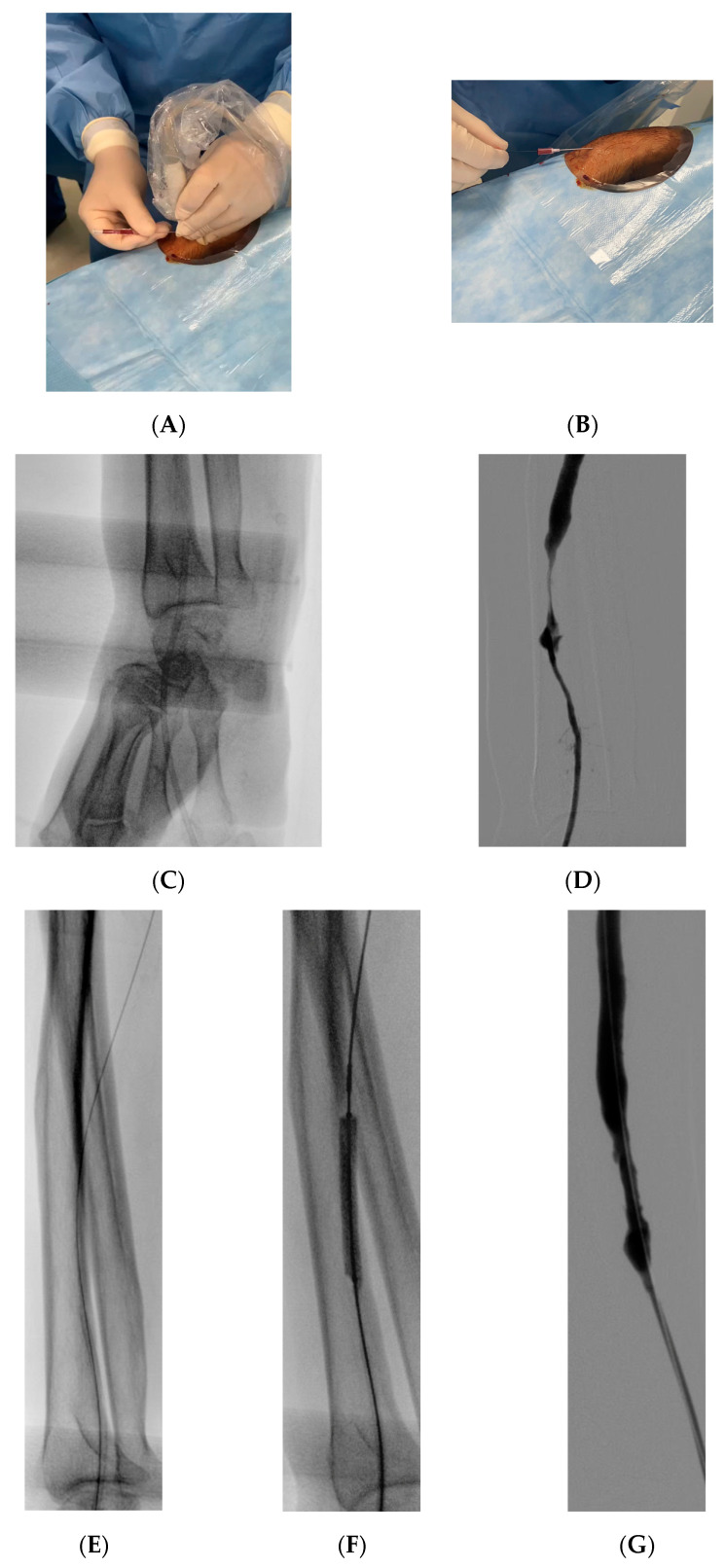
This study aims to evaluate the feasibility, efficacy, and safety of distal transradial access (dRA) for the endovascular management of malfunctioning dialysis fistulas. This study also compares dRA with conventional access techniques, such as proximal radial and transvenous access, focusing on technical success, clinical outcomes, and vascular access site complications (VASCs).
A retrospective multicenter study was conducted across four hospitals, including 292 patients treated between January 2019 and June 2024. Of these, 57 patients underwent dRA, and 235 received proximal radial or transvenous access. Key outcomes included technical success (successful completion of the procedure), clinical success (restoration of functional dialysis access), and complication rates. Data were collected on procedure times and complication profiles.
Technical success was achieved in 96.5% of patients undergoing dRA, compared to 98.3% in those receiving conventional access ( = 0.388). Clinical success was similar between groups (96.5% vs. 97%, = 0.835). The overall complication rate was 10.5% for dRA and 8.5% for conventional access ( = 0.632). Cannulation time was longer for dRA (109.1 vs. 91.9 s, < 0.001), but total procedure duration was comparable between the groups. No major complications were observed in either cohort, and improved post-procedure access flow rates were recorded in all patients.
Distal transradial access is a feasible and effective approach for the endovascular management of malfunctioning dialysis fistulas, with outcomes comparable to conventional access techniques. It provides a safe alternative, particularly for patients with complex fistulas, while maintaining a low complication profile.
本研究旨在评估经桡动脉远端入路(dRA)用于血管内治疗功能不良的透析内瘘的可行性、有效性和安全性。本研究还将dRA与传统入路技术(如桡动脉近端入路和经静脉入路)进行比较,重点关注技术成功率、临床结局和血管入路部位并发症(VASCs)。
在四家医院进行了一项回顾性多中心研究,纳入2019年1月至2024年6月期间接受治疗的292例患者。其中,57例患者接受了dRA,235例接受了桡动脉近端或经静脉入路。主要结局包括技术成功(手术成功完成)、临床成功(恢复功能性透析通路)和并发症发生率。收集了手术时间和并发症情况的数据。
接受dRA的患者技术成功率为96.5%,接受传统入路的患者为98.3%(P = 0.388)。两组临床成功率相似(96.5%对97%,P = 0.835)。dRA的总体并发症发生率为10.5%,传统入路为8.5%(P = 0.632)。dRA的置管时间更长(109.1秒对91.9秒,P < 0.001),但两组的总手术时间相当。两组均未观察到重大并发症,所有患者术后通路血流量均有所改善。
经桡动脉远端入路是血管内治疗功能不良的透析内瘘的一种可行且有效的方法,其结局与传统入路技术相当。它提供了一种安全的替代方法,特别是对于复杂内瘘患者,同时保持较低的并发症发生率。