Górska Anna, Baran Ewelina, Knapik-Kowalczuk Justyna, Szafraniec-Szczęsny Joanna, Paluch Marian, Kulinowski Piotr, Mendyk Aleksander
Department of Pharmaceutical Technology and Biopharmaceutics, Faculty of Pharmacy, Jagiellonian University Medical College, 9 Medyczna Street, 30-688 Kraków, Poland.
Institute of Technology, University of the National Education Commission, Podchorążych 2, 30-084 Kraków, Poland.
Pharmaceutics. 2024 Oct 28;16(11):1388. doi: 10.3390/pharmaceutics16111388.
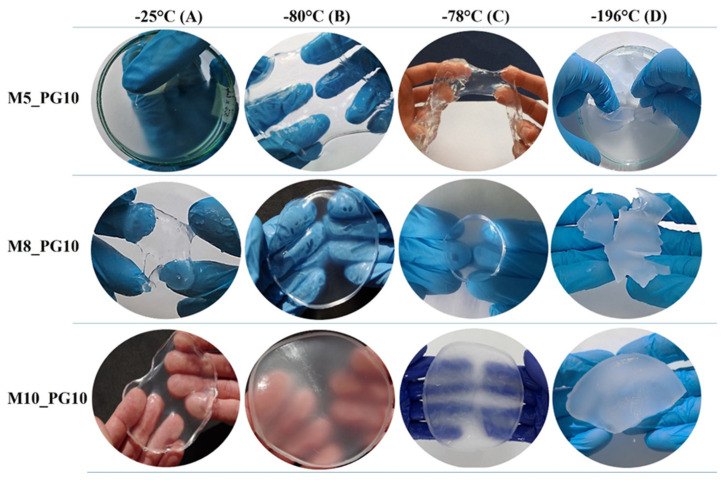
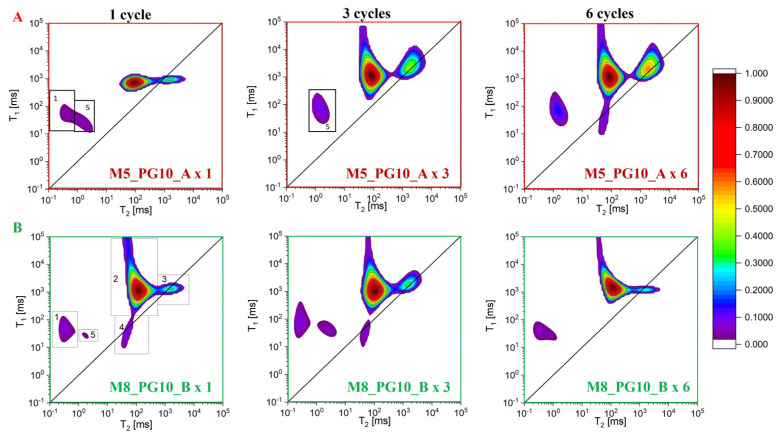
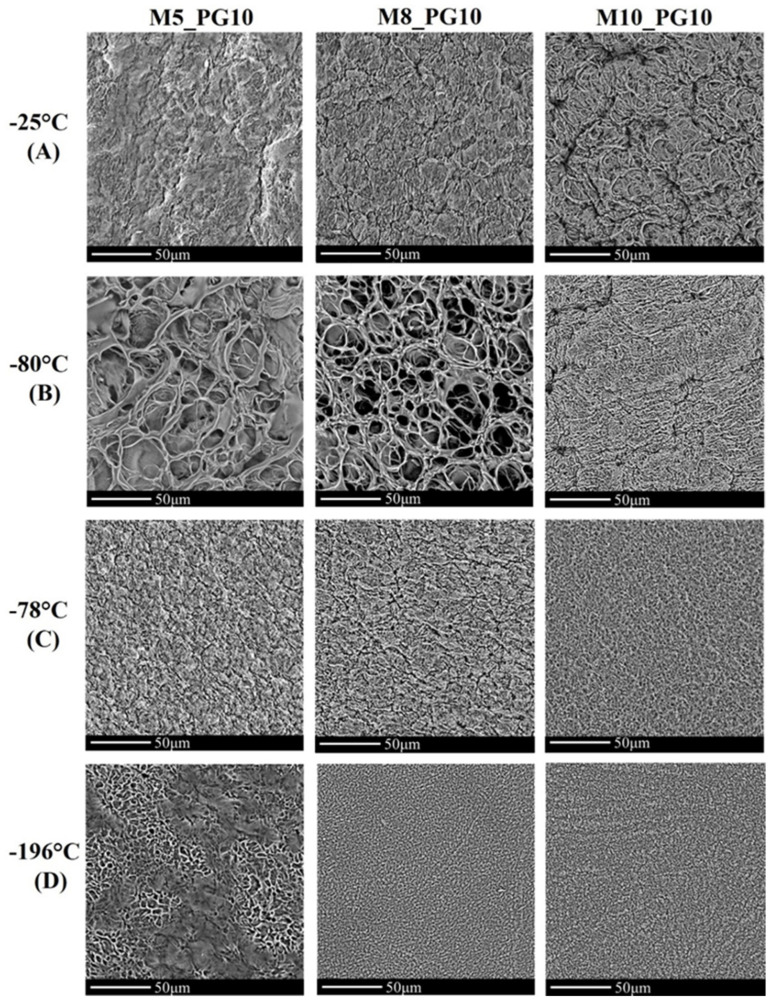
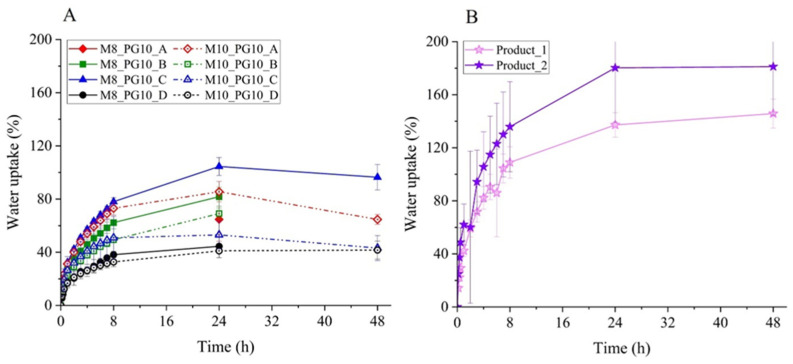
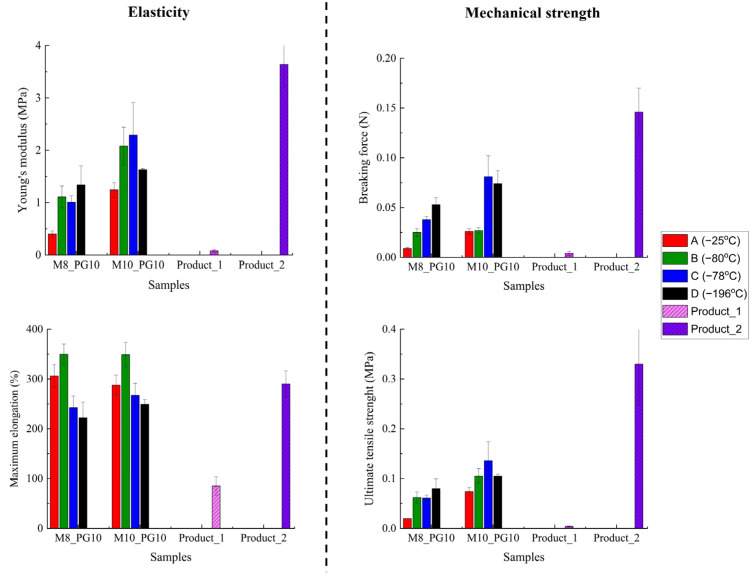
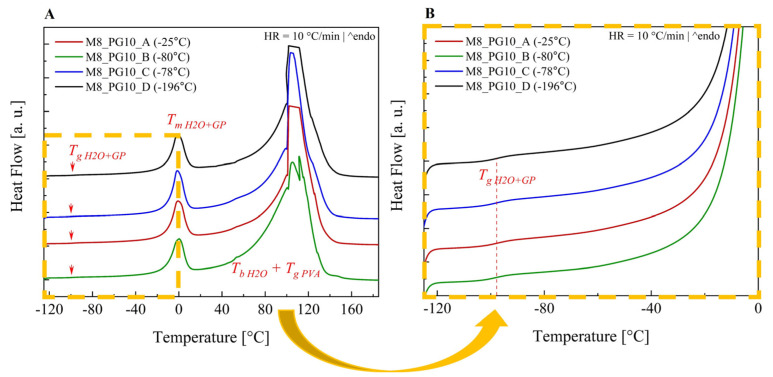
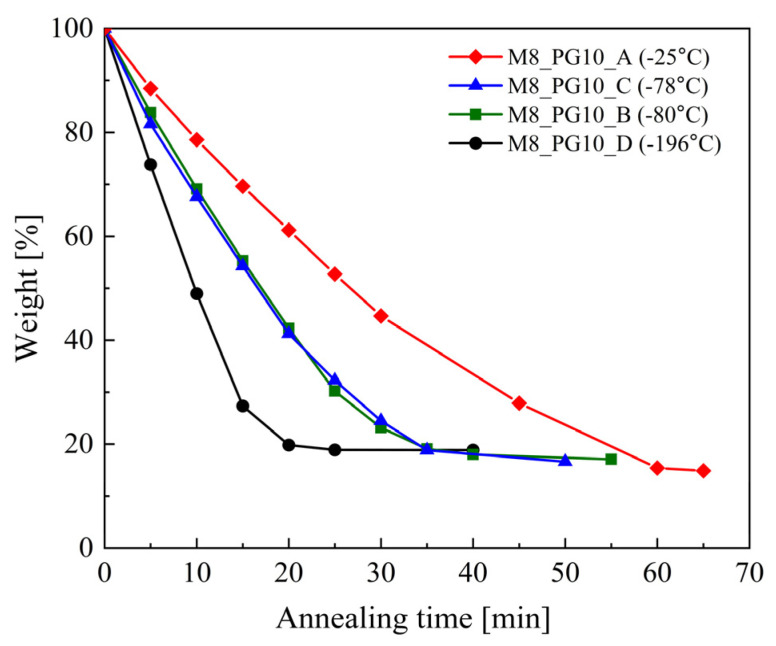
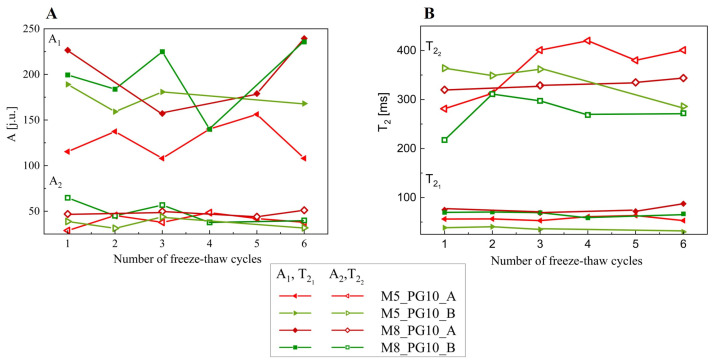
: Hydrogels produced using the freeze-thaw method have demonstrated significant potential for wound management applications. However, their production requires precise control over critical factors including freezing temperature and the choice of matrix-forming excipients, for which no consensus on the optimal conditions currently exists. This study aimed to address this gap by evaluating the effects of the above-mentioned variables on cryogel performance. : Mechanical properties, absorption capacity, and microstructure were assessed alongside advanced analyses using differential scanning calorimetry (DSC) and low-field nuclear magnetic resonance relaxometry (LF TD NMR). : The results demonstrated that fully hydrolyzed polyvinyl alcohol (PVA) with a molecular weight above 61,000 g/mol is essential for producing high-performance cryogels. Among the tested formulations, an 8% (/) PVA solution (Mw~195,000; DH = 98.0-98.8%) with 10% (/) propylene glycol (PG) provided the best balance of stretchability, durability, and low adhesion. Notably, while -25 °C is often used for cryogel preparation, freezing the gel precursor at -80 °C yielded superior results, producing materials with more open, interconnected structures and enhanced mechanical strength and elasticity-deviating from conventional practices. : The designed cryogel prototypes exhibited functional properties comparable to or even surpassing commercial wound dressings, except for absorption capacity, which remained lower. Despite this, the cryogel prototypes demonstrated potential as wound dressings, particularly for use in dry or minimally exuding wounds. All in all, this study provides a comprehensive analysis of the physicochemical and functional properties of PVA cryogels, establishing a strong foundation for the development of advanced wound dressing systems.
采用冻融法制备的水凝胶在伤口处理应用中已显示出巨大潜力。然而,其制备需要精确控制关键因素,包括冷冻温度和基质形成辅料的选择,目前对于最佳条件尚无共识。本研究旨在通过评估上述变量对冷冻凝胶性能的影响来填补这一空白。同时使用差示扫描量热法(DSC)和低场核磁共振弛豫测量法(LF TD NMR)进行高级分析,评估其机械性能、吸收能力和微观结构。结果表明,分子量高于61,000 g/mol的完全水解聚乙烯醇(PVA)对于制备高性能冷冻凝胶至关重要。在测试的配方中,含有10%(/)丙二醇(PG)的8%(/)PVA溶液(Mw~195,000;DH = 98.0 - 98.8%)在拉伸性、耐用性和低粘性之间提供了最佳平衡。值得注意的是,虽然 - 25°C常用于冷冻凝胶制备,但在 - 80°C冷冻凝胶前体产生了更好的结果,所制备的材料具有更开放、相互连接的结构以及增强的机械强度和弹性——这与传统做法不同。除了吸收能力较低外,所设计的冷冻凝胶原型显示出与商业伤口敷料相当甚至更优的功能特性。尽管如此,冷冻凝胶原型仍显示出作为伤口敷料的潜力,特别是用于干燥或渗出极少的伤口。总而言之,本研究对PVA冷冻凝胶的物理化学和功能特性进行了全面分析,为先进伤口敷料系统的开发奠定了坚实基础。