Castro-Vidal Zainab A, Mathew Felwin, Ibrahim Alia A, Shubhangi Fnu, Cherian Robin R, Choi Hoi Kei, Begum Afreen, Ravula Hari Krishna, Giri Harshvardhan
Surgery, Saba University School of Medicine, The Bottom, BES.
Neurology, PK Das Institute of Medical Science, Ottapalam, IND.
Cureus. 2024 Oct 26;16(10):e72451. doi: 10.7759/cureus.72451. eCollection 2024 Oct.
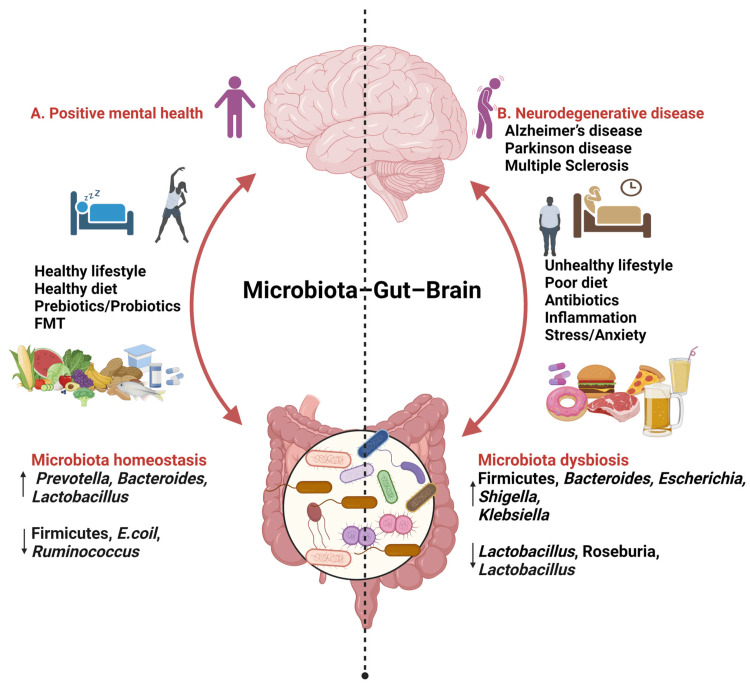
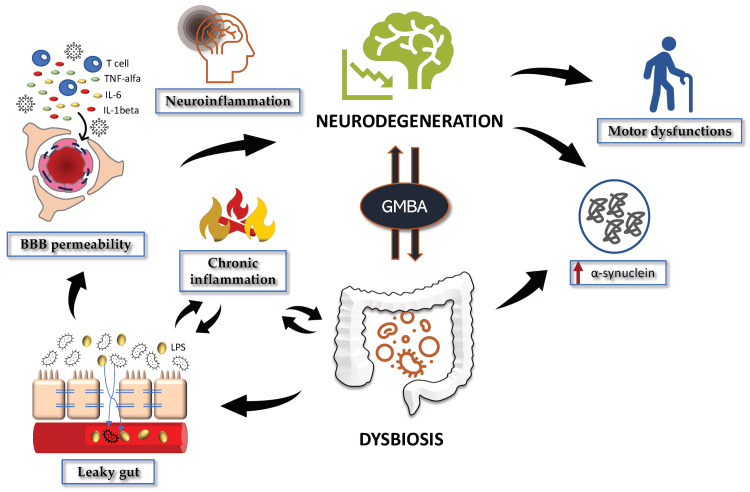
This review explores the critical role of the human microbiome in neurological and neurodegenerative disorders, focusing on gut-brain axis dysfunction caused by dysbiosis, an imbalance in gut bacteria. Dysbiosis has been linked to diseases such as Alzheimer's disease, Parkinson's disease (PD), multiple sclerosis (MS), and stroke. The gut microbiome influences the central nervous system (CNS) through signaling molecules, including short-chain fatty acids, neurotransmitters, and metabolites, impacting brain health and disease progression. Emerging therapies, such as fecal microbiota transplantation (FMT), have shown promise in restoring microbial balance and alleviating neurological symptoms, especially in Alzheimer's and PD. Additionally, nutritional interventions such as probiotics, prebiotics, and specialized diets are being investigated for their ability to modify gut microbiota and improve patient outcomes. This review highlights the therapeutic potential of gut microbiota modulation but emphasizes the need for further clinical trials to establish the safety and efficacy of these interventions in neurological and mental health disorders.
本综述探讨了人类微生物群在神经和神经退行性疾病中的关键作用,重点关注由肠道菌群失调(即肠道细菌失衡)引起的肠-脑轴功能障碍。肠道菌群失调与阿尔茨海默病、帕金森病(PD)、多发性硬化症(MS)和中风等疾病有关。肠道微生物群通过信号分子影响中枢神经系统(CNS),这些信号分子包括短链脂肪酸、神经递质和代谢产物,从而影响大脑健康和疾病进展。新兴疗法,如粪便微生物群移植(FMT),已显示出恢复微生物平衡和缓解神经症状的前景,尤其是在阿尔茨海默病和帕金森病方面。此外,正在研究益生菌、益生元等营养干预措施以及特殊饮食改变肠道微生物群和改善患者预后的能力。本综述强调了调节肠道微生物群的治疗潜力,但也强调需要进一步开展临床试验,以确定这些干预措施在神经和精神健康疾病中的安全性和有效性。