Department of Urology, Beijing Chao-Yang Hospital, Capital Medical University, Beijing, China.
Institute of Urology, Capital Medical University, Beijing, China.
PLoS One. 2024 Nov 27;19(11):e0312272. doi: 10.1371/journal.pone.0312272. eCollection 2024.
The demographic shift towards an older population presents significant challenges for kidney transplantation (KTx), particularly due to the vulnerability of aged donor kidneys to ischemic damage, delayed graft function, and reduced graft survival. KTx rejection poses a significant threat to allograft function and longevity of the kidney graft. The relationship between senescence and rejection remains elusive and controversial.
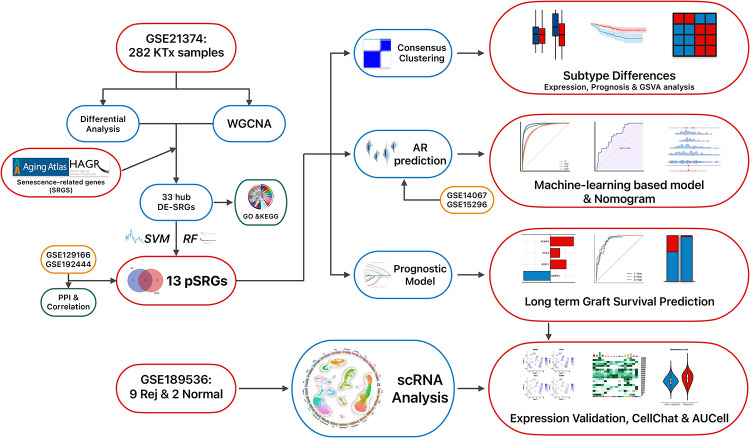
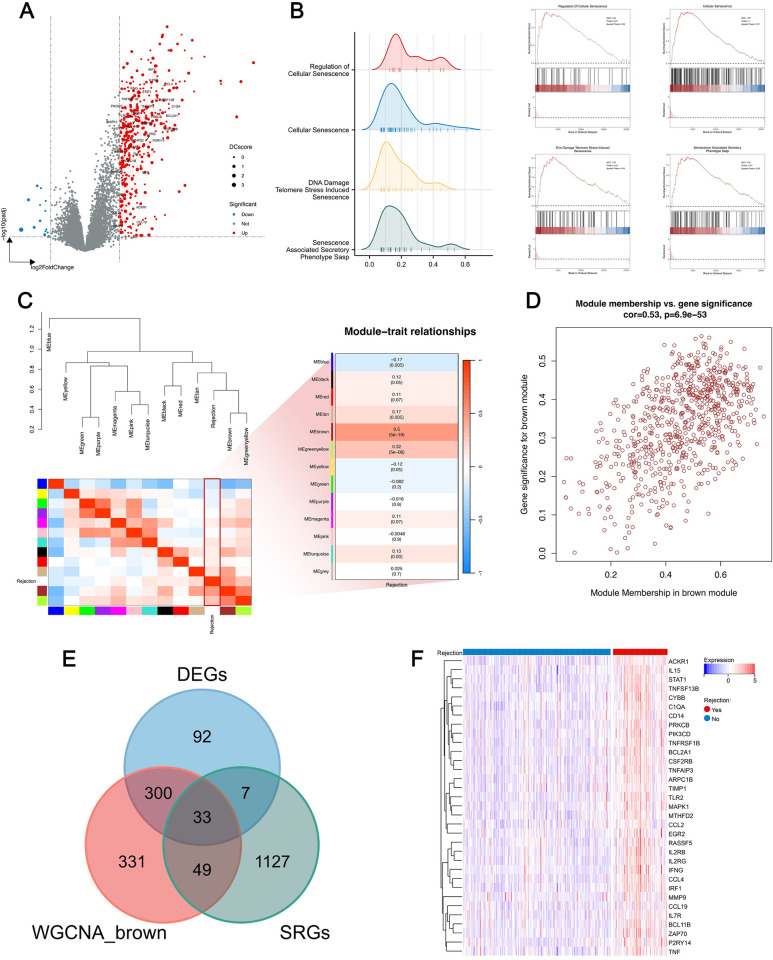
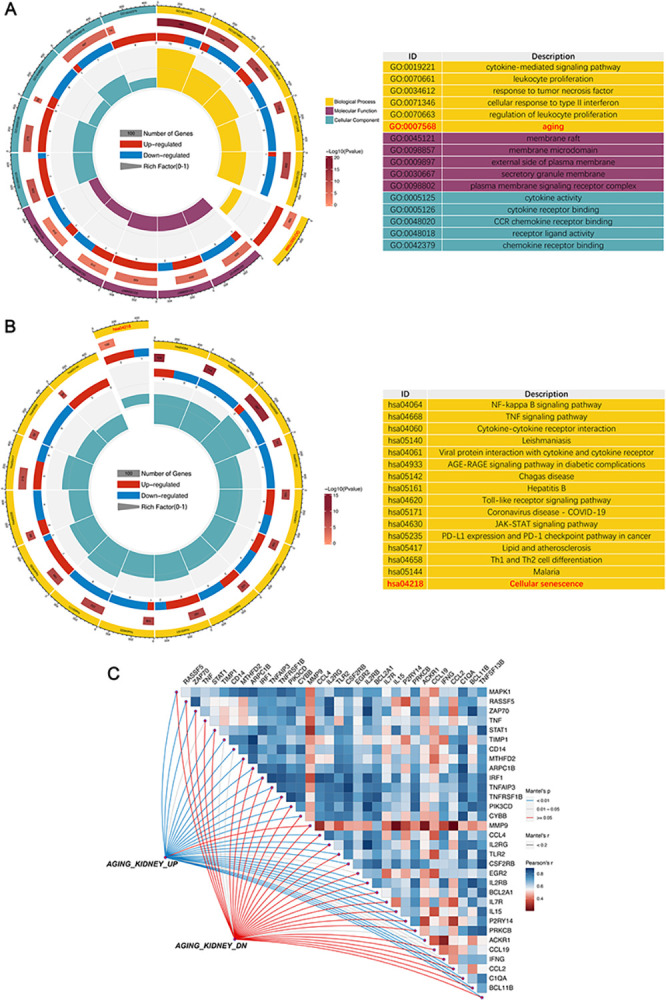
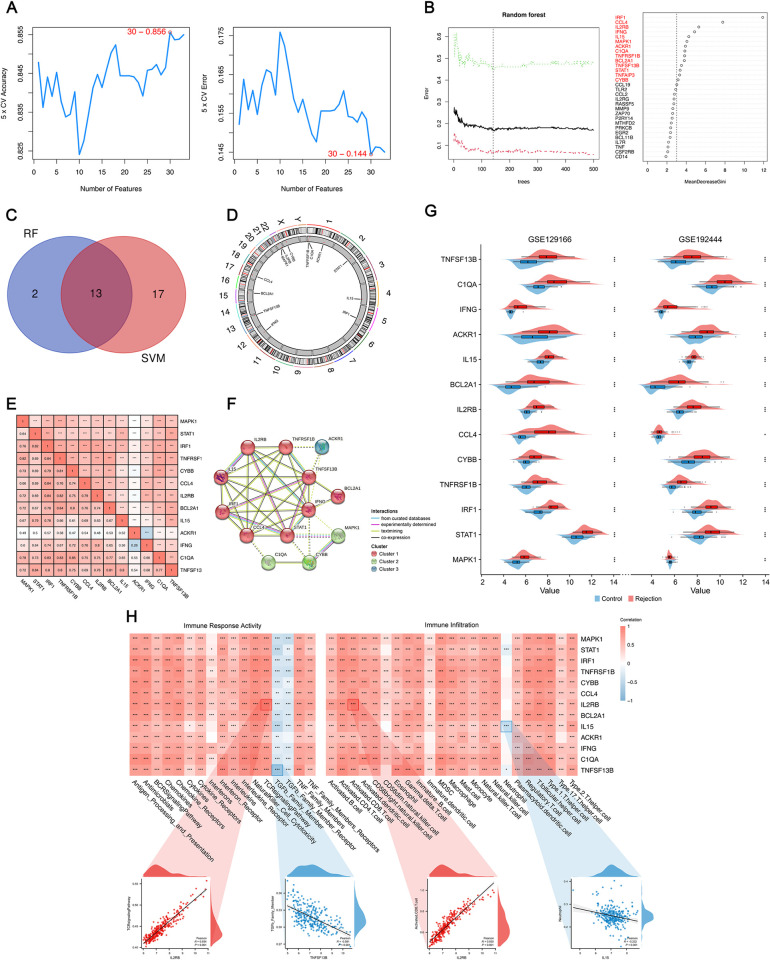
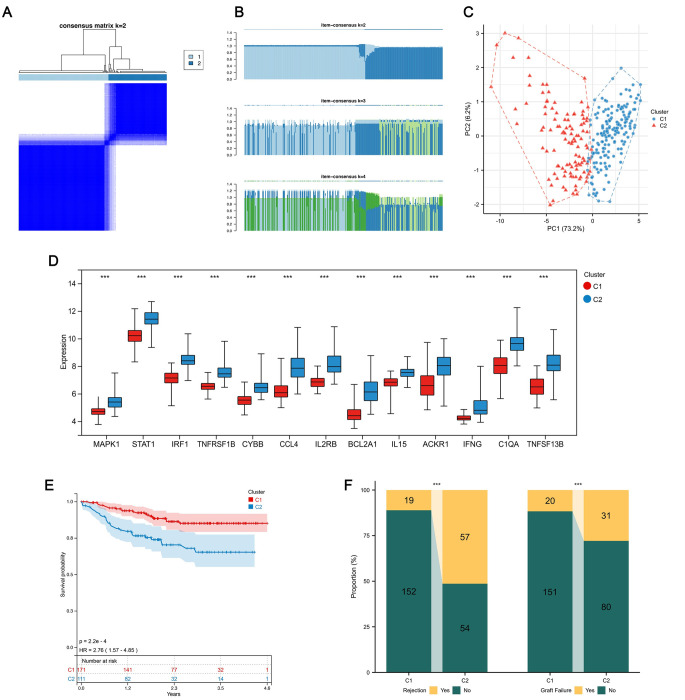
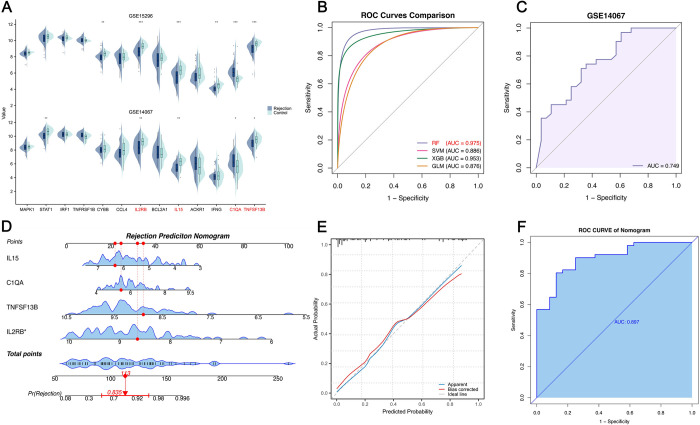
Gene Expression Omnibus (GEO) provided microarray and single-cell RNA sequencing datasets. After integrating Senescence-Related Genes (SRGs) from multiple established databases, differential expression analysis, weighted gene co-expression network analysis (WGCNA), and machine learning algorithms were applied to identify predictive SRGs (pSRGs). A cluster analysis of rejection samples was conducted using the consensus clustering algorithm. Subsequently, we utilized multiple machine learning methods (RF, SVM, XGB, GLM and LASSO) based on pSRGs to develop the optimal Acute Rejection (AR) diagnostic model and long-term graft survival predictive signatures. Finally, we validated the role of pSRGs and senescence in kidney rejection through the single-cell landscape.
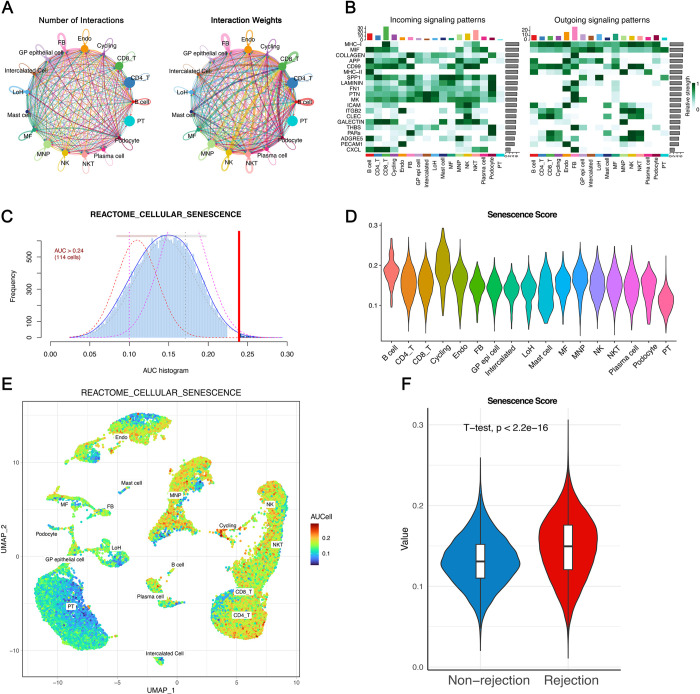
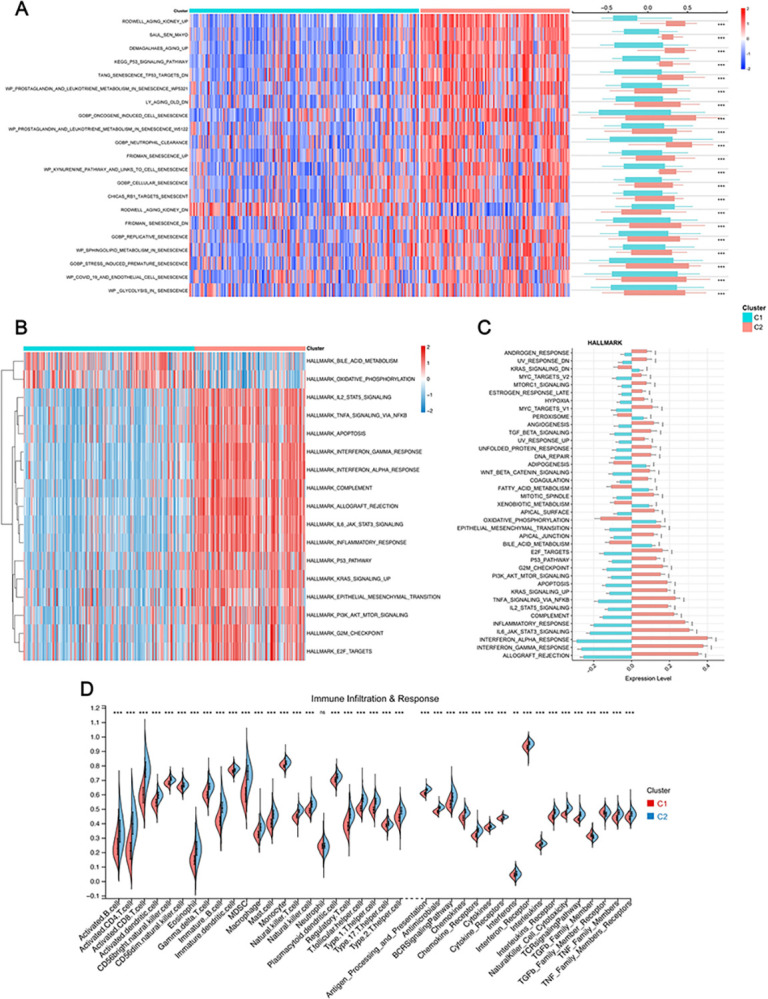
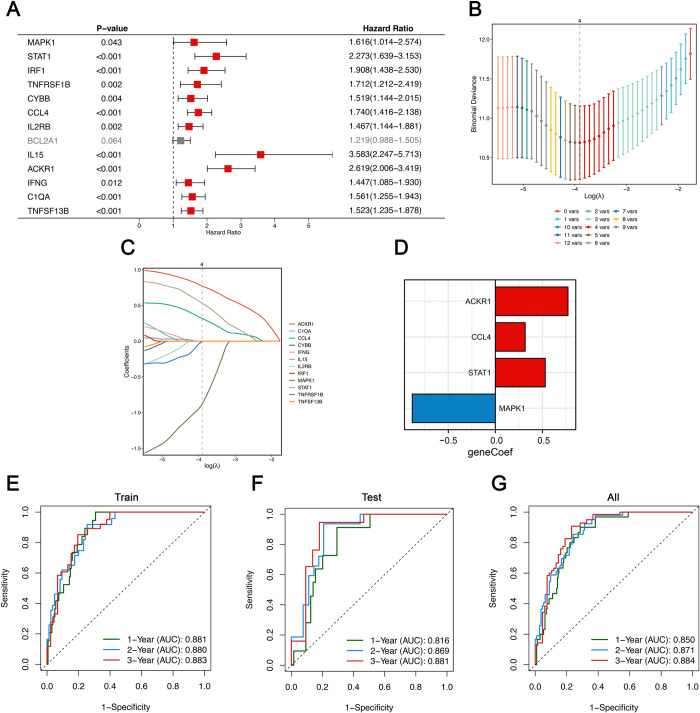
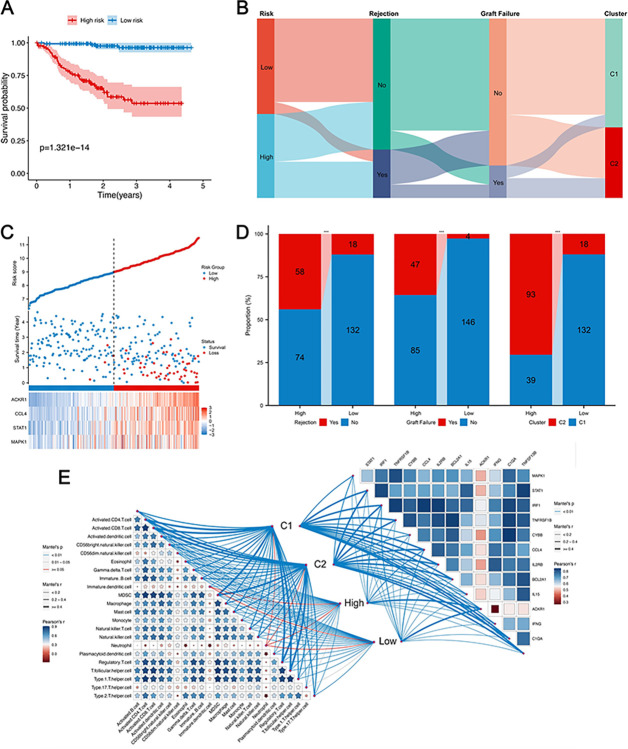
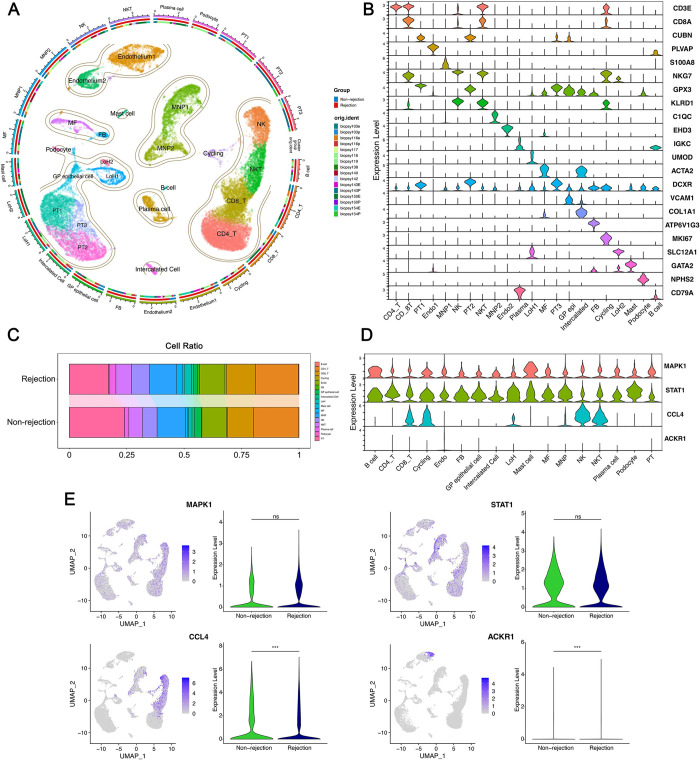
Thirteen pSRGs were identified, correlating with rejection. Two rejection clusters were divided (Cluster C1 and C2). GSVA analysis of two clusters underscored a positive correlation between senescence, KTx rejection occurrence and worse graft survival. A non-invasive diagnostic model (AUC = 0.975) and a prognostic model (1- Year AUC = 0.881; 2- Year AUC = 0.880; 3- Year AUC = 0.883) for graft survival were developed, demonstrating significant predictive capabilities to early detect acute rejection and long-term graft outcomes. Single-cell sequencing analysis provided a detailed cellular-level landscape of rejection, supporting the conclusions drawn from above.
Our comprehensive analysis underscores the pivotal role of senescence in KTx rejection, highlighting the potential of SRGs as biomarkers for diagnosing rejection and predicting graft survival, which may enhance personalized treatment strategies and improve transplant outcomes.
人口老龄化给肾移植(KTx)带来了巨大挑战,尤其是老年供体肾脏容易受到缺血损伤、移植物功能延迟和移植物存活率降低的影响。KTx 排斥反应对同种异体移植物功能和肾脏移植物的长期存活构成了重大威胁。衰老与排斥之间的关系仍然难以捉摸且存在争议。
基因表达综合数据库(GEO)提供了微阵列和单细胞 RNA 测序数据集。在整合来自多个已建立数据库的衰老相关基因(SRGs)后,我们进行了差异表达分析、加权基因共表达网络分析(WGCNA)和机器学习算法,以识别预测性 SRGs(pSRGs)。使用共识聚类算法对排斥样本进行聚类分析。随后,我们利用基于 pSRGs 的多种机器学习方法(RF、SVM、XGB、GLM 和 LASSO)来开发最佳急性排斥(AR)诊断模型和长期移植物存活预测特征。最后,我们通过单细胞图谱验证了 pSRGs 和衰老在肾排斥中的作用。
确定了 13 个与排斥相关的 pSRGs。两个排斥簇被分为(簇 C1 和 C2)。两个簇的 GSVA 分析强调了衰老、KTx 排斥发生和移植物存活率下降之间的正相关关系。建立了一种非侵入性诊断模型(AUC = 0.975)和一种预后模型(1 年 AUC = 0.881;2 年 AUC = 0.880;3 年 AUC = 0.883),用于评估移植物存活,具有显著的早期检测急性排斥和长期移植物结局的预测能力。单细胞测序分析提供了排斥的详细细胞水平图谱,支持了上述结论。
我们的综合分析强调了衰老在 KTx 排斥中的关键作用,突出了 SRGs 作为诊断排斥和预测移植物存活的生物标志物的潜力,这可能增强个性化治疗策略并改善移植结果。