Lian Kun, Yang Wei, Ye Jing, Chen Yilan, Zhang Lei, Xu Xiufeng
Department of Neurosurgery, The Second Affiliated Hospital of Kunming Medical University, Kunming, Yunnan, 650101, China.
Department of Psychiatry, The First Affiliated Hospital of Kunming Medical University, No.295, Xichang Road, Wuhua District, Kunming, Yunnan, 650000, China.
BMC Psychiatry. 2025 Mar 3;25(1):188. doi: 10.1186/s12888-025-06542-8.
Evidence indicates that patients with Major Depressive Disorder (MDD) exhibit a senescence phenotype or an increased susceptibility to premature senescence. However, the relationship between senescence-related genes (SRGs) and MDD remains underexplored.
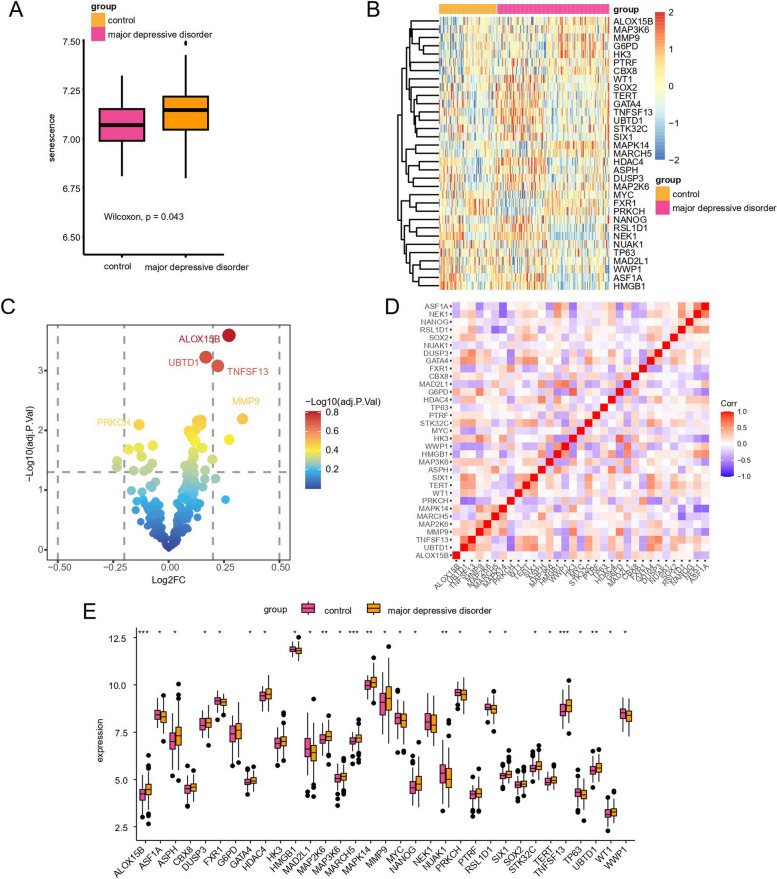
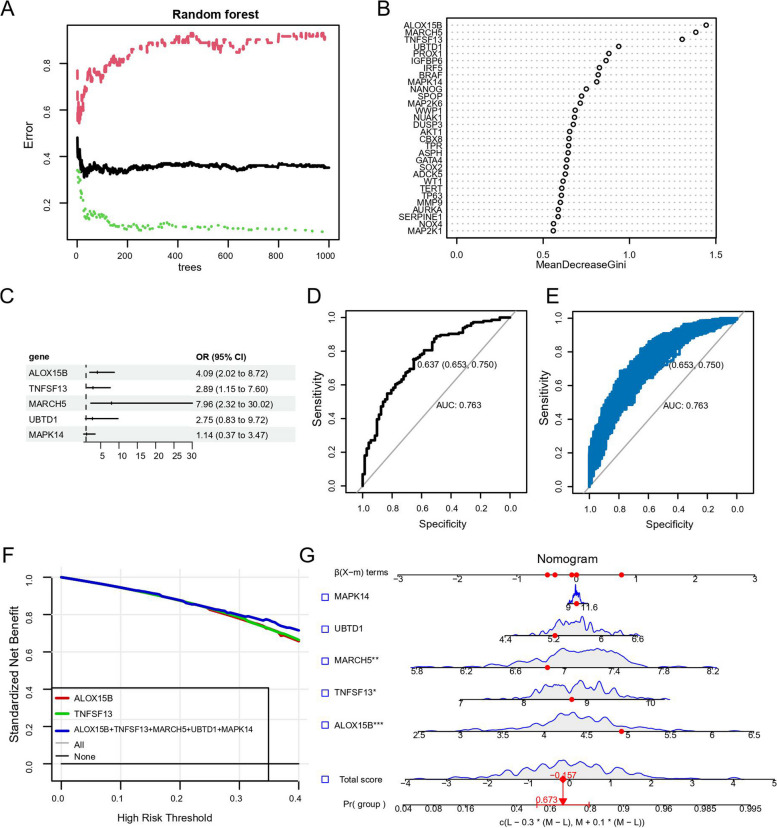
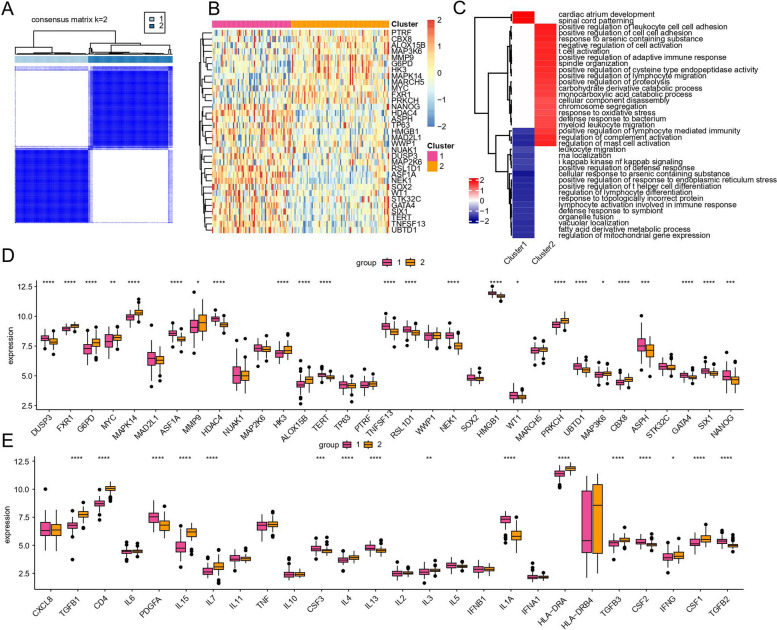
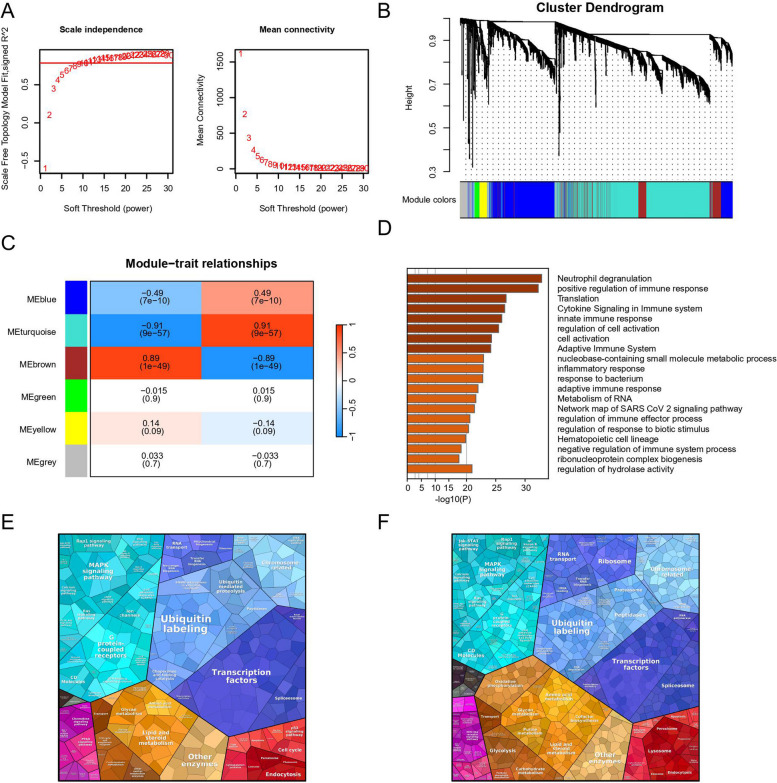
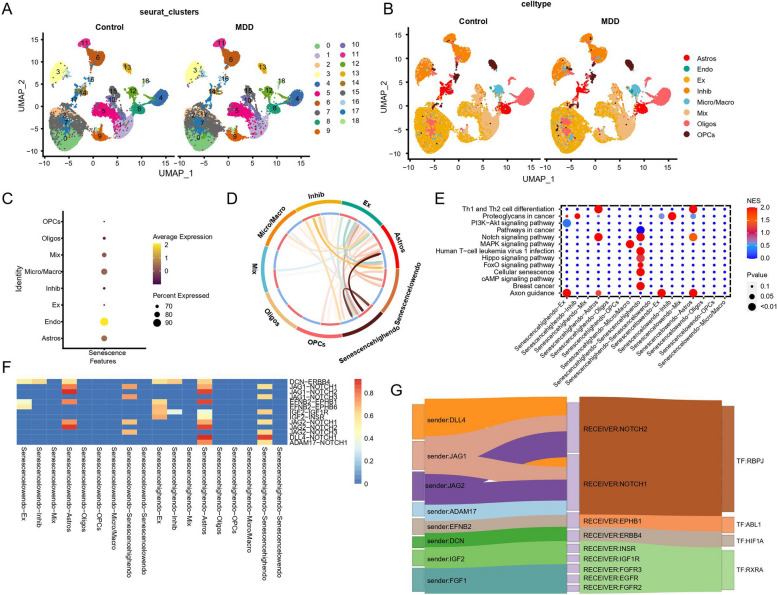
We analyzed 144 MDD samples and 72 healthy controls from the GEO database to compare SRGs expression. Using Random Forest (RF) and Support Vector Machine-Recursive Feature Elimination (SVM-RFE), we identified five hub SRGs to construct a logistic regression model. Consensus cluster analysis, based on SRGs expression patterns, identified subclusters of MDD patients. Weighted Gene Co-expression Network Analysis (WGCNA) identified gene modules strongly linked to each cluster. Single-cell RNA sequencing was used to analyze MDD SRGs functions.
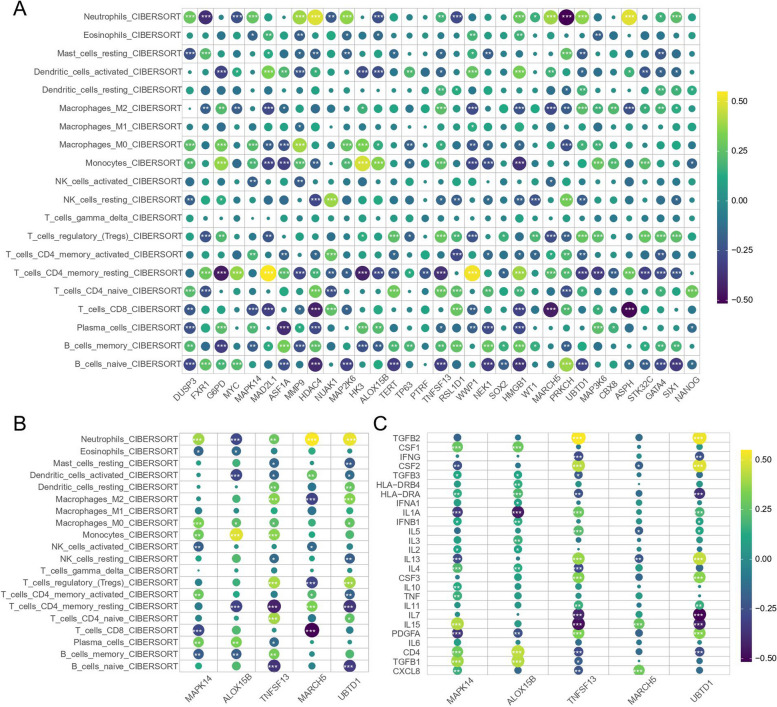
The five hub SRGs: ALOX15B, TNFSF13, MARCH 15, UBTD1, and MAPK14 showed differential expression between MDD patients and controls. Diagnostics models based on these hub genes demonstrated high accuracy. The hub SRGs correlated positively with neutrophils and negatively with T lymphocytes. SRGs expression pattern revealed two distinct MDD subclusters. WGCNA identified significant gene modules within these subclusters. Additionally, individual endothelial cells with high senescence scores were found to interact with astrocytes via the Notch signaling pathway, suggesting a specific role in MDD pathogenesis.
This comprehensive study elucidates the significant role of SRGs in MDD, highlighting the importance of the Notch signaling pathway in mediating senescence effects.
有证据表明,重度抑郁症(MDD)患者表现出衰老表型或对早衰的易感性增加。然而,衰老相关基因(SRGs)与MDD之间的关系仍未得到充分探索。
我们分析了来自基因表达综合数据库(GEO)的144例MDD样本和72例健康对照,以比较SRGs的表达。使用随机森林(RF)和支持向量机递归特征消除法(SVM-RFE),我们确定了五个关键SRGs,以构建逻辑回归模型。基于SRGs表达模式的一致性聚类分析确定了MDD患者的亚群。加权基因共表达网络分析(WGCNA)确定了与每个聚类密切相关的基因模块。单细胞RNA测序用于分析MDD中SRGs的功能。
五个关键SRGs:15-脂氧合酶-15B(ALOX15B)、肿瘤坏死因子超家族成员13(TNFSF13)、含多个锚蛋白重复序列的膜相关环指蛋白15(MARCH 15)、泛素硫酯酶结构域蛋白1(UBTD1)和丝裂原活化蛋白激酶14(MAPK14)在MDD患者和对照之间表现出差异表达。基于这些关键基因的诊断模型显示出高准确性。关键SRGs与中性粒细胞呈正相关,与T淋巴细胞呈负相关。SRGs表达模式揭示了两个不同的MDD亚群。WGCNA在这些亚群中确定了显著的基因模块。此外,发现衰老评分高的单个内皮细胞通过Notch信号通路与星形胶质细胞相互作用,提示其在MDD发病机制中的特定作用。
这项综合性研究阐明了SRGs在MDD中的重要作用,突出了Notch信号通路在介导衰老效应中的重要性。