Shi Zhiyong, Yun Mingkai, Nie Binbin, Zhu Enjun, Fu Wei, Shan Baoci, Li Sijin, Zhang Xiaoli, Li Xiang
Department of Nuclear Medicine, Molecular Imaging Lab, Beijing Anzhen Hospital, Capital Medical University, Beijing, China.
Division of Nuclear Technology and Applications, Institute of High Energy Physics, Chinese Academy of Sciences, Beijing, China.
EJNMMI Res. 2024 Nov 28;14(1):120. doi: 10.1186/s13550-024-01183-6.
Epidemiological studies have indicated that patients with heart failure (HF) who experience cognitive impairment (CI) have a poor prognosis. While poor self-management and compliance are suggested as contributing factors, they do not fully explain the underlying mechanisms of high risk of cardiac events in HF patients with CI. Given the interconnectedness of CI and the autonomic nervous system (ANS), both regulated by the central nervous system, this study investigated the relationship among cognitive function, metabolism in ANS-related brain regions, and major arrhythmic events (MAEs) in patients with HF with reduced ejection fraction (HFrEF).
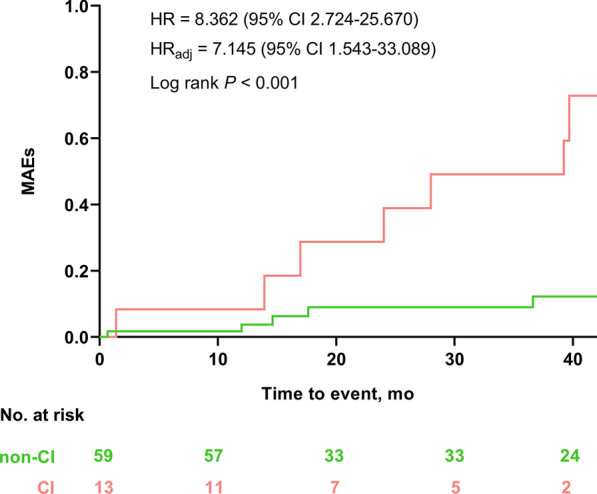
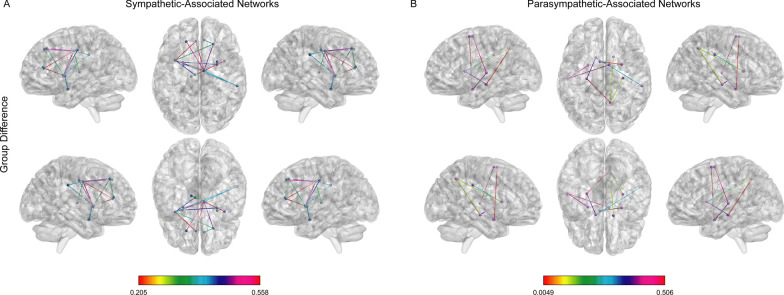
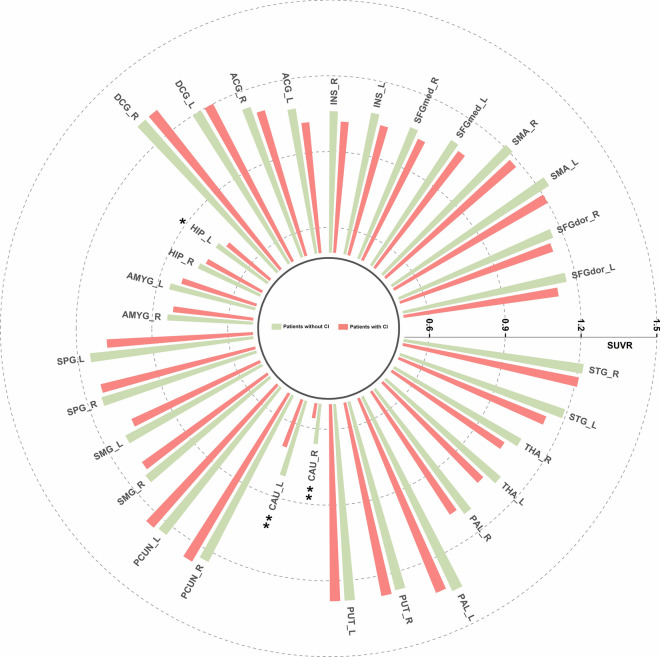
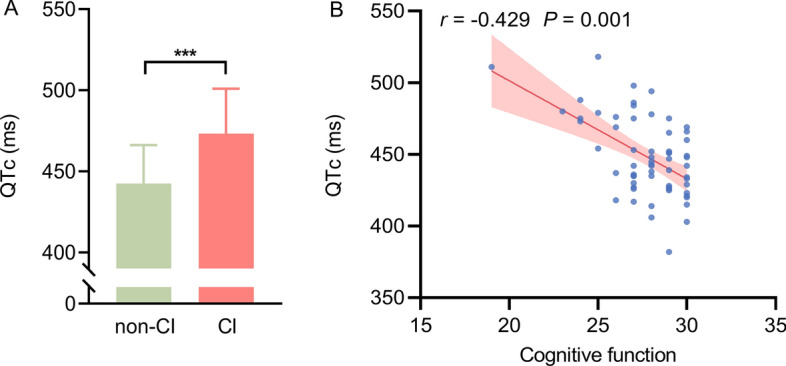
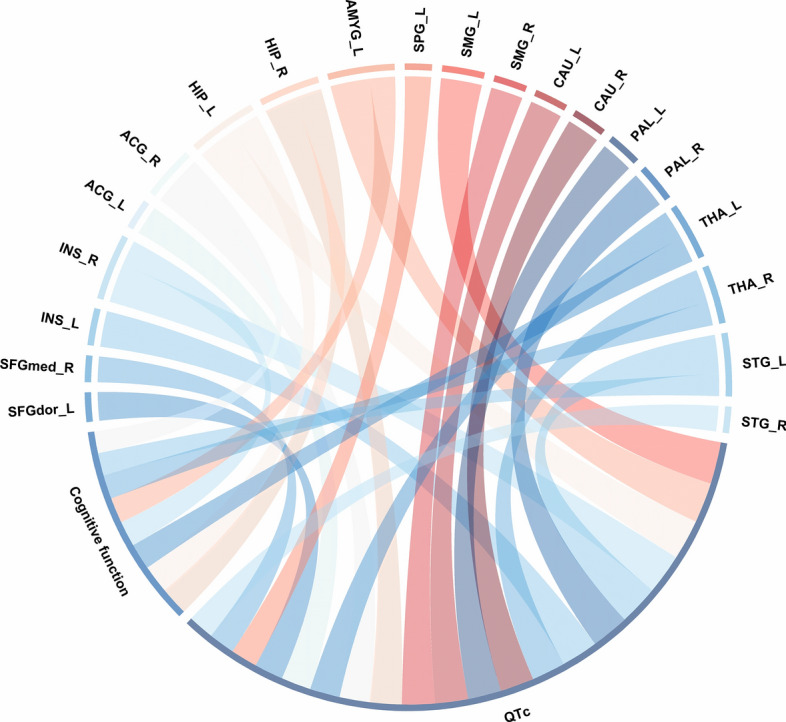
We retrospectively enrolled 72 patients with HFrEF who underwent gated myocardial perfusion imaging, heart and brain F-FDG positron emission tomography/computed tomography imaging, and cognitive testing. Cognitive function was evaluated using the Mini-Mental State Examination. During the follow-up period, 13 patients (17.8%) experienced MAEs. Patients with MAEs exhibited decreased cognitive function across various domains, including orientation, registration, and language and praxis (all p < 0.05). Patients with CI displayed a prolonged heart rate-corrected QT (QTc) interval and hypometabolism in the left hippocampus and bilateral caudate nuclei (all p < 0.05). Significant correlations were observed between cognitive function, QTc interval, and metabolism in ANS-related brain regions (all p < 0.05). Cox regression model analysis showed that the predictive value of cognitive function is not independent of the QTc interval and there is a significant interaction. The mediation analyses suggested that a prolonged QTc interval resulting from ANS disorder increased risk of MAEs in HFrEF patients with CI. Patients with CI exhibited reduced central autonomic network (CAN) connectivity.
ANS dysfunction, exacerbated by reduced metabolism in ANS-related brain regions and CAN connectivity, contributed to an increased risk of MAEs in HFrEF patients with CI.
流行病学研究表明,心力衰竭(HF)合并认知障碍(CI)的患者预后较差。虽然自我管理和依从性差被认为是促成因素,但它们并不能完全解释CI的HF患者发生心脏事件高风险的潜在机制。鉴于CI与自主神经系统(ANS)相互关联,且均受中枢神经系统调节,本研究调查了射血分数降低的心力衰竭(HFrEF)患者的认知功能、ANS相关脑区代谢与主要心律失常事件(MAE)之间的关系。
我们回顾性纳入了72例接受门控心肌灌注成像、心脏和脑部F-FDG正电子发射断层扫描/计算机断层扫描成像以及认知测试的HFrEF患者。使用简易精神状态检查表评估认知功能。在随访期间,13例患者(17.8%)发生了MAE。发生MAE的患者在各个领域的认知功能均下降,包括定向、记忆和语言及实践(均p<0.05)。CI患者的心率校正QT(QTc)间期延长,左侧海马体和双侧尾状核代谢减低(均p<0.05)。在认知功能、QTc间期和ANS相关脑区代谢之间观察到显著相关性(均p<0.05)。Cox回归模型分析表明,认知功能的预测价值并非独立于QTc间期,且存在显著交互作用。中介分析提示,ANS紊乱导致的QTc间期延长增加了CI的HFrEF患者发生MAE的风险。CI患者的中枢自主神经网络(CAN)连接性降低。
ANS功能障碍因ANS相关脑区代谢降低和CAN连接性受损而加剧,导致CI的HFrEF患者发生MAE的风险增加。