Leventis Theodora E, Judge Patrick, Zhang Jialiang, Kazmi M Zain H, Foston Marcus B, Williams Florence J
The University of Iowa, Iowa City, Iowa 52242-1002, United States.
Washington University in St. Louis, St. Louis, Missouri 63130-4899, United States.
ACS Sustain Chem Eng. 2024 Nov 14;12(47):17210-17221. doi: 10.1021/acssuschemeng.4c06206. eCollection 2024 Nov 25.
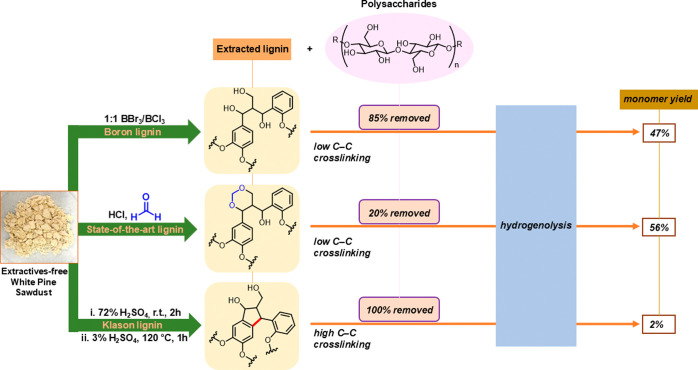
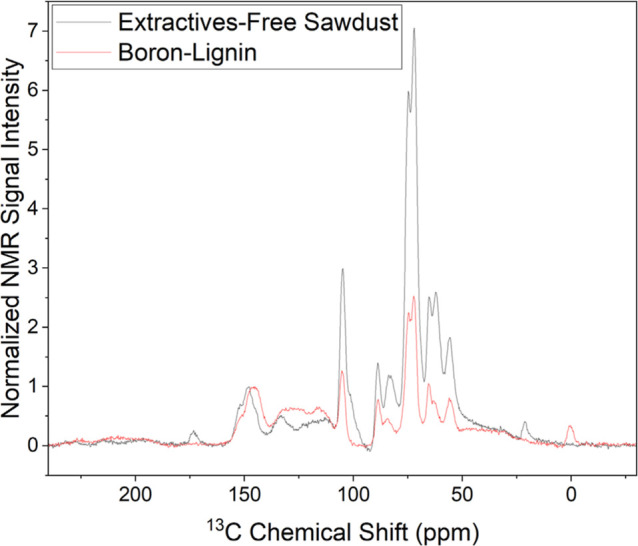
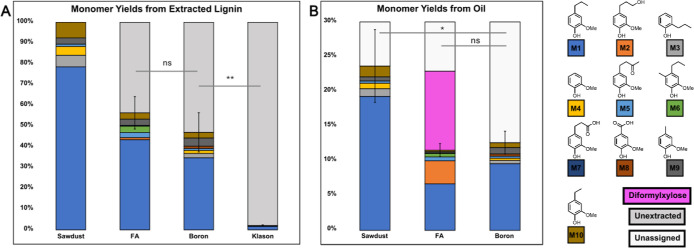
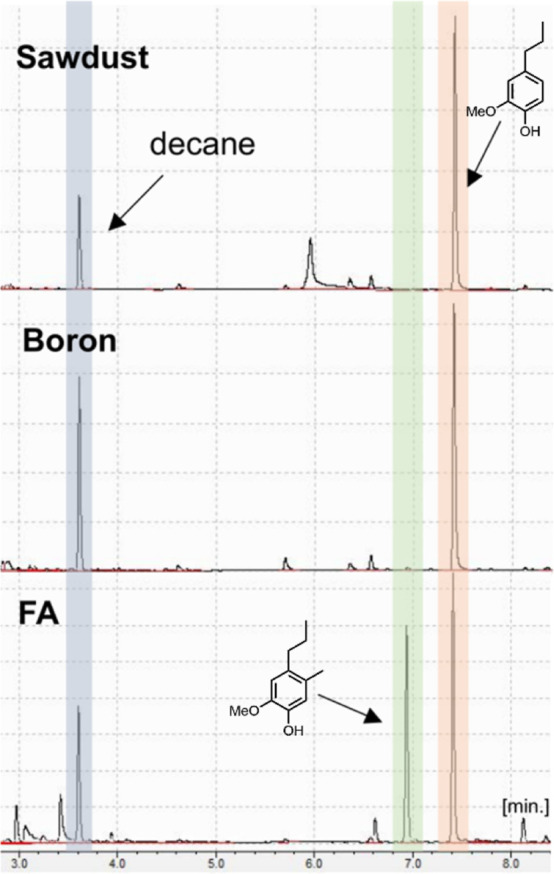
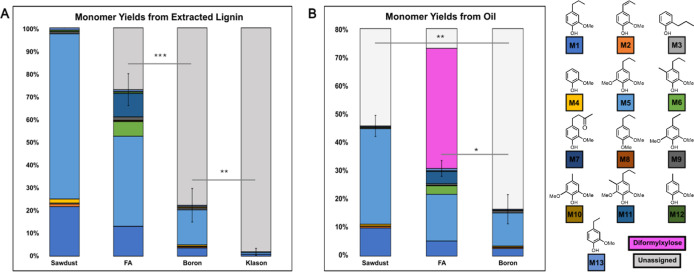
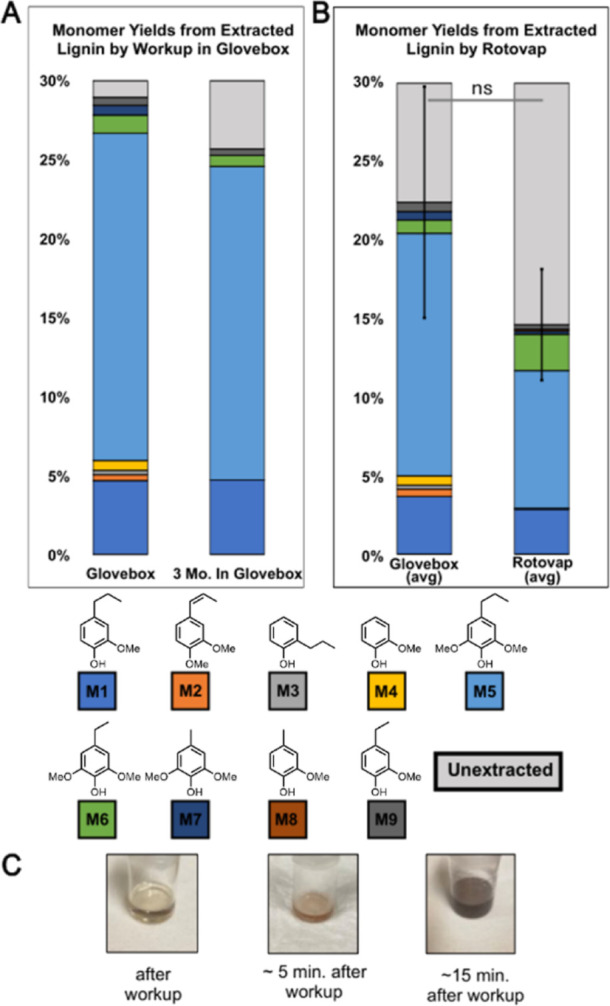
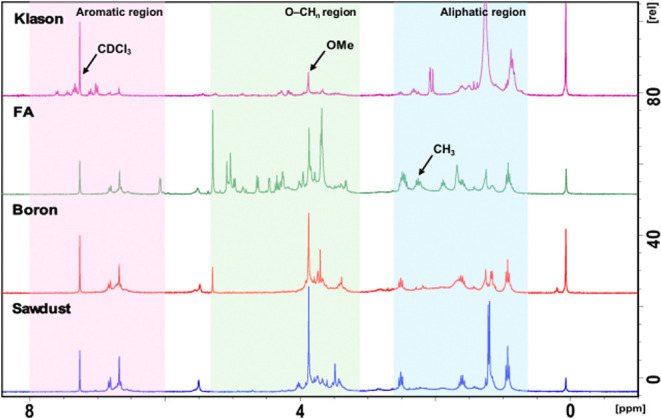
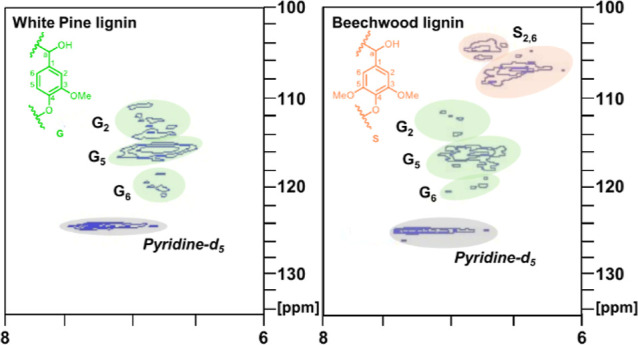
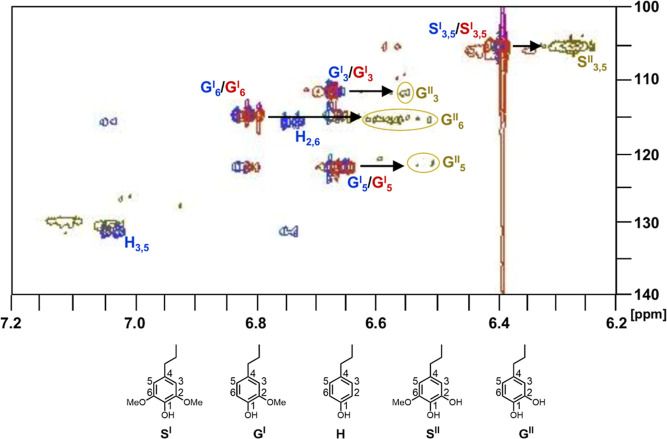
The separation of lignocellulose into lignin, cellulose, and hemicellulose without significantly altering the chemical structures of these component biopolymers remains a modern chemical challenge. Lignin, in particular, has potential as a highly valuable feedstock material but remains underutilized due to the difficulty of generating lignin with low modification and condensation. This work investigates the lignin-rich solids ("boron lignin") generated from a previously reported boron Lewis acid-mediated lignocellulose separation and concludes that (1) boron Lewis acid extraction removes 80-85% of carbohydrates from the original lignocellulose sample, and (2) the resulting lignin possesses a low condensation level and high similarity to native lignin structure. Residual carbohydrate assessment, depolymerization efficiency analyses, heteronuclear single quantum coherence (HSQC) and solid-state nuclear magnetic resonance (NMR) analyses are discussed, including benchmarking results with alternate lignin sources known to possess low and high condensation levels. Further, two different wood sources (white pine, a softwood, and beechwood, a hardwood) were employed to generate lignin samples. Depolymerization of a white pine-derived boron-lignin produced 47% (±9.5) of extractable monomers, which compares well to a state-of-the-art method to generate low condensed lignin (56 ± 7.8%). An unexpected instability of the oil sample was observed following hydrogenolysis of boron lignin generated from beechwood. Dramatic color changes coupled with precipitation and lowered monomer yields were observed when samples were aged (11% decrease) or concentrated (30% decrease). Based on NMR spectroscopic analyses, this instability is postulated to arise due to boron-mediated demethylation of methoxy sites on the lignin scaffold.
在不显著改变这些生物聚合物化学成分结构的前提下,将木质纤维素分离成木质素、纤维素和半纤维素仍然是现代化学面临的一项挑战。特别是木质素,它有潜力成为一种高价值的原料,但由于难以生成低改性和低缩合的木质素,其利用率仍然很低。这项工作研究了先前报道的硼路易斯酸介导的木质纤维素分离过程中产生的富含木质素的固体(“硼木质素”),并得出以下结论:(1)硼路易斯酸萃取可从原始木质纤维素样品中去除80-85%的碳水化合物;(2)所得木质素具有低缩合水平,并且与天然木质素结构高度相似。文中讨论了残留碳水化合物评估、解聚效率分析、异核单量子相干(HSQC)和固态核磁共振(NMR)分析,包括与已知具有低缩合水平和高缩合水平的其他木质素来源的基准测试结果。此外,还使用了两种不同的木材来源(软木白松和硬木山毛榉)来生成木质素样品。白松衍生的硼木质素解聚产生了47%(±9.5)的可萃取单体,这与生成低缩合木质素的现有技术方法(56 ± 7.8%)相比效果良好。在对山毛榉产生的硼木质素进行氢解后,观察到油样出现了意想不到的不稳定性。当样品老化(降低11%)或浓缩(降低30%)时,观察到颜色急剧变化,伴有沉淀现象,单体产率降低。基于核磁共振光谱分析,推测这种不稳定性是由于硼介导的木质素支架上甲氧基位点的去甲基化引起的。