Department of Plastic Surgery and Burn Center, Second Affiliated Hospital, Shantou University Medical College, Shantou, Guangdong, China.
Plastic Surgery Institute of Shantou University Medical College, Shantou, Guangdong, China.
BMC Med Genomics. 2024 Nov 29;17(1):280. doi: 10.1186/s12920-024-02054-8.
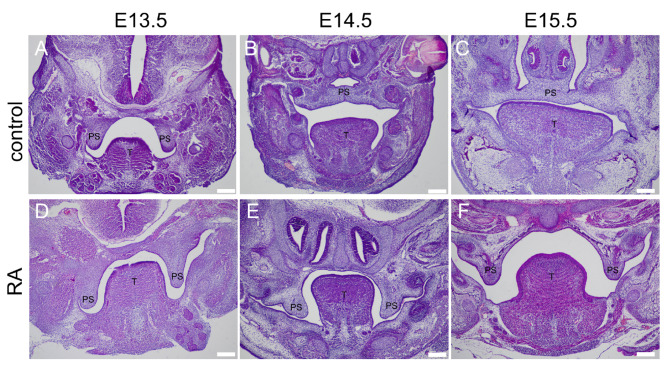
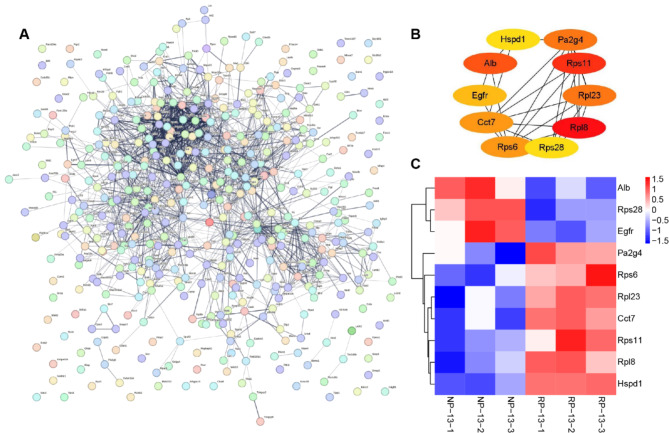
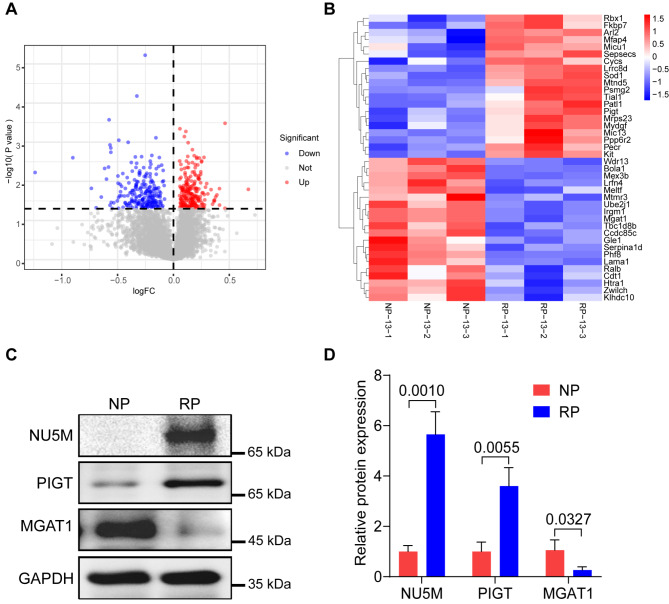
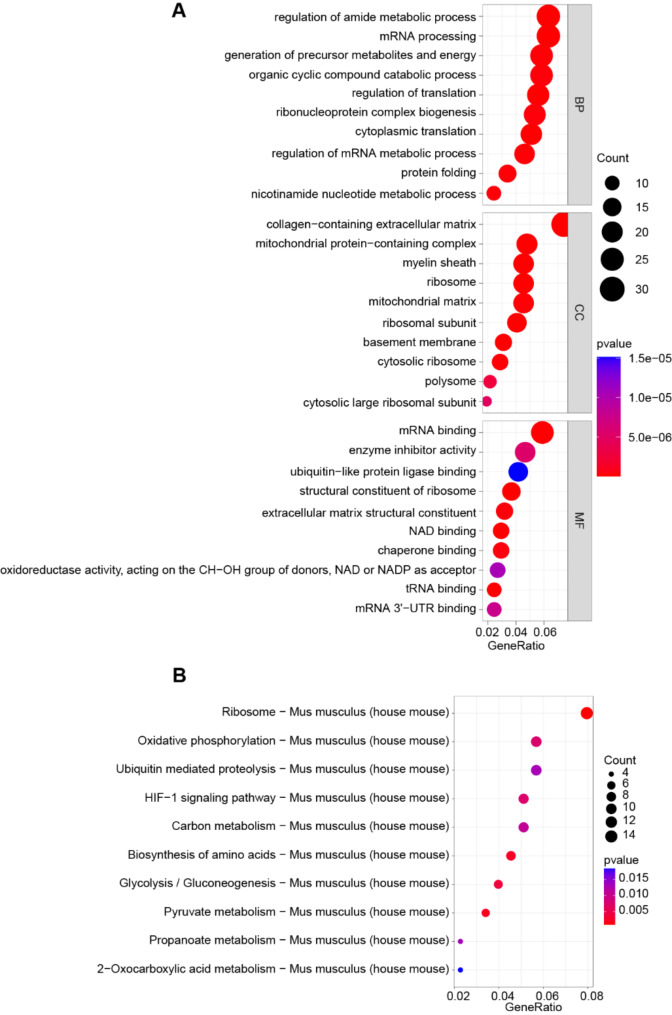
Recent studies have unveiled disrupted metabolism in the progression of cleft palate (CP), a congenital anomaly characterized by defective fusion of facial structures. Nonetheless, the precise composition of this disrupted metabolism remains elusive, prompting us to identify these components and elucidate primary metabolic irregularities contributing to CP pathogenesis. We established a murine CP model by retinoic acid (RA) treatment and analyzed control and RA-treated embryonic palatal tissues by LC-MS-based proteomic approach. We identified 220 significantly upregulated and 224 significantly downregulated proteins. Gene Ontology (GO) and Kyoto Encyclopedia of Genes and Genomes (KEGG) enrichment analysis revealed that these differentially expressed proteins (DEPs) were involved in translation, ribosome assembly, mitochondrial function, mRNA binding, as well as key metabolic pathways like oxidative phosphorylation (OXPHOS), glycolysis/gluconeogenesis, and amino acid biosynthesis. These findings suggest that dysregulated ribosome-related pathways and disrupted metabolism play a critical role in CP development. Protein-protein interaction analysis using the STRING database revealed a tightly connected network of DEPs. Furthermore, we identified the top 10 hub proteins in CP using the Cytohubba plugin in Cytoscape. These hub proteins, including RPL8, RPS11, ALB, PA2G4, RPL23, RPS6, CCT7, EGFR, HSPD1, and RPS28, are potentially key regulators of CP pathogenesis. In conclusion, our comprehensive proteomic analysis provides insights into the molecular alterations associated with RA-induced CP in Kun Ming mice. These findings suggest potential therapeutic targets and pathways to understand and prevent congenital craniofacial anomalies.
最近的研究揭示了腭裂(CP)进展过程中的代谢紊乱,CP 是一种以面部结构融合缺陷为特征的先天性异常。然而,这种代谢紊乱的确切组成仍然难以捉摸,促使我们识别这些成分并阐明导致 CP 发病机制的主要代谢异常。我们通过视黄酸(RA)处理建立了 CP 小鼠模型,并通过基于 LC-MS 的蛋白质组学方法分析了对照和 RA 处理的胚胎腭组织。我们鉴定出 220 个显著上调和 224 个显著下调的蛋白质。基因本体论(GO)和京都基因与基因组百科全书(KEGG)富集分析表明,这些差异表达的蛋白质(DEPs)参与翻译、核糖体组装、线粒体功能、mRNA 结合以及关键代谢途径,如氧化磷酸化(OXPHOS)、糖酵解/糖异生和氨基酸生物合成。这些发现表明,失调的核糖体相关途径和代谢紊乱在 CP 发育中起关键作用。使用 STRING 数据库进行蛋白质-蛋白质相互作用分析揭示了 DEPs 的紧密连接网络。此外,我们使用 Cytoscape 中的 Cytohubba 插件在 CP 中鉴定出前 10 个枢纽蛋白。这些枢纽蛋白,包括 RPL8、RPS11、ALB、PA2G4、RPL23、RPS6、CCT7、EGFR、HSPD1 和 RPS28,可能是 CP 发病机制的关键调节剂。总之,我们的综合蛋白质组学分析提供了与昆明小鼠 RA 诱导的 CP 相关的分子改变的见解。这些发现为理解和预防先天性颅面畸形提供了潜在的治疗靶点和途径。