Department of Medicine, University of Udine, Udine, Italy.
Clinic of Obstetrics and Gynecology, Santa Maria della Misericordia Hospital, ASUFC, Udine, Italy.
FASEB J. 2024 Dec 15;38(23):e70222. doi: 10.1096/fj.202401946R.
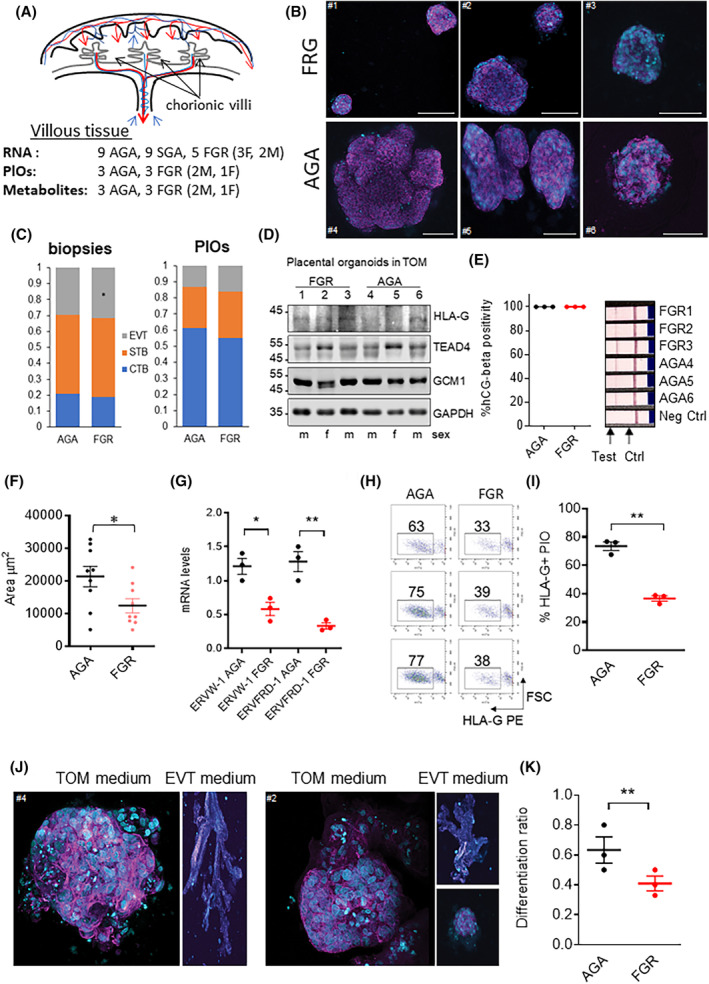
Placental insufficiency often correlates with fetal growth restriction (FGR), a condition that has both short- and long-term effects on the health of the newborn. In our study, we analyzed placental tissue from infants with FGR and from infants classified as small for gestational age (SGA) or appropriate for gestational age (AGA), performing comprehensive analyses that included transcriptomics and metabolomics. By examining villus tissue biopsies and 3D trophoblast organoids, we identified significant metabolic changes in placentas associated with FGR. These changes include adaptations to reduced oxygen levels and modifications in arginine metabolism, particularly within the polyamine and creatine phosphate synthesis pathways. Specifically, we found that placentas with FGR utilize arginine to produce phosphocreatine, a crucial energy reservoir for ATP production that is essential for maintaining trophoblast function. In addition, we found polyamine insufficiency in FGR placentas due to increased SAT1 expression. SAT1 facilitates the acetylation and subsequent elimination of spermine and spermidine from trophoblasts, resulting in a deficit of polyamines that cannot be compensated by arginine or polyamine supplementation alone, unless SAT1 expression is suppressed. Our study contributes significantly to the understanding of metabolic adaptations associated with placental dysfunction and provides valuable insights into potential therapeutic opportunities for the future.
胎盘功能不全常与胎儿生长受限(FGR)相关,这会对新生儿的健康产生短期和长期影响。在我们的研究中,我们分析了 FGR 婴儿和按胎龄分类为小于胎龄儿(SGA)或适于胎龄儿(AGA)的婴儿的胎盘组织,进行了包括转录组学和代谢组学在内的综合分析。通过检查绒毛组织活检和 3D 滋养层类器官,我们确定了与 FGR 相关的胎盘显著代谢变化。这些变化包括对低氧水平的适应以及精氨酸代谢的改变,特别是在多胺和磷酸肌酸合成途径中。具体而言,我们发现 FGR 胎盘利用精氨酸产生磷酸肌酸,这是产生 ATP 所必需的关键能量储备,对于维持滋养层功能至关重要。此外,我们发现 FGR 胎盘中的多胺不足是由于 SAT1 表达增加所致。SAT1 促进乙酰化和随后从滋养层中消除精脒和精胺,导致多胺不足,除非 SAT1 表达受到抑制,否则仅通过精氨酸或多胺补充无法得到补偿。我们的研究对理解与胎盘功能障碍相关的代谢适应有重要贡献,并为未来的潜在治疗机会提供了有价值的见解。