McLachlan Isobel, Huntley Selene, Leslie Kirstin, Bishop Jennifer, Redman Christopher, Yebra Gonzalo, Shaaban Sharif, Christofidis Nicolaos, Lycett Samantha, Holden Matthew T G, Robertson David L, Smith-Palmer Alison, Hughes Joseph, Nickbakhsh Sema
Public Health Scotland, Edinburgh, UK.
The Roslin Institute, University of Edinburgh, Edinburgh, UK.
BMJ Open. 2024 Nov 29;14(11):e085332. doi: 10.1136/bmjopen-2024-085332.
We aimed to assess the effects of risk-based travel restrictions on (1) international travel frequency, (2) SARS-CoV-2 case importation risk, (3) national SARS-CoV-2 incidence and (4) importation of SARS-CoV-2 variants into Scotland.
Population-based surveillance study.
The study utilises SARS-CoV-2 community testing from February 2021 to May 2022 in Scotland, UK and spans the introduction of the UK's 'traffic light system' policy in May 2021.
Travel-related cases of COVID-19 were defined as PCR-positive Scottish residents self-reporting international travel within 14 days of booking a postarrival travel test. The Red-Amber-Green (RAG) status of the reported travel destination was determined through data linkage using country and date.
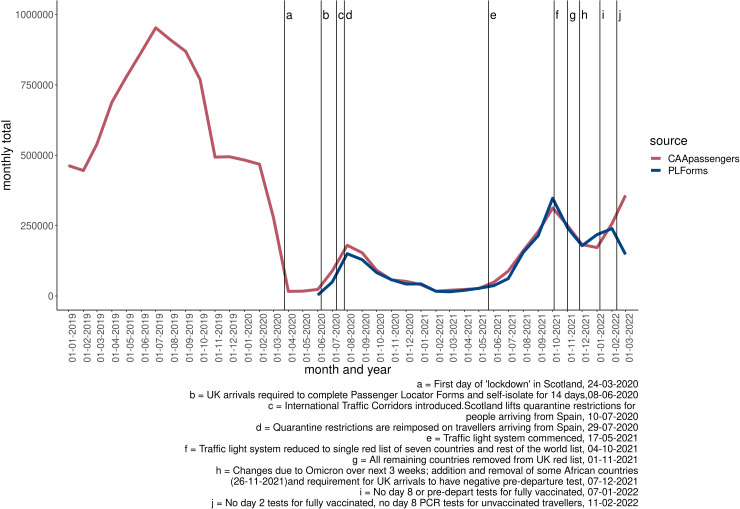
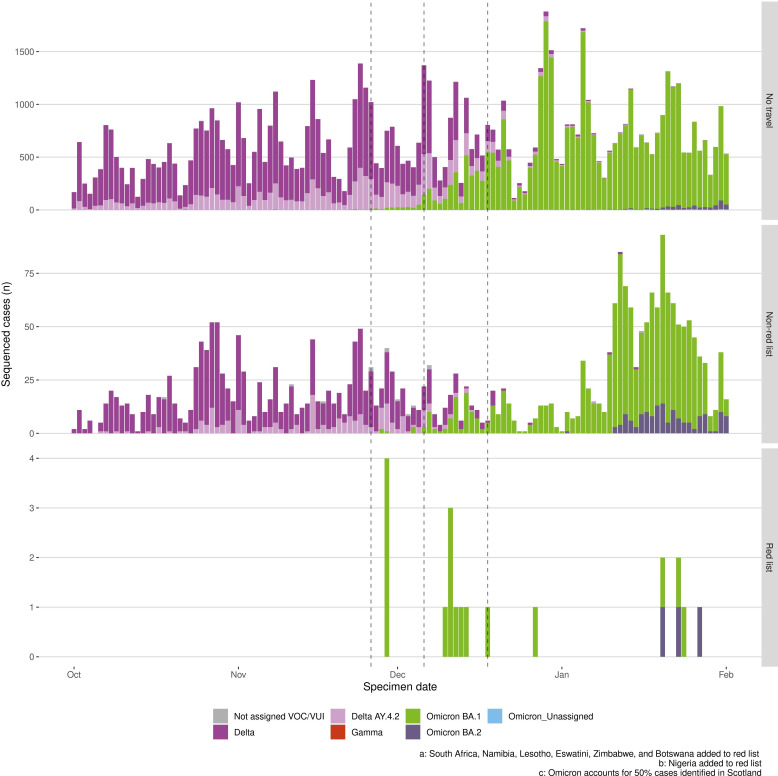
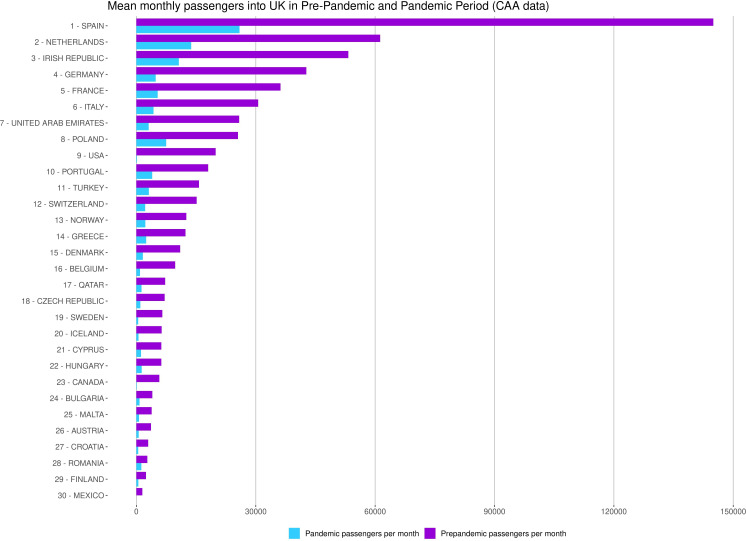
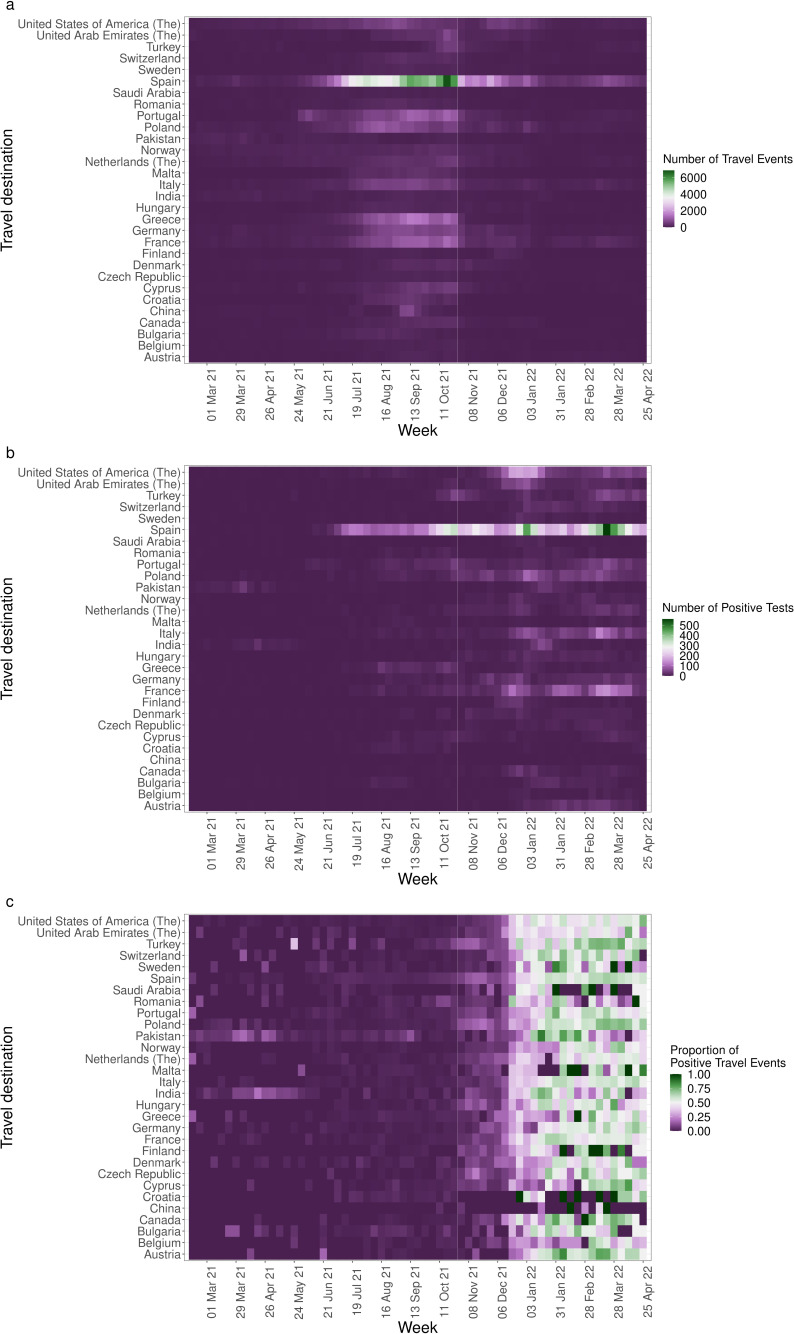
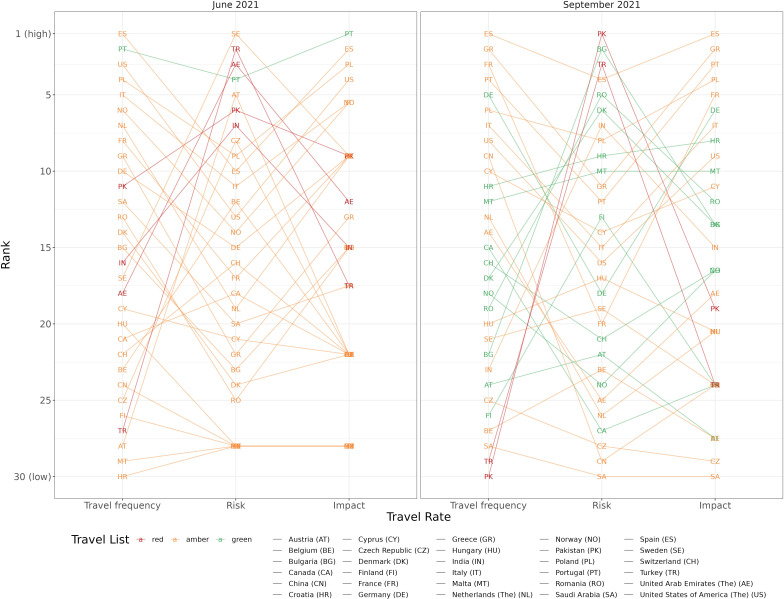
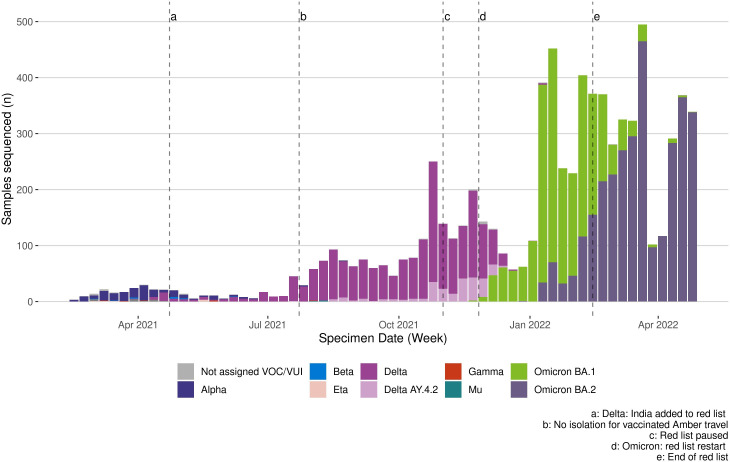
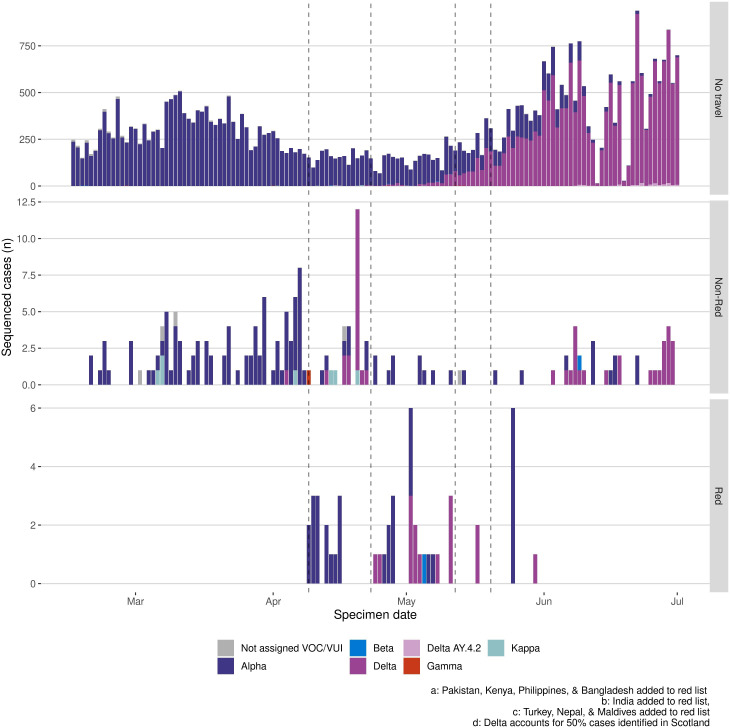
International flight passengers arriving into Scotland increased by 754% during the traffic light period. Amber list countries were the most frequently visited and ranked highly for both SARS-CoV-2 importations and contribution to national case incidence. Rates of international travel and associated SARS-CoV-2 case rates varied significantly across age, health board and deprivation groups. Multivariable logistic regression revealed SARS-CoV-2 case detections were less likely through travel-based than community-based surveillance systems, although increased from green-to-amber and amber-to-red lists. When examined according to travel destination, SARS-CoV-2 importation risks did not strictly follow RAG designations, and red lists did not prevent establishment of novel SARS-CoV-2 variants.
Our findings suggest that country-specific postarrival screening undertaken in Scotland did not prohibit the public health impact of COVID-19 in Scotland. Travel rates likely contributed to patterns of SARS-CoV-2 case importation and population incidence.
我们旨在评估基于风险的旅行限制对以下方面的影响:(1)国际旅行频率;(2)新冠病毒输入风险;(3)全国新冠病毒发病率;(4)新冠病毒变异株输入苏格兰的情况。
基于人群的监测研究。
该研究利用了2021年2月至2022年5月在英国苏格兰进行的新冠病毒社区检测,涵盖了2021年5月英国“交通灯系统”政策的实施。
与旅行相关的新冠肺炎病例定义为在预订抵达后旅行检测的14天内自我报告国际旅行的PCR阳性苏格兰居民。通过使用国家和日期的数据链接确定报告旅行目的地的红-琥珀-绿(RAG)状态。
在交通灯时期,抵达苏格兰的国际航班乘客增加了754%。琥珀色名单国家是访问最频繁的,在新冠病毒输入和对全国病例发病率的贡献方面排名都很高。国际旅行率和相关的新冠病毒病例率在年龄、卫生委员会和贫困群体之间有显著差异。多变量逻辑回归显示,尽管从绿色名单国家到琥珀色名单国家以及从琥珀色名单国家到红色名单国家时病例检测有所增加,但通过基于旅行的监测系统检测到新冠病毒病例的可能性低于基于社区的监测系统。根据旅行目的地进行检查时,新冠病毒输入风险并不严格遵循RAG指定,红色名单也未能阻止新型新冠病毒变异株的出现。
我们的研究结果表明,苏格兰进行的针对特定国家的抵达后筛查并未阻止新冠病毒对苏格兰公共卫生的影响。旅行率可能促成了新冠病毒病例输入模式和人群发病率。