Nagashima Shuhei, Kobayashi Satoshi, Tsunoda Shotaro, Yamachika Yui, Tozuka Yuichiro, Fukushima Taito, Morimoto Manabu, Ueno Makoto, Furuse Junji, Maeda Shin
Department of Gastroenterology, Kanagawa Cancer Center, 2-3-2 Nakao Asahi-ku, Yokohama, 241-8515, Japan.
Department of Gastroenterology, Yokohama City University Graduate School of Medicine, 3-9, Fukuura, Kanazawa-ku, Yokohama, 236-0004, Japan.
Clin J Gastroenterol. 2025 Feb;18(1):125-129. doi: 10.1007/s12328-024-02062-2. Epub 2024 Dec 1.
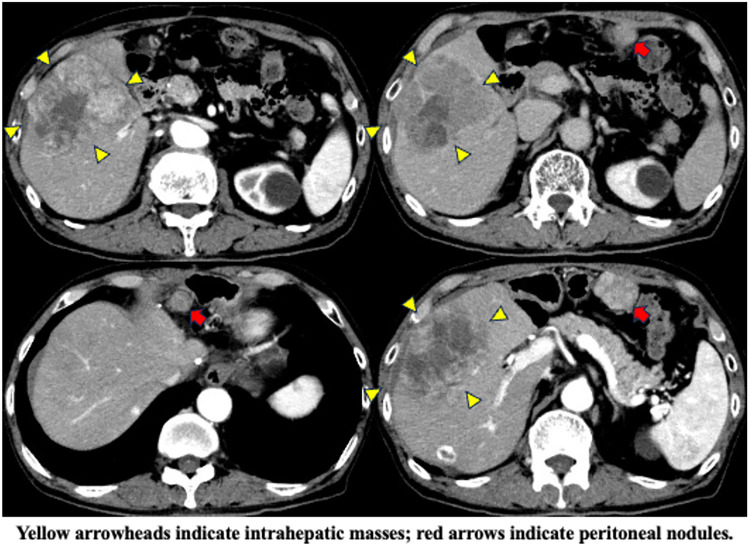
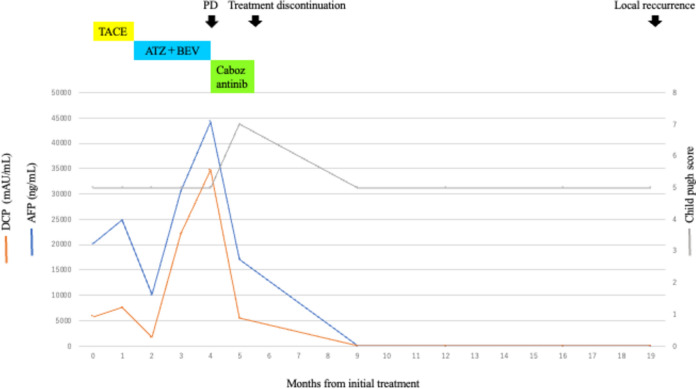
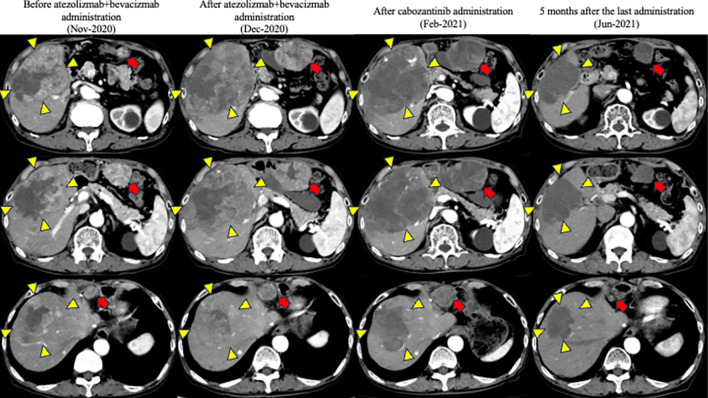
Cabozantinib is a multi-kinase inhibitor targeting multiple tyrosine kinases. It improves overall survival and progression-free survival in patients previously treated with sorafenib for advanced hepatocellular carcinoma (HCC) compared to the placebo in the phase 3 CELESTIAL trial. A 71-year-old man presented to our hospital for treatment of HCC with chronic hepatitis C. He was refractory to sorafenib, lenvatinib, regorafenib, and ramucirumab and started atezolizumab and bevacizumab therapy in November 2020. After administering the second cycle on December 10, 2020, the patient was diagnosed with progressive disease in January 2021. Therefore, cabozantinib (60 mg/day) was initiated on January 14, 2021. As the grade 3 aspartate aminotransferase and alanine aminotransferase levels increased, grade 3 anorexia and a decline in performance status were observed in the first week, and cabozantinib was terminated. His performance status and anorexia gradually improved, and contrast-enhanced computed tomography (CT) in June 2021 showed complete remission (CR) according to the modified Response Evaluation Criteria in Solid Tumors. The patient did not show disease progression for 11 months without receiving any treatment for HCC. To the best of our knowledge, this is the first report of CR with cabozantinib in advanced HCC.
卡博替尼是一种靶向多种酪氨酸激酶的多激酶抑制剂。在3期CELESTIAL试验中,与安慰剂相比,它可改善先前接受索拉非尼治疗的晚期肝细胞癌(HCC)患者的总生存期和无进展生存期。一名71岁男性因慢性丙型肝炎相关性HCC前来我院治疗。他对索拉非尼、乐伐替尼、瑞戈非尼和雷莫西尤单抗均耐药,并于2020年11月开始接受阿替利珠单抗和贝伐单抗治疗。在2020年12月10日给予第二个周期治疗后,该患者于2021年1月被诊断为疾病进展。因此,于2021年1月14日开始使用卡博替尼(60mg/天)。由于3级天冬氨酸转氨酶和丙氨酸转氨酶水平升高,在第一周观察到3级厌食和体能状态下降,遂停用卡博替尼。他的体能状态和厌食逐渐改善,2021年6月的对比增强计算机断层扫描(CT)根据实体瘤改良反应评估标准显示完全缓解(CR)。该患者在未接受任何HCC治疗的情况下11个月未出现疾病进展。据我们所知,这是卡博替尼治疗晚期HCC达到CR的首例报告。